Toilet Choke Repair Singapore: 9 Practical Solutions Every Homeowner Should Know
A clogged toilet always seems to happen at the worst possible time. Maybe guests are coming over. Maybe it’s early in the morning before work. Or perhaps it’s late at night when every plumbing issue feels twice as stressful.
If you’re searching for toilet choke repair Singapore, chances are you need answers quickly. The good news? Not every blockage is a plumbing disaster. Some can be cleared with simple tools, while others need professional attention before they become bigger—and more expensive—problems.
This guide covers the most common causes of toilet clogs, practical solutions, warning signs to watch for, and tips to prevent future blockages. Let’s get started.
1. Understand Why Toilets Get Choked
Most toilet blockages don’t happen overnight. They usually build up little by little.
Some of the most common causes include:
- Excessive toilet paper
- Wet wipes labeled “flushable”
- Sanitary products
- Children’s toys
- Hair and tissue buildup
- Grease or food waste flushed accidentally
- Tree root intrusion in older drainage systems
- Damaged or collapsed drain pipes
And sometimes… it’s simply years of accumulated waste restricting water flow.
Knowing the cause helps determine the right repair method.
2. Try These Safe DIY Fixes First
Before calling a plumber, there are a few things worth trying.
Use a Toilet Plunger
A flange plunger creates a strong seal around the toilet drain and often removes minor blockages within a few attempts.
Remember:
- Push slowly.
- Pull firmly.
- Repeat several times.
Patience matters.
Hot Water and Dish Soap
Pour a small amount of dish soap into the bowl, followed by hot—not boiling—water.
Leave it for 15 to 20 minutes.
This may soften paper blockages enough to restore normal flushing.
Toilet Auger
If the clog sits deeper inside the toilet trap, a toilet auger can reach places a plunger cannot.
Avoid using excessive force, though. Scratching porcelain is never fun.
3. Know When DIY Isn’t Enough
Some warning signs suggest a deeper drainage issue.
Watch for:
- Water backing up repeatedly
- Slow flushing every day
- Gurgling sounds from nearby drains
- Overflow after every flush
- Bad sewer odours
- Water backing up into floor traps
These symptoms usually point to a blockage beyond the toilet itself.
And that’s when professional toilet choke repair Singapore services become the smarter option.
4. Professional Toilet Choke Repair Methods
Experienced plumbers don’t rely on guesswork.
Instead, they use specialised equipment to identify and remove the blockage efficiently.
Common repair methods include:
Drain Inspection
Modern plumbers often inspect drains before recommending repairs.
This helps locate:
- Pipe damage
- Heavy blockages
- Foreign objects
- Root intrusion
Accurate diagnosis saves both time and money.
High-Pressure Water Jetting
Water jetting removes stubborn grease, sludge, soap residue, and debris without damaging most drain pipes.
It’s especially useful for recurring blockages.
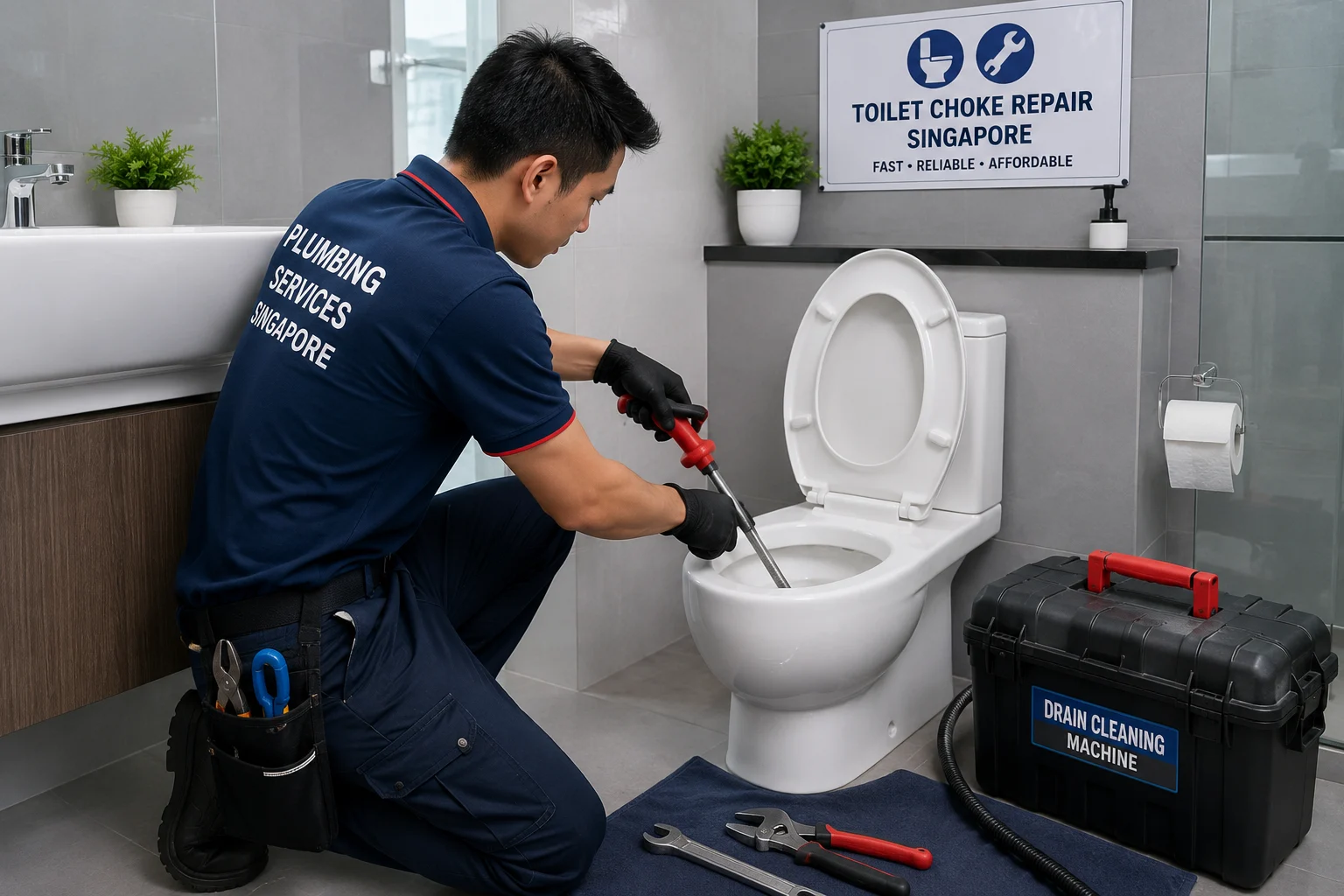
Mechanical Drain Machines
Motorised drain snakes break apart compacted waste deep inside drainage systems.
They’re much stronger than household tools.
Pipe Repairs
If damaged pipes are causing repeated toilet chokes, repairing or replacing sections of the drainage line may be necessary.
Thankfully, not every blockage ends with pipe replacement.
5. Signs You Should Call a Plumber Immediately
Some situations shouldn’t wait.
Contact a professional if you notice:
- Toilet overflowing continuously
- Multiple drains blocked at once
- Sewage smells inside the home
- Water leaking around the toilet base
- Flooding in bathrooms
- Blockages returning within days
These problems often indicate a larger drainage issue affecting the property’s plumbing system.
Ignoring them rarely makes things better.
6. How Professionals Diagnose Recurring Toilet Problems
One blocked toilet isn’t unusual.
But repeated blockages deserve a closer look.
Professional plumbers usually inspect:
- Toilet trap condition
- Drainpipe alignment
- Sewer line health
- Ventilation pipes
- Floor trap connections
- Main drainage system
Sometimes the toilet isn’t actually the problem.
The issue could be much further down the drainage network.
7. Tips to Prevent Future Toilet Chokes
A little prevention goes a long way.
Here are some simple habits that make a difference:
- Flush only toilet paper and human waste.
- Keep a covered bin for tissues and sanitary products.
- Avoid pouring grease into any drain.
- Teach children not to flush toys.
- Schedule periodic drain maintenance.
- Address slow drainage early.
Small changes today can prevent costly emergency repairs later.
8. What to Expect During a Toilet Choke Repair Visit
If you’ve never hired a plumber before, here’s what typically happens.
The technician will:
- Inspect the toilet.
- Ask about the symptoms.
- Check nearby drainage points.
- Identify the blockage location.
- Recommend the appropriate repair.
- Test the drainage after clearing the clog.
- Offer maintenance advice.
Many straightforward repairs can be completed within a single visit, depending on the severity of the blockage.
9. Choosing the Right Toilet Choke Repair Service in Singapore
Not every plumbing company offers the same level of service.
Before hiring, look for:
- Licensed and experienced plumbers
- Transparent pricing
- Emergency response availability
- Positive customer reviews
- Modern diagnostic equipment
- Warranty on workmanship
Good communication also matters.
A reliable plumber should explain the problem clearly instead of rushing into repairs.
Common Mistakes Homeowners Make
It’s easy to panic when a toilet blocks.
Unfortunately, panic often leads to bigger problems.
Avoid these mistakes:
- Flushing repeatedly after a blockage
- Using harsh chemical drain cleaners
- Mixing different cleaning chemicals
- Ignoring slow drainage
- Attempting major repairs without proper tools
Sometimes doing less is actually the safer choice.
Why does my toilet keep clogging?
Recurring clogs may be caused by excessive toilet paper, hidden foreign objects, damaged drain pipes, poor plumbing installation, or a blockage in the main sewer line.
Can I use chemical drain cleaners?
Most plumbers discourage regular use because harsh chemicals may damage pipes and toilet components over time. Mechanical clearing methods are usually safer.
How long does toilet choke repair take?
Simple blockages may take less than an hour, while more complex drainage issues requiring inspection or pipe repairs can take longer.
Is recurring blockage a serious problem?
Yes. Frequent clogs often indicate an underlying drainage issue that should be diagnosed before it worsens.
Final Thoughts
A blocked toilet is frustrating, but it doesn’t have to become a major plumbing emergency. Understanding the common causes, recognising the warning signs, and acting quickly can save you from costly repairs and unnecessary stress.
While minor clogs can often be cleared with a plunger or toilet auger, recurring blockages, foul odours, or overflowing toilets usually require professional attention. Choosing an experienced toilet choke repair Singapore specialist ensures the root cause is properly identified and resolved, giving you peace of mind and a plumbing system that works as it should.