Ceiling Water Damage Singapore: Causes, Warning Signs, Repair Tips & Prevention Guide
A small brown patch on your ceiling might not look like a big problem at first. Maybe you notice it after a rainy week, or perhaps there is a tiny water stain near your bathroom. It is easy to ignore.
But ceiling water damage Singapore is something homeowners should take seriously.
Singapore’s humid climate, heavy rainfall, ageing buildings, and frequent plumbing issues create the perfect conditions for ceiling leaks. What starts as a minor stain can slowly become peeling paint, mould growth, damaged plaster, or even more expensive repairs.
The tricky part? The visible damage is usually not where the problem begins. Water may travel through concrete slabs, pipes, or hidden gaps before finally appearing on your ceiling.
Understanding the causes, signs, and solutions can help you fix the issue before it gets worse.
Common Causes of Ceiling Water Damage Singapore Homes Experience
Ceiling leaks can happen for several reasons. Finding the actual source is the first step toward a proper repair.
1. Bathroom Waterproofing Problems
One of the most common reasons for ceiling water damage in Singapore apartments is failed bathroom waterproofing.
Bathrooms are constantly exposed to water from showers, sinks, and floor washing. Over time, waterproof membranes beneath tiles can weaken. Small cracks may develop, allowing water to seep through the floor slab.
This often affects the ceiling of the unit below.
Common signs include:
- Water stains appearing below toilets or bathrooms
- Damp ceiling patches
- Peeling paint around bathroom areas
- Musty smells
In many cases, the leak continues slowly for weeks or months before homeowners notice it.
2. Leaking Pipes Above the Ceiling
Hidden plumbing problems are another major cause.
A damaged water pipe, loose connection, or ageing pipe joint can release water inside the ceiling space. Since these pipes are concealed, the damage may only become obvious after moisture has already spread.
Signs of pipe-related leaks include:
- Sudden wet patches
- Dripping water from the ceiling
- Increased water bills
- Damp spots that keep returning after repairs
A professional plumber may need to inspect the piping system to locate the exact source.
3. Roof Leakage in Landed Properties
For landed homes in Singapore, roof problems are a common cause of ceiling water damage.
Heavy tropical rain can expose weaknesses in:
- Roof tiles
- Roof membranes
- Flashing areas
- Gutters
- Drainage systems
Water may enter through tiny gaps and travel along roof structures before reaching the ceiling.
And sometimes, the leak only appears during intense rainfall. On dry days, everything looks normal — making the problem harder to identify.
4. Air Conditioner Condensation Leaks
Air conditioning systems run almost daily in many Singapore homes. Over time, drainage pipes can become clogged or damaged.
When condensation water cannot drain properly, it may overflow and affect nearby ceilings or walls.
Look out for:
- Water droplets around air-conditioning units
- Damp ceiling areas near AC points
- Mould growth
- Unusual dripping sounds
Regular air conditioner servicing can help prevent these issues.
Early Warning Signs of Ceiling Water Damage
Detecting ceiling problems early can save you from expensive repairs.
Here are some common warning signs homeowners should watch for.
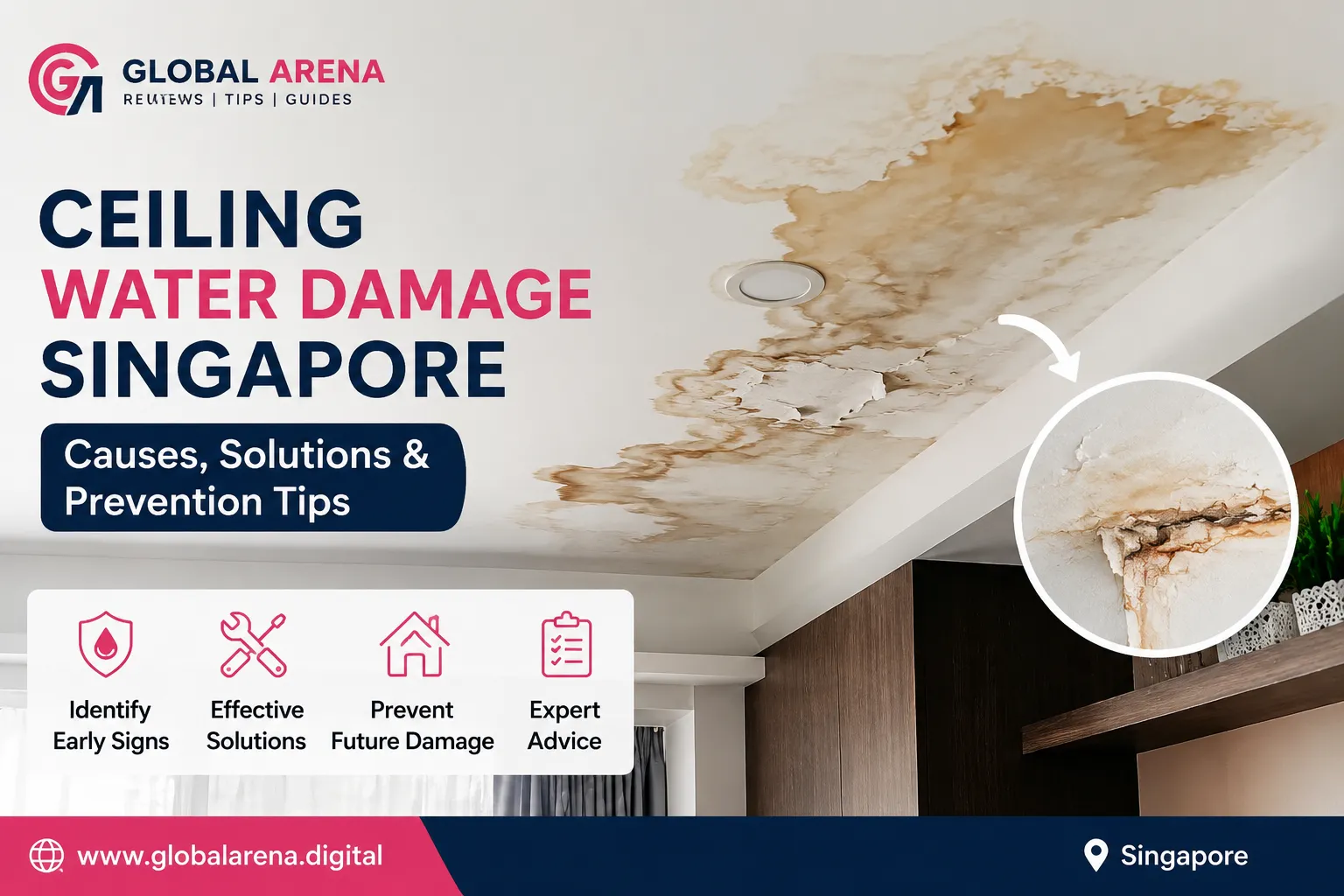
1. Yellow or Brown Ceiling Stains
Discolouration is often the first visible sign.
Water stains usually appear as:
- Yellow patches
- Brown rings
- Dark marks spreading outward
These stains mean moisture has already entered the ceiling material.
Ignoring them rarely makes the problem disappear.
2. Peeling Paint or Bubbling Surfaces
When water gets trapped behind paint, it can cause bubbling, cracking, or peeling.
You may notice:
- Flaking paint
- Soft ceiling areas
- Uneven surfaces
This happens because moisture weakens the bond between paint and the ceiling surface.
3. Mould and Mildew Growth
Singapore’s humidity creates an ideal environment for mould.
A damp ceiling can encourage mould growth, which may appear as:
- Black spots
- Greenish patches
- A musty smell
Apart from damaging your home, mould can affect indoor air quality.
4. Ceiling Dripping or Water Drops
A dripping ceiling is a more serious warning sign.
It usually means there is an active leak happening above. Quick action is important because prolonged water exposure can damage electrical wiring, ceiling boards, and furniture below.
How Ceiling Water Damage Repair Works in Singapore
The repair process depends on the source and severity of the damage.
A proper repair usually involves several steps.
Step 1: Identify the Leak Source
The first step is finding where the water comes from.
Professionals may check:
- Bathroom waterproofing
- Pipes
- Roof areas
- Air-conditioning drainage
- External walls
Repairing only the visible stain without fixing the source usually leads to the same problem coming back.
Step 2: Stop the Water Problem
Once identified, the source needs to be repaired.
Examples:
- Waterproofing replacement
- Pipe repair
- Roof sealing
- Drainage cleaning
- AC pipe replacement
The goal is simple — stop water from entering before repairing the ceiling itself.
Step 3: Restore the Damaged Ceiling
After the area dries completely, restoration work can begin.
This may include:
- Removing damaged paint
- Treating mould
- Applying waterproof coating
- Repainting the ceiling
- Replacing damaged ceiling boards
Drying time is important. Painting over a damp ceiling can trap moisture and cause the problem to return.
How Much Does Ceiling Water Damage Repair Cost in Singapore?
The cost depends on the damage level and the cause.
Typical factors affecting pricing include:
- Size of affected area
- Type of ceiling material
- Source of leakage
- Repair complexity
- Waterproofing requirements
A simple repainting job may cost less, while waterproofing repairs or plumbing replacement can be significantly higher.
It is better to fix the cause early instead of repeatedly repainting damaged areas.
A quick patch might look cheaper today, but recurring leaks usually become more expensive over time.
Tips to Prevent Ceiling Water Damage Singapore Homes Face
Prevention is always easier than major repairs.
Here are practical steps homeowners can take.
1. Check Bathrooms Regularly
Inspect bathroom ceilings, walls, and corners for:
- Moisture marks
- Cracks
- Mould
- Unusual smells
Small waterproofing issues are easier to handle before they spread.
2. Maintain Your Air Conditioner
Schedule regular servicing and check:
- Drain pipes
- Water leakage
- Filter condition
A small AC drainage issue can slowly create ceiling damage.
3. Inspect Roof and Gutters
For landed properties, regular roof checks are important.
Clear blocked gutters and look for damaged roofing materials, especially before periods of heavy rain.
4. Respond Quickly to Small Signs
That tiny ceiling stain is worth investigating.
Many major ceiling repairs started as small ignored problems.
Should You Repair Ceiling Water Damage Yourself?
Small cosmetic repairs like repainting may seem easy, but the real challenge is finding the leak source.
Applying paint over a damaged ceiling only hides the symptom.
For serious issues involving plumbing, waterproofing, or structural moisture, professional inspection is usually the safer option.
Especially in Singapore apartments, water leakage can involve responsibility between different units, making proper diagnosis even more important.
Final Thoughts on Ceiling Water Damage Singapore
Ceiling water damage in Singapore is more than just an ugly stain. It can indicate hidden problems involving plumbing, waterproofing, roofing, or drainage systems.
The earlier you identify the cause, the easier and cheaper the repair usually becomes.
Watch for warning signs like brown patches, peeling paint, mould, and dripping water. Don’t wait until the ceiling starts falling apart.
A dry, well-maintained ceiling protects not only your home’s appearance but also its long-term condition. Sometimes that small stain is your home’s way of saying, “Hey, something needs attention here.”