
Kitchen Sink Choke Singapore: 10 Practical Ways to Fix and Prevent Blocked Kitchen Dra
A clogged kitchen sink choke singapore always seems to happen at the worst possible time. You’re washing dishes after dinner, the water suddenly stops draining, and within minutes the sink starts filling up with cloudy, greasy water. Frustrating? Absolutely.
If you’re dealing with a kitchen sink choke Singapore problem, you’re definitely not alone. kitchen sink choke singapore blockages are one of the most common plumbing issues in Singapore homes. The combination of cooking oil, food scraps, soap residue, and everyday use slowly narrows the drain until water can barely pass through.
The good news is that not every blocked sink requires an emergency plumber. Some minor clogs can be cleared with simple methods, while severe blockages should be handled professionally to avoid damaging your pipes.
Let’s go through the most effective ways to fix—and prevent—a kitchen sink choke.
1. Understand Why Kitchen Sinks Get Choked
Before fixing the issue, it helps to know what’s causing it.
Unlike bathroom drains that mostly collect hair and soap, kitchen sinks deal with grease, cooking oil, leftover food, coffee grounds, rice, noodles, and detergent. Over time, these materials stick to the inside of drain pipes.
Little by little…
The opening becomes smaller.
Eventually, water slows down before stopping completely.
In many Singapore households, high cooking frequency means kitchen drains experience heavy daily use, making regular maintenance especially important.
2. Watch for Early Warning Signs
Most sink blockages don’t happen overnight.
There are usually warning signs that many homeowners ignore.
Common symptoms include:
- Water draining slowly
- Bubbling or gurgling sounds
- Bad smells coming from the drain
- Water backing up into the sink
- Standing water after washing dishes
- Overflow from the floor trap nearby
If you notice any of these signs, acting early can prevent a complete kitchen sink choke singapore choke.
3. Try Hot Water First
For minor grease build-up, hot water is often surprisingly effective.
Boil a kettle of water and slowly pour it into the drain in stages instead of all at once.
The heat helps soften grease deposits that cling to the pipe walls.
This method works best when:
- The sink drains slowly
- Grease is the likely cause
- The blockage isn’t completely sealed
Avoid pouring boiling water into certain plastic plumbing systems if you’re unsure about their heat tolerance.
4. Use Baking Soda and Vinegar
This classic home remedy remains popular for a reason.
Here’s how:
- Pour half a cup of baking soda into the drain.
- Add one cup of white vinegar.
- Allow the mixture to fizz for about 20 minutes.
- Flush the drain with hot water.
The reaction helps loosen grease, soap residue, and minor organic buildup.
It’s simple, inexpensive, and chemical-free.
5. Remove Food Debris Manually
Sometimes the blockage sits just below the sink strainer.
Wear gloves and inspect the drain opening.
You may find:
- Vegetable peels
- Rice
- Eggshells
- Small bones
- Noodles
- Coffee grounds
Removing visible debris before using other methods often improves drainage immediately.
And honestly…it’s usually less unpleasant than people imagine.
6. Use a Sink Plunger Correctly
A plunger isn’t only for toilets.
A sink plunger creates pressure that can dislodge many drain blockages.
For best results:
- Fill the sink with enough water to cover the plunger.
- Seal the overflow opening using a damp cloth.
- Pump the plunger firmly several times.
- Check whether the water drains properly.
Repeat the process if necessary.
If the blockage moves, you’ll usually hear water rushing through the pipes.
7. Avoid Common Mistakes
Many homeowners accidentally make the blockage worse.
Try not to:
- Pour cooking oil down the sink
- Wash large amounts of rice into the drain
- Dispose of coffee grounds through the sink
- Flush flour mixtures
- Force sharp metal objects into pipes
- Overuse harsh chemical drain cleaners
Chemical cleaners may provide temporary relief, but repeated use can damage certain pipe materials and even create safety risks.
Sometimes less really is more.
8. Know When DIY Isn’t Enough
Some blockages are simply too deep inside the plumbing system.
Professional help is usually necessary if:
- Water won’t drain at all.
- Multiple drains are backing up.
- The blockage keeps returning.
- Bad smells remain after cleaning.
- Water leaks appear under the sink.
- The floor trap starts overflowing.
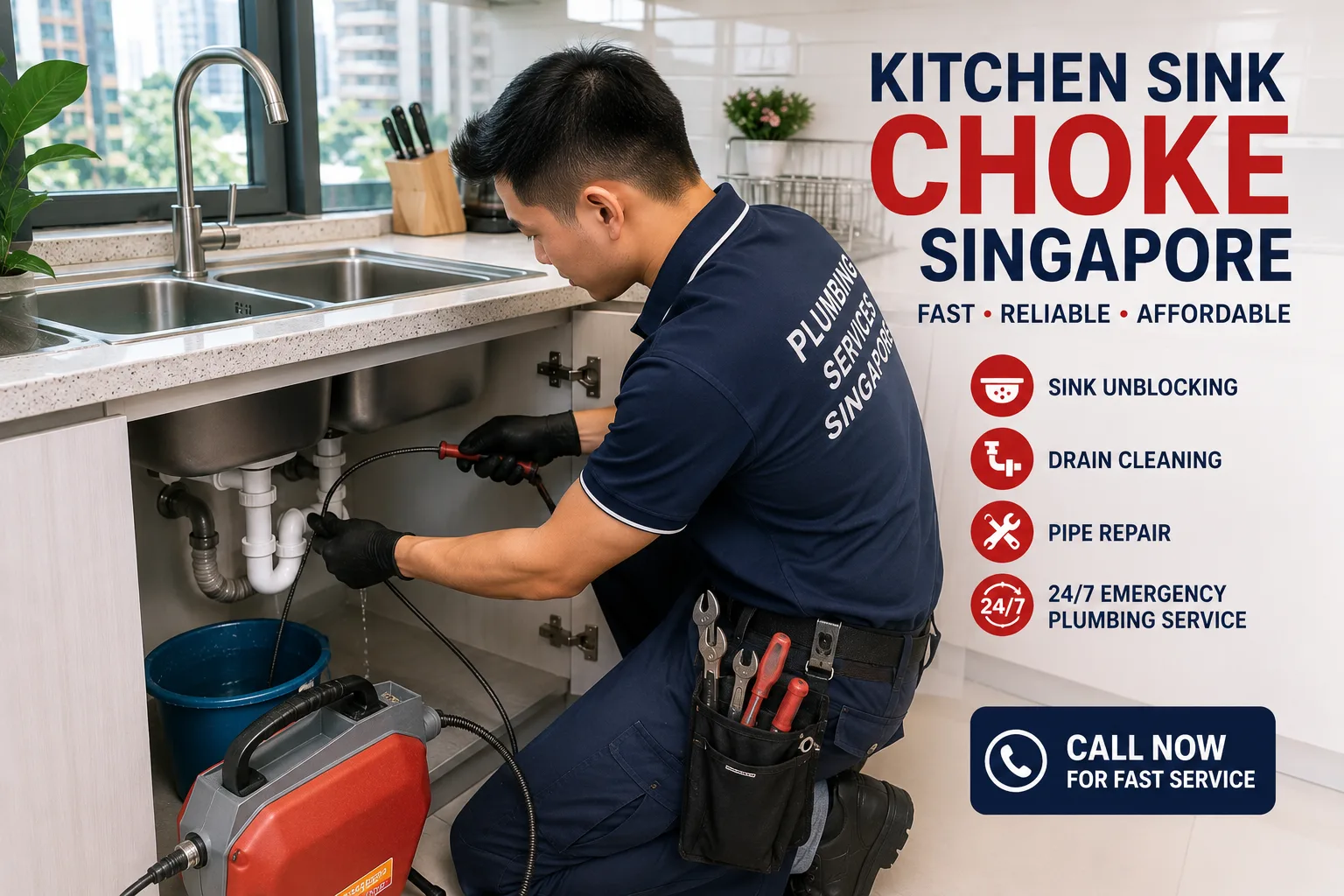
Professional plumbers use specialized equipment like drain snakes, inspection cameras, and high-pressure jetting systems to locate and remove stubborn blockages safely.
9. Prevent Future Kitchen Sink Chokes
Prevention is far easier than dealing with an emergency blockage.
Simple daily habits make a huge difference.
Good practices include:
- Scrape food into the rubbish bin before washing dishes.
- Install a sink strainer.
- Wipe greasy pans with paper towels first.
- Flush the drain with hot water weekly.
- Clean the sink trap regularly.
- Avoid pouring fats and oils into the drain.
These small habits can significantly extend the life of your kitchen plumbing.
And they only take a minute or two.
10. Schedule Regular Drain Maintenance
Many homeowners wait until the sink is completely blocked before taking action.
That’s understandable…but not ideal.
Routine maintenance helps remove grease and residue before major clogs develop.
Professional drain cleaning is especially useful for:
- Busy family homes
- Restaurants
- Cafes
- Food businesses
- Older HDB flats
- Condominiums with aging plumbing
Regular inspections can also identify developing issues before they become costly repairs.
Why Kitchen Sink Chokes Are Common in Singapore
Singapore’s food culture is amazing, but it also means kitchen drains work hard every day.
Frequent cooking, oily dishes, stir-frying, curries, soups, and heavy dishwashing all contribute to gradual pipe buildup.
Apartment living can also mean shared drainage systems in certain buildings, making proper maintenance even more important.
Humidity doesn’t directly cause sink blockages, but it can make unpleasant drain odors more noticeable when food waste becomes trapped inside the pipes.
What causes a kitchen sink choke singapore choke in Singapore?
The most common causes include grease, cooking oil, food scraps, soap residue, rice, noodles, and coffee grounds that accumulate inside drain pipes over time.
Can I use chemical drain cleaners?
Occasional use may clear small blockages, but frequent use can damage plumbing components and may not solve deeper clogs. Safer DIY methods or professional cleaning are often better choices.
How can I prevent my kitchen sink from clogging?
Use a sink strainer, dispose of food waste in the rubbish bin, avoid pouring oil into the drain, and flush the pipes with hot water regularly.
When should I call a plumber?
If water completely stops draining, multiple drains become blocked, foul smells persist, or DIY methods fail, it’s time to contact a professional plumber.
Final Thoughts
A kitchen sink choke Singapore problem may start as a slow drain, but ignoring it often leads to bigger plumbing headaches. Thankfully, many minor clogs can be prevented with simple habits like disposing of food waste properly, avoiding grease buildup, and cleaning drains regularly.
When home remedies don’t solve the problem, professional plumbing services can quickly identify the source of the blockage and restore proper drainage without causing unnecessary damage.
A little maintenance today can save you from a flooded kitchen tomorrow—and that’s something every homeowner can appreciate.