Aircon Leaking Water Singapore: 9 Common Causes and How to Fix Them
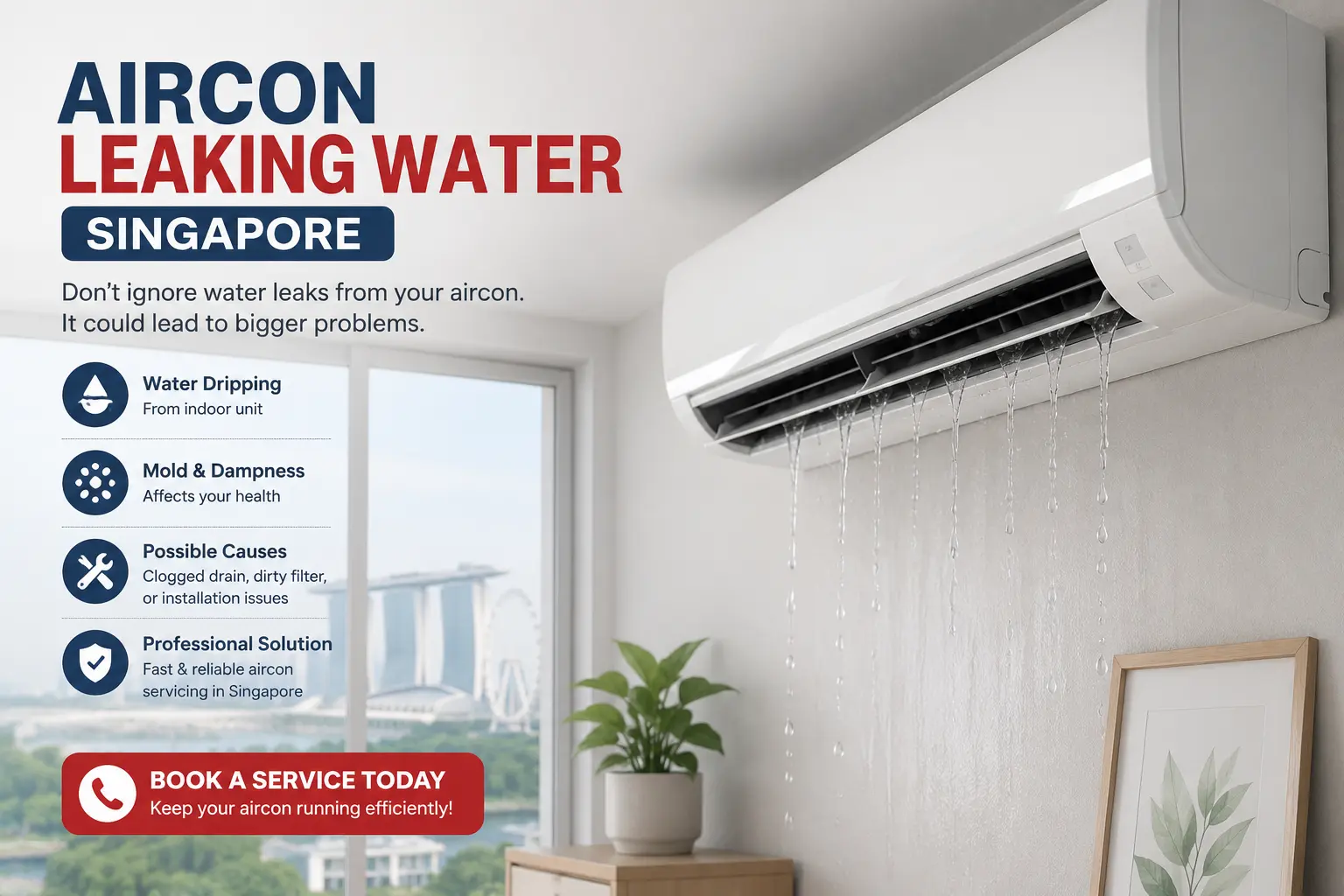
Finding water dripping from your air conditioner can be frustrating. One day it’s cooling your room perfectly, and the next, there’s a puddle on the floor or water stains on the wall. If you’re dealing with aircon leaking water Singapore, you’re definitely not alone.
aircon leaking water singapore hot and humid climate means air conditioners work harder than in many other countries. They remove a significant amount of moisture from indoor air every day. Normally, this water drains away without any issues. But when something goes wrong, leaks happen.
The good news? Many water leaks start with small problems that are easy to fix if caught early. Ignore them for too long, though, and you could end up with damaged walls, mould growth, or expensive repair bills.
Let’s look at the most common reasons your air conditioner is aircon leaking water singapore and what you can do about it.
1. A Clogged Drain Pipe
This is probably the number one reason behind aircon leaking water Singapore complaints.
As your air conditioner removes humidity, the water flows into a drain pan before exiting through a drainage pipe. Over time, dust, dirt, algae, and even tiny insects can block this pipe.
When the blockage becomes severe, water has nowhere to go. Instead, it overflows and starts dripping indoors.
Signs
- Water dripping from the indoor unit
- Slow drainage
- Damp walls beneath the air conditioner
- Musty smell
Solution
Professional aircon servicing usually includes flushing and clearing the drainage pipe. This simple maintenance task often solves the problem immediately.
2. Dirty Air Filters
Many homeowners overlook something as basic as the air filter.
When filters become clogged with dust, airflow is restricted. Reduced airflow causes the evaporator coil to become too cold, allowing ice to form. Later, when the ice melts, excess water overwhelms the drainage system.
And suddenly… there’s water on your floor.
What to Do
Clean washable filters every two to four weeks.
If your filters are damaged or disposable, replace them according to the manufacturer’s recommendations.
3. Frozen Evaporator Coil
Ice inside an air conditioner may sound strange in Singapore’s tropical weather, but it happens surprisingly often.
A frozen evaporator coil eventually melts, producing more water than the drain system can handle.
Several issues can trigger freezing:
- Dirty filters
- Low refrigerant levels
- Blocked airflow
- Faulty fan motor
If icing keeps returning after cleaning the filter, it’s best to have a technician inspect the unit.
4. Damaged or Rusted Drain Pan
Older air conditioners naturally experience wear and tear.
The drain pan sits underneath the evaporator coil and collects condensation before directing it into the drain pipe. After years of use, corrosion or cracks may develop.
Even a tiny crack allows water to escape.
Common Warning Signs
- Water leaking despite a clean drain pipe
- Rust marks
- Visible cracks
- Constant dripping
Replacing the drain pan is usually a straightforward repair.
5. Improper Aircon Installation
Sometimes the issue isn’t maintenance at all.
If an air conditioner wasn’t installed with the proper tilt angle, condensation cannot flow correctly toward the drain pipe.
Instead, gravity works against the system.
Water begins collecting inside the unit before eventually leaking into your room.
Professional installation ensures:
- Correct indoor unit angle
- Secure drainage connection
- Proper pipe insulation
- Stable wall mounting
6. Low Refrigerant Levels
Low refrigerant doesn’t directly cause water leaks.
Instead, it lowers pressure inside the cooling system, making the evaporator coil colder than normal. Ice forms, melts later, and creates excessive dripping.
Other symptoms include:
- Weak cooling
- Higher electricity bills
- Hissing sounds
- Ice around copper pipes
Because refrigerant handling requires specialized equipment, this repair should always be left to certified professionals.
7. Damaged Drain Pipe Insulation
Singapore’s humidity creates another unique issue.
Cold refrigerant pipes need proper insulation to prevent condensation forming on the outside.
When insulation deteriorates, moisture develops around the exposed pipe.
Many homeowners mistake this condensation for an internal leak.
Replacing worn insulation is inexpensive and prevents ongoing moisture problems.
8. Faulty Condensate Pump
Some air conditioning systems rely on a condensate pump instead of gravity drainage.
If the pump stops working:
- Water builds up rapidly
- Overflow occurs
- Indoor leaks become noticeable
Pump failures may result from:
- Electrical faults
- Worn motors
- Dirt accumulation
- Age-related failure
Replacing a faulty pump restores proper drainage.
9. Lack of Regular Aircon Maintenance
Here’s the reality…
Many leaking air conditioners simply haven’t been serviced for months—or even years.
Routine servicing prevents multiple problems before they become expensive repairs.
Professional maintenance typically includes:
- Cleaning filters
- Flushing drain pipes
- Washing evaporator coils
- Checking refrigerant levels
- Inspecting electrical components
- Testing drainage performance
Preventive servicing costs far less than repairing water damage inside your home.
How to Prevent Aircon Water Leaks
The easiest way to avoid leaks is regular maintenance.
Consider these habits:
- Clean filters every two to four weeks.
- Schedule professional servicing every three to six months.
- Don’t ignore unusual noises.
- Watch for weak cooling performance.
- Inspect around the indoor unit regularly.
- Address small drips before they become larger leaks.
Small maintenance efforts can extend your air aircon leaking water singaporelifespan significantly.
When Should You Call an Aircon Technician?
Some issues can be handled at home, like cleaning filters.
But professional help is recommended if you notice:
- Continuous leaking
- Ice forming repeatedly
- Poor cooling
- Refrigerant issues
- Electrical smells
- Water damaging walls or ceilings
Waiting too long often turns a minor repair into a costly replacement.
Why Water Leaks Should Never Be Ignored
It may seem harmless at first—a few drops here and there.
But ongoing leaks can create much bigger problems.
These include:
- Mould growth
- Ceiling damage
- Wall stains
- Damaged flooring
- Electrical hazards
- Higher repair costs
The earlier the problem is diagnosed, the easier—and cheaper—it usually is to fix.
Final Thoughts
If you’re experiencing aircon leaking water Singapore, don’t panic. Most leaks are caused by everyday issues like clogged drain pipes, dirty filters, frozen coils, or poor maintenance. The important thing is acting quickly before the problem worsens.
Regular servicing keeps your air conditioner running efficiently while reducing the chances of unexpected breakdowns. And honestly, that’s worth it in aircon leaking water singapore year-round heat. A little preventive care today can save you from expensive repairs tomorrow, while keeping your home cool, comfortable, and completely leak-free.