Plumbing Maintenance Tips: 15 Simple Ways to Prevent Costly Repairs
A dripping faucet. A slow-draining sink. A toilet that suddenly refuses to flush. Most plumbing emergencies don’t happen out of nowhere—they usually start as small problems that are easy to miss.
The good news? Regular plumbing maintenance doesn’t have to be difficult or expensive. A few simple habits can keep your pipes, drains, faucets, and water heater working efficiently for years. Better yet, you’ll save money by preventing major repairs before they happen.
If you’ve been looking for practical plumbing maintenance tips, you’re in the right place. Here are 15 easy ways to protect your home’s plumbing system without needing professional skills.
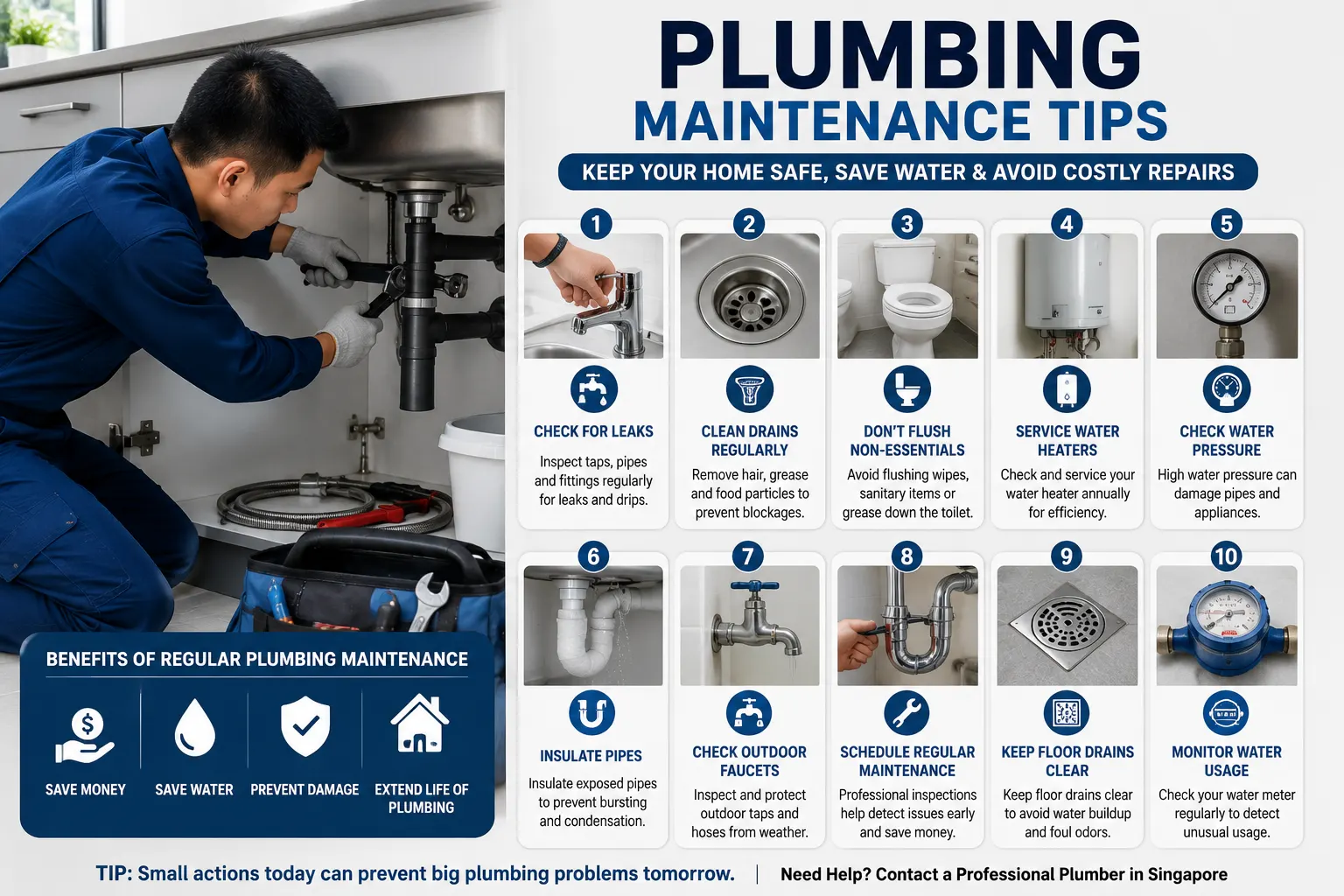
1. Check for Leaks Regularly
Tiny leaks may seem harmless, but they can waste thousands of liters of water every year. Even worse, hidden leaks often cause mold, wood rot, and expensive structural damage.
Inspect these areas every month:
- Under kitchen and bathroom sinks
- Around toilets
- Behind washing machines
- Near water heaters
- Outdoor faucets
If you notice damp spots, water stains, or musty odors, don’t ignore them. Small repairs today can prevent huge bills tomorrow.
2. Never Ignore Slow Drains
A drain that empties slowly is usually warning you about a developing blockage.
Hair, soap residue, grease, food scraps, and mineral buildup gradually narrow your pipes until water struggles to flow.
Instead of reaching for harsh chemical cleaners every time:
- Remove visible debris
- Use a drain strainer
- Flush with hot water occasionally
- Clean sink traps when needed
And if several drains become slow at once…that’s often a sign of a larger plumbing issue.
3. Be Careful What Goes Down the Kitchen Sink
Your kitchen drain isn’t a garbage disposal.
Many common items eventually create stubborn clogs, including:
- Cooking grease
- Coffee grounds
- Rice
- Pasta
- Eggshells
- Flour
- Vegetable peels
Grease is especially troublesome. It may go down as a liquid but cools inside the pipes and hardens over time.
Instead, collect grease in a container and dispose of it properly.
4. Use Drain Covers Everywhere
This might be one of the easiest plumbing maintenance habits…
Install drain strainers in:
- Bathroom sinks
- Showers
- Bathtubs
- Kitchen sinks
They catch hair, food particles, and other debris before they enter your plumbing system.
Cleaning a drain cover takes seconds.
Clearing a blocked pipe? That’s another story.
5. Flush Your Water Heater Every Year
Over time, sediment settles inside your water heater tank.
This buildup can cause:
- Reduced heating efficiency
- Higher energy bills
- Strange popping noises
- Shorter appliance lifespan
Flushing the tank once each year removes accumulated sediment and helps your water heater perform like it should.
If you’re unsure how to do it safely, hiring a plumber is well worth the investment.
6. Monitor Your Water Pressure
High water pressure feels great in the shower.
But excessive pressure slowly damages pipes, fixtures, washing machines, and water heaters.
Ideal household water pressure generally falls between 40 and 60 PSI.
If the pressure seems unusually strong—or suddenly weak—it’s worth having your plumbing system inspected.
7. Protect Pipes During Cold Weather
Frozen pipes are one of the most expensive plumbing emergencies homeowners face.
Water expands when it freezes, putting tremendous pressure on pipes.
To reduce the risk:
- Insulate exposed pipes
- Seal wall and foundation gaps
- Disconnect outdoor hoses
- Keep indoor temperatures stable
- Allow faucets to drip during severe cold spells
These small precautions can save thousands in repair costs.
8. Know Where Your Main Water Shut-Off Valve Is
Imagine a pipe suddenly bursts.
Every second counts.
Knowing how to shut off your home’s water supply can dramatically reduce flooding and water damage.
Take a few minutes today to locate the main shut-off valve and make sure everyone in the household knows where it is.
Hopefully, you’ll never need it.
But if you do…you’ll be glad you prepared.
9. Inspect Toilet Components
Toilets work almost constantly, even when you don’t notice.
Every few months, check:
- The flapper valve
- Fill valve
- Supply hose
- Base seal
- Handle mechanism
A worn flapper alone can waste hundreds of gallons of water every month through silent leaks.
An easy way to test:
Add food coloring to the tank. If color appears in the bowl without flushing, you’ve found a leak.
10. Clean Faucet Aerators
Have your faucets lost pressure?
The problem may simply be mineral deposits clogging the aerator.
Unscrew the aerator carefully and soak it in vinegar for several hours.
Rinse thoroughly before reinstalling.
It’s amazing how much better the water flow becomes after a simple cleaning.
11. Watch for Hidden Signs of Plumbing Problems
Some plumbing issues stay hidden for months.
Pay attention to warning signs like:
- Water stains on ceilings
- Bubbling paint
- Peeling wallpaper
- Mold growth
- Musty smells
- Unexpected increases in water bills
These clues often point to concealed leaks inside walls or under floors.
Early detection almost always means lower repair costs.
12. Don’t Use Chemical Drain Cleaners Too Often
Chemical drain cleaners promise quick fixes.
Sometimes they work.
But repeated use can gradually damage certain pipe materials while exposing you to harsh chemicals.
A drain snake, plunger, or professional drain cleaning is often a safer long-term solution.
Your plumbing system will thank you.
13. Schedule Routine Professional Inspections
Even if everything seems fine, a professional inspection every year or two can identify problems before they become emergencies.
Experienced plumbers can detect:
- Hidden leaks
- Corrosion
- Pipe deterioration
- Water pressure issues
- Sewer line concerns
Preventive maintenance almost always costs less than emergency repairs.
14. Pay Attention to Outdoor Plumbing
Indoor plumbing gets most of the attention.
Outdoor fixtures deserve some too.
Regularly inspect:
- Garden hose connections
- Outdoor faucets
- Irrigation systems
- Underground sprinkler heads
Leaks outside often go unnoticed for weeks because they’re out of sight.
Unfortunately, your water bill notices them immediately.
15. Teach Everyone Basic Plumbing Habits
Good plumbing maintenance isn’t just one person’s responsibility.
Everyone in the household should know:
- What shouldn’t be flushed
- How to report leaks
- Where the shut-off valve is
- Why grease doesn’t belong in the sink
- How to avoid overloading drains
Small daily habits add up over time.
And honestly…they’re often the biggest difference between a plumbing system that lasts decades and one that constantly needs repairs.
Common Plumbing Maintenance Mistakes to Avoid
Even homeowners with good intentions sometimes create bigger plumbing problems.
Try to avoid these common mistakes:
- Ignoring small drips
- Using toilets as trash cans
- Pouring grease into drains
- Overtightening plumbing connections
- Skipping water heater maintenance
- Waiting too long to call a professional
- Using chemical cleaners as a permanent solution
Fixing problems early is almost always cheaper—and far less stressful.
Final Thoughts
Following these plumbing maintenance tips doesn’t require advanced tools or professional experience. Most of these tasks take only a few minutes, yet they can significantly extend the life of your plumbing system and reduce the risk of unexpected repairs.
Start with one or two habits this week. Check for leaks, clean your drain covers, inspect your faucets, or flush your water heater if it’s overdue. Little by little, those small maintenance routines make a real difference.
And when you notice something unusual—persistent leaks, strange noises, slow drains, or inconsistent water pressure—don’t wait. Addressing plumbing issues early is one of the smartest ways to protect your home, save money, and enjoy reliable plumbing for years to come.