Aircon Troubleshooting Guide: 10 Common Problems and Easy Fixes Before
If your air conditioner suddenly stops cooling, starts making strange noises, or leaks water, don’t panic. Many common air conditioning issues have simple explanations—and in some cases, easy solutions you can handle yourself.
This aircon troubleshooting guide is designed to help homeowners identify the most common air conditioner problems, understand what causes them, and know when it’s time to call a professional.
A little troubleshooting can save you time, money, and unnecessary stress. Sometimes the fix is surprisingly simple…
Why Every Homeowner Needs an Aircon Troubleshooting Guide
Air conditioners work hard every day, especially in hot and humid climates. Dust builds up. Filters clog. Parts wear down over time.
The good news? Not every issue means your aircon is broken.
Knowing how to troubleshoot basic problems helps you:
- Reduce unnecessary repair costs
- Improve cooling performance
- Extend your air conditioner’s lifespan
- Prevent small issues from becoming expensive repairs
- Stay comfortable during hot weather
Let’s look at the most common problems and what you can do about them.
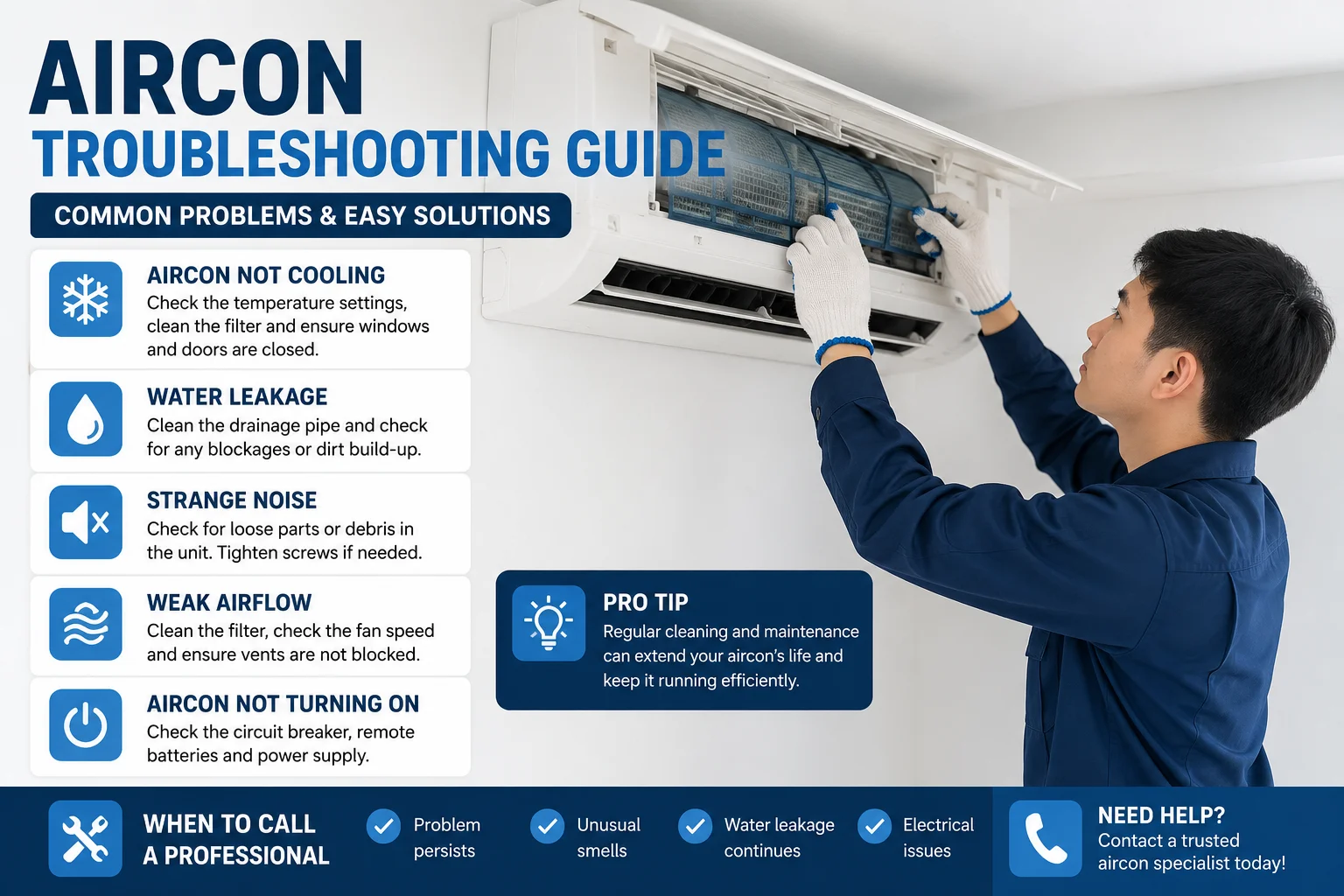
1. Air Conditioner Isn’t Cooling Properly
Poor cooling is probably the most common complaint.
Before assuming something major is wrong, check these simple things:
- Dirty air filters
- Incorrect thermostat settings
- Blocked air vents
- Closed windows or doors
- Outdoor condenser covered with dirt or leaves
A clogged air filter alone can reduce airflow dramatically. And yes, it happens more often than people realize.
If you’ve cleaned the filter and your aircon still blows warm air, the system may have low refrigerant or a faulty compressor. Those repairs require professional servicing.
2. Aircon Is Blowing Weak Air
Weak airflow usually means the cool air isn’t moving efficiently through your home.
Possible causes include:
- Dirty evaporator coil
- Blocked air ducts
- Clogged filters
- Faulty blower motor
- Frozen evaporator coil
Start by replacing or washing the filter.
If airflow doesn’t improve after cleaning, avoid forcing the system to run continuously. That only increases wear and electricity usage.
3. Water Is Leaking From the Indoor Unit
Finding water under your air conditioner can be alarming.
Usually, it’s caused by:
- Blocked drainage pipe
- Dirty drain pan
- Frozen evaporator coil
- Improper installation angle
- Condensation overflow
Sometimes a simple drain cleaning solves everything.
But if water continues leaking after cleaning, have the drainage system inspected before moisture damages your walls or ceiling.
4. Strange Noises Coming From the Air Conditioner
Air conditioners shouldn’t be loud.
Different sounds often point to different problems.
Buzzing
Could indicate:
- Loose electrical wiring
- Compressor issues
- Dirty condenser
Clicking
Usually normal during startup.
Constant clicking may signal electrical problems.
Grinding
Often points to worn motor bearings.
Rattling
Loose screws, panels, or internal components can create rattling sounds.
Don’t ignore unusual noises. They rarely disappear on their own.
5. Bad Smells Coming From the Aircon
A healthy air conditioner shouldn’t smell unpleasant.
Common odors include:
Musty Smell
Usually caused by mold or mildew growing inside the unit.
Burning Smell
May indicate overheating electrical components.
Turn off the unit immediately if you notice burning odors.
Rotten Smell
Sometimes bacteria accumulate inside the drainage system.
Regular cleaning and servicing help prevent odor problems before they start.
6. Air Conditioner Keeps Turning On and Off
Short cycling happens when the system starts and stops repeatedly.
Possible reasons include:
- Dirty air filter
- Oversized air conditioning unit
- Faulty thermostat
- Refrigerant problems
- Electrical faults
Short cycling wastes electricity and increases wear on important components.
And honestly… it’s one of those issues that should be checked sooner rather than later.
7. Aircon Remote Isn’t Working
Before replacing the remote, check the basics.
Try these steps:
- Replace the batteries
- Clean battery contacts
- Remove objects blocking the sensor
- Reset the remote
- Check for damaged buttons
Sometimes the issue isn’t the remote at all—it could be the receiver inside the indoor unit.
8. Air Conditioner Freezes Up
Ice on an air conditioner isn’t normal.
Frozen coils usually result from:
- Poor airflow
- Dirty filters
- Low refrigerant
- Faulty fan motor
- Dirty evaporator coil
Turn the system off immediately and allow the ice to melt.
Running the unit while frozen can damage the compressor, which is one of the most expensive parts to replace.
9. High Electricity Bills
A sudden increase in energy usage often means the air conditioner isn’t operating efficiently.
Common reasons include:
- Dirty filters
- Aging equipment
- Low refrigerant
- Thermostat problems
- Poor insulation
- Lack of maintenance
Even small maintenance tasks can noticeably improve efficiency.
Clean filters every few weeks during heavy use. It sounds simple because it is—but it works.
10. Air Conditioner Won’t Turn On
If nothing happens when you switch on the aircon, don’t immediately assume it’s dead.
Check:
- Power supply
- Circuit breaker
- Remote batteries
- Thermostat settings
- Timer mode
- Electrical outlet
If power reaches the unit and it still refuses to start, internal electrical components may need professional diagnosis.
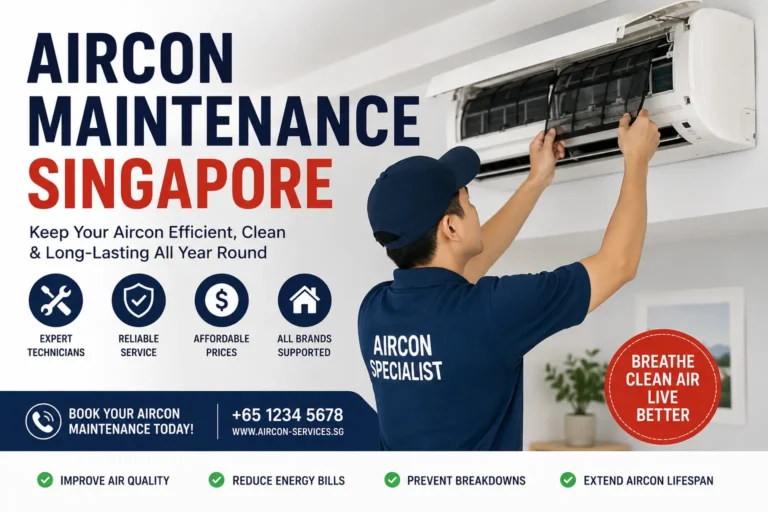
Preventive Maintenance Tips
The easiest repair is the one you never need.
Here are a few habits that keep your air conditioner running smoothly:
- Clean filters every 2 to 4 weeks
- Keep outdoor condenser free of debris
- Don’t block indoor vents with furniture
- Schedule professional servicing every 6 to 12 months
- Watch for unusual sounds or smells
- Keep drainage pipes clean
- Avoid setting extremely low temperatures continuously
Routine maintenance doesn’t just improve comfort.
It also helps lower energy bills and reduces unexpected breakdowns.
When Should You Call a Professional?
Some problems are safe to troubleshoot yourself.
Others require trained technicians.
Call an expert if you notice:
- Refrigerant leaks
- Compressor failure
- Burning smells
- Electrical problems
- Continuous water leakage
- Frozen coils that return repeatedly
- Complete system failure
- Loud mechanical noises
Trying to repair complex air conditioning components without proper tools can make the problem worse—and sometimes unsafe.
Why is my air conditioner running but not cooling?
The most common causes include dirty air filters, blocked airflow, low refrigerant levels, dirty condenser coils, or thermostat issues.
Can I fix a leaking air conditioner myself?
If the drain pipe is clogged, cleaning it may solve the problem. However, recurring leaks should be inspected by a qualified technician.
How often should I clean my aircon filter?
Most manufacturers recommend cleaning filters every two to four weeks, especially during periods of frequent use.
Why does my air conditioner smell musty?
Musty odors are usually caused by mold, mildew, or bacteria growing inside the indoor unit due to excess moisture.
Is annual aircon servicing necessary?
Yes. Regular servicing improves cooling performance, extends equipment life, reduces electricity consumption, and helps identify small problems before they become costly repairs.
Final Thoughts
Every homeowner experiences air conditioner problems at some point. The key is knowing which issues have simple solutions and which require professional attention.
This aircon troubleshooting guide gives you a practical starting point whenever your system isn’t performing as expected. From poor cooling and water leaks to unusual noises and rising energy bills, many problems can be identified quickly with a careful inspection.
And while DIY troubleshooting is helpful, regular maintenance remains the best way to avoid unexpected breakdowns. Keep your filters clean, schedule routine servicing, and pay attention to early warning signs. Your air conditioner will run more efficiently, last longer, and keep your home comfortable throughout the year.