Sungei Buloh Wetland Reserve: Wildlife, Trails & Visitor Guide
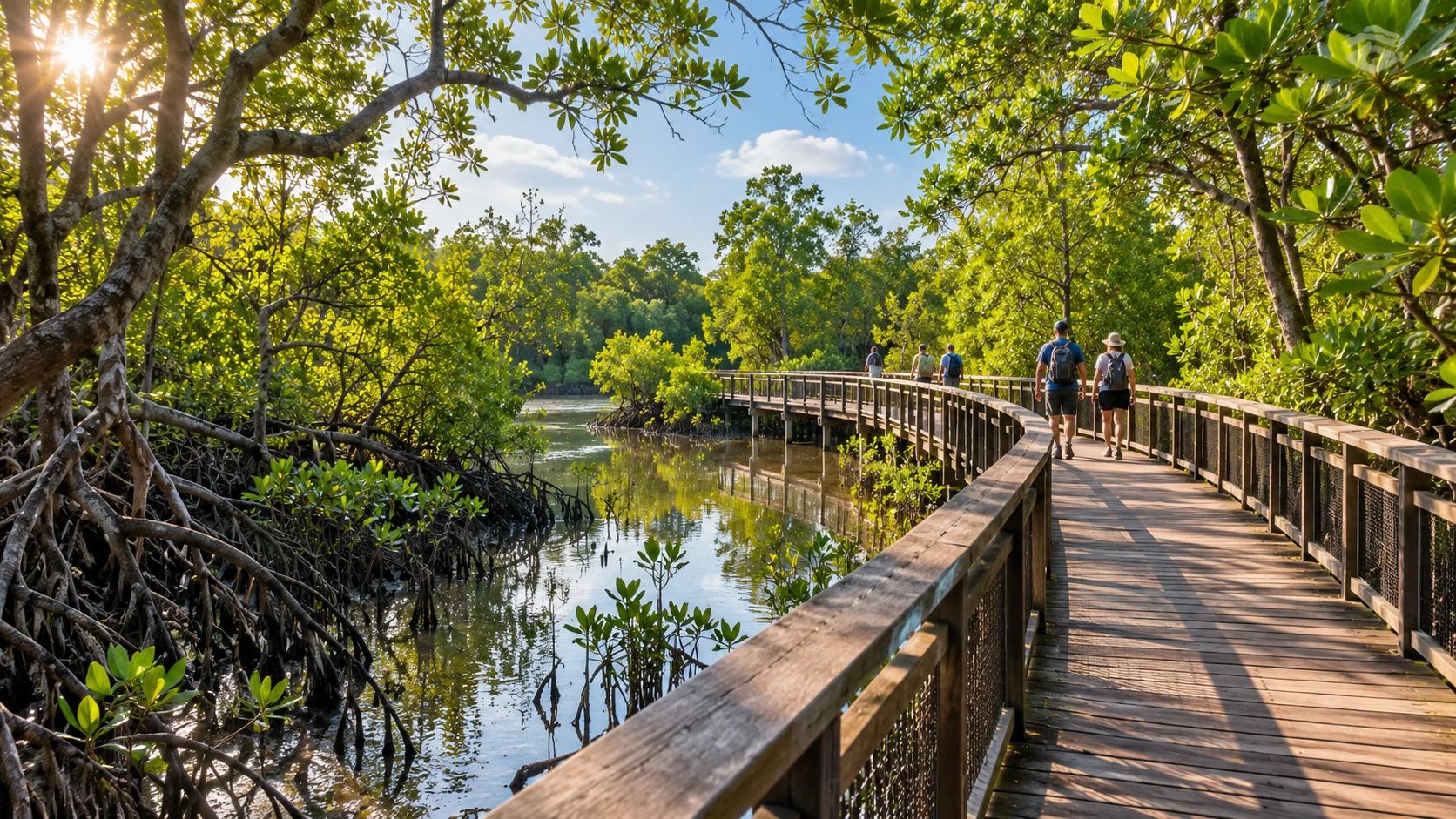
Sungei Buloh Wetland Reserve is one of Singapore’s most fascinating natural attractions, offering visitors a chance to explore mangrove forests, freshwater ponds, coastal wetlands and wildlife habitats. Located in the northwestern part of Singapore, this protected nature reserve is especially popular among birdwatchers, nature photographers, families and outdoor enthusiasts.
Unlike Singapore’s busy shopping districts and modern attractions, Sungei Buloh Wetland Reserve offers a quieter environment where visitors can observe wildlife in its natural surroundings. Its walking trails, observation hides and scenic boardwalks provide opportunities to discover a different side of the island.
The reserve is particularly well known for migratory birds that travel thousands of kilometres along the East Asian–Australasian Flyway. Visitors may also encounter monitor lizards, mudskippers, crabs and other animals that depend on the wetland ecosystem.
Where Is Sungei Buloh Wetland Reserve Located?
Sungei Buloh Wetland Reserve is situated in the Kranji area of northwestern Singapore, close to the Johor Strait. Its location makes it an important coastal habitat for resident wildlife and migratory birds.
The reserve is accessible through different visitor entrances, including the Wetland Centre and Visitor Centre. These provide access to different sections of the reserve and their surrounding trails.
Its location away from Singapore’s main commercial districts creates a peaceful atmosphere, making it suitable for visitors interested in nature walks and wildlife observation.
Sungei Buloh Wetland Reserve Visitor Information
| Information | Details |
|---|---|
| Location | Kranji, Northwestern Singapore |
| Main address | 301 Neo Tiew Crescent, Singapore 718925 |
| Admission fee | Free |
| Wetland Centre | 7:00 AM – 7:00 PM |
| Visitor Centre | 7:00 AM – 7:00 PM |
| Best visiting time | Early morning |
| Recommended duration | 2–3 hours |
| Main attractions | Mangrove boardwalks, wildlife trails, birdwatching hides |
| Suitable for | Families, photographers, nature lovers and birdwatchers |
Opening hours and access arrangements may change due to maintenance or weather conditions. Visitors should check the official NParks website before travelling.
History of Sungei Buloh Wetland Reserve
Sungei Buloh Wetland Reserve has an important place in Singapore’s environmental conservation history.
The area was once associated with fish and prawn farming activities. Its ecological importance became increasingly recognised when conservationists identified the wetlands as a valuable habitat for migratory birds.
In 1989, the Singapore government announced plans to conserve the area as a nature park.
The site officially opened as Sungei Buloh Nature Park in 1993, allowing the public to explore its wetlands while supporting environmental education and conservation.
In 2002, it was designated a nature reserve, becoming Singapore’s first gazetted wetland reserve.
Another important milestone came in 2003, when Sungei Buloh was recognised as Singapore’s first ASEAN Heritage Park.
Today, the reserve continues to protect coastal habitats while providing opportunities for scientific research, environmental education and responsible nature tourism.
Why Is Sungei Buloh Wetland Reserve Famous?
Sungei Buloh Wetland Reserve is famous for its biodiversity, mangrove ecosystems and importance as a stopover site for migratory birds.
Every year, birds travelling between northern breeding grounds and southern wintering areas use wetlands across Asia to rest and feed.
Sungei Buloh provides valuable feeding areas where shorebirds can search for small aquatic animals in exposed mudflats.
The reserve is also known for its accessible nature trails, allowing visitors to observe mangrove environments without disturbing sensitive habitats.
Its international conservation recognition has helped establish Sungei Buloh as one of Singapore’s important natural heritage sites.
Best Things to Do at Sungei Buloh Wetland Reserve
1. Explore the Mangrove Boardwalk
The mangrove boardwalk is one of the most interesting attractions at Sungei Buloh Wetland Reserve.
Visitors can walk through sections of mangrove forest while observing the unusual root systems that allow these trees to survive in muddy, salty coastal environments.
Some mangrove species develop exposed breathing roots, while others have supporting roots that help them remain stable in soft sediment.
During low tide, visitors may notice small crabs moving across the mud and mudskippers resting near shallow pools.
The boardwalk provides an excellent opportunity to understand how mangrove forests support coastal biodiversity.
2. Go Birdwatching at the Wetlands
Birdwatching is one of the main reasons people visit Sungei Buloh Wetland Reserve.
The reserve lies along the East Asian–Australasian Flyway, an important migration route used by birds travelling between northern Asia and Australasia.
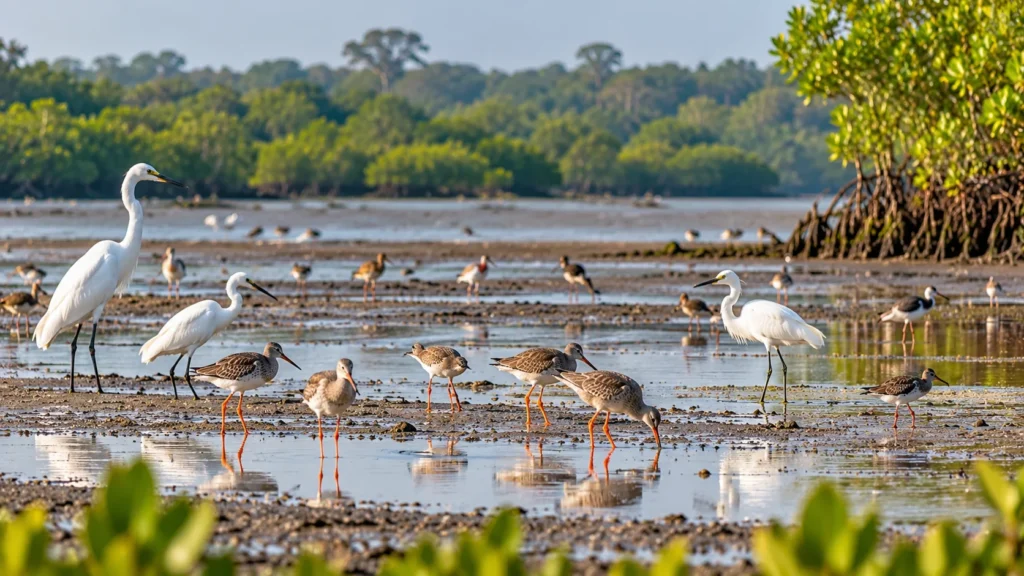
During the migratory season, visitors may observe different shorebird species feeding and resting around the wetlands.
Commonly recorded birds include:
- Common Redshank
- Common Greenshank
- Marsh Sandpiper
- Pacific Golden Plover
- Whimbrel
- Little Egret
- Grey Heron
Bird sightings vary depending on the season, tide, weather and time of day.
Bringing binoculars can make the experience more enjoyable, particularly when birds are feeding far from the walking trails.
3. Spot Monitor Lizards in Their Natural Habitat
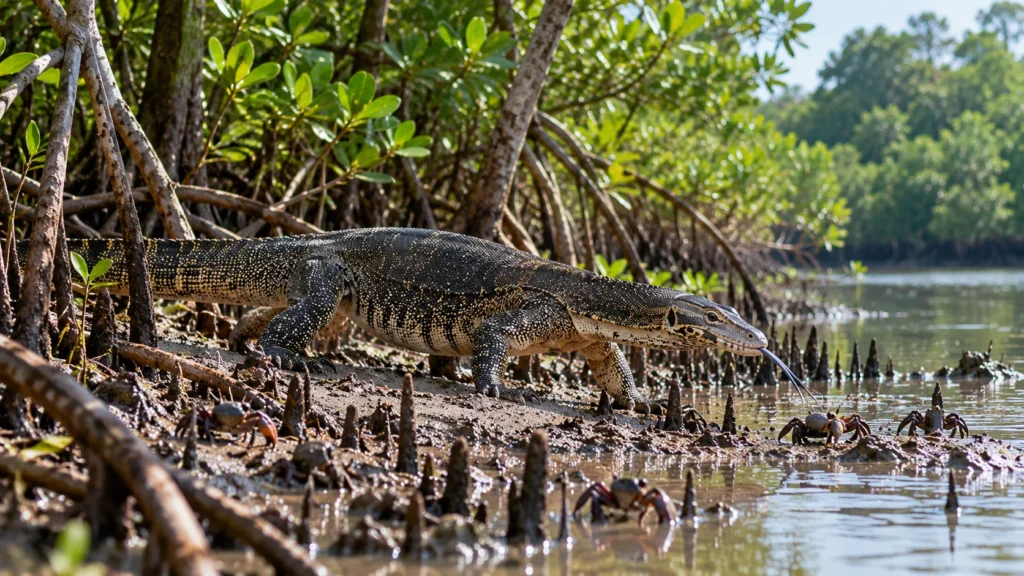
Sungei Buloh Wetland Reserve is also known for sightings of large water monitor lizards.
These reptiles are often seen swimming through waterways, resting near muddy banks or moving slowly along the trails.
Water monitor lizards are strong swimmers and play an important role in the ecosystem as predators and scavengers.
Although they generally avoid people, visitors should maintain a safe distance and never attempt to feed or touch them.
Watching these animals in their natural environment can be one of the most memorable experiences during a visit.
4. Walk Along the Coastal Trails
The coastal trails offer beautiful views of the surrounding wetlands, vegetation and Johor Strait.
Walking through these areas gives visitors an opportunity to experience Singapore’s coastal environment away from crowded urban attractions.
Some sections include viewing platforms and sheltered observation areas.
The scenery changes throughout the day as sunlight, water levels and tidal conditions affect the appearance of the wetlands.
Early morning walks are especially pleasant because temperatures are generally cooler and wildlife activity can be easier to observe.
5. Discover Mudskippers and Mangrove Crabs
The muddy areas around Sungei Buloh are home to fascinating small animals.
Mudskippers are unusual fish capable of moving across exposed mud using their fins. They can often be seen near mangrove roots during low tide.
Visitors may also notice fiddler crabs, which are recognised by the enlarged claw found on males.
These small animals are essential parts of the wetland food web.
Observing them offers a closer look at how different species have adapted to challenging coastal conditions.
6. Enjoy Nature Photography
Sungei Buloh Wetland Reserve is an excellent destination for nature photographers.
The combination of mangrove forests, wildlife, coastal scenery and changing natural light creates many photographic opportunities.
Visitors can photograph birds from observation hides, capture reflections on calm water or focus on detailed patterns in mangrove roots.
A telephoto lens is useful for wildlife photography because it allows photographers to capture animals without approaching them closely.
Photography should always be conducted responsibly, without disturbing wildlife or blocking walking paths.
Wildlife You Can See at Sungei Buloh Wetland Reserve
The reserve supports a variety of wildlife because it contains several interconnected habitats.
These include mangrove forests, tidal mudflats, freshwater areas and coastal vegetation.
Migratory and Resident Birds
Birds are among the most important animals found at Sungei Buloh.
Migratory shorebirds visit seasonally, while resident birds can be observed throughout the year.
Herons, egrets and kingfishers are among the birds visitors may encounter around the waterways.
The best birdwatching opportunities often depend on tidal conditions, as water levels influence where birds gather to feed.
Reptiles
Water monitor lizards are regularly associated with the reserve.
Saltwater crocodiles may also occur in the wetlands. Sightings are not guaranteed, and visitors must follow all safety signs and instructions.
Visitors should remain on designated paths and avoid approaching the water’s edge where access is restricted.
Fish and Aquatic Animals
The wetlands support mudskippers, small fish, crabs, molluscs and other aquatic organisms.
Many of these animals provide food for larger wildlife, including birds and reptiles.
Their presence highlights the importance of maintaining healthy tidal habitats.
Mangrove Plants
Mangrove trees are among the reserve’s most important plant species.
Their root systems help trap sediment, provide shelter for animals and protect coastal areas from erosion.
Mangroves also store carbon in their vegetation and soils, contributing to climate regulation.
Best Time to Visit Sungei Buloh Wetland Reserve
Sungei Buloh Wetland Reserve can be visited throughout the year, but the experience changes with the seasons.
Visitors interested in migratory birds should consider the main migration period, generally from September to March.
During these months, different shorebird species may use the reserve as feeding and resting grounds.
For comfortable walking conditions, early morning is usually preferable.
Singapore’s tropical climate can become hot and humid later in the day, particularly along exposed trails.
Seasonal Visiting Guide
| Period | What to Expect | Best Activities |
|---|---|---|
| January–March | Migratory birds may still be present | Birdwatching and photography |
| April–June | More emphasis on resident wildlife | Mangrove walks and nature exploration |
| July–August | Resident birds and wetland wildlife | Nature photography and educational walks |
| September–November | Autumn bird migration | Migratory bird observation |
| December | Migratory birds and potentially wetter weather | Birdwatching and scenic walks |
Wildlife sightings are never guaranteed. Visitors should also consider tide levels and weather forecasts when planning their trip.
How to Get to Sungei Buloh Wetland Reserve
There are several ways to reach Sungei Buloh Wetland Reserve, depending on where visitors are travelling from.
By MRT and Bus
Kranji MRT Station on the North–South Line is a common starting point for visitors using public transport.
From the station, travellers can continue by connecting bus services towards the reserve area.
Bus 925 is one service associated with access to the Kranji countryside, although operating patterns and the nearest suitable stop should be checked before travelling.
Visitors should confirm the latest routes using an official transport journey planner.
By Car or Taxi
Travelling by car or taxi can be more convenient for families, photographers carrying equipment and visitors unfamiliar with the Kranji area.
Drivers should choose the correct entrance before starting their journey because the Visitor Centre and Wetland Centre serve different parts of the reserve.
Parking availability may be limited during busy periods.
By Private-Hire Vehicle
Private-hire services provide another convenient option.
Visitors can select the appropriate entrance as their destination and avoid the need for public transport transfers.
For the return journey, it is helpful to arrange transport before leaving, particularly during quieter periods.
Sungei Buloh Wetland Reserve Walking Trails
The reserve offers different walking routes that allow visitors to explore its habitats at a comfortable pace.
Some trails pass through mangrove vegetation, while others lead towards observation hides, ponds and coastal viewpoints.
Visitors should choose a route based on their available time, walking ability and interests.
Short Nature Walk
A shorter visit is suitable for families or travellers who want to experience the mangrove environment without spending several hours outdoors.
Visitors can explore accessible boardwalk sections, observe small wildlife and stop at nearby viewing areas.
Wildlife Observation Walk
Visitors interested in birdwatching can spend more time around the wetland observation hides.
These areas are designed to support wildlife viewing while reducing disturbance to animals.
Patience is important because birds and other wildlife may remain hidden or move between feeding areas.
Extended Nature Exploration
Visitors with more time can explore additional designated trails and different sections of the reserve.
An extended visit provides more opportunities to experience the contrast between mangrove forests, open wetlands and coastal habitats.
Trail access can change because of maintenance, conservation work or weather conditions.
Is Sungei Buloh Wetland Reserve Suitable for Families?
Sungei Buloh Wetland Reserve can be a rewarding destination for families with children.
The reserve offers opportunities for children to observe animals, learn about coastal habitats and understand the importance of environmental protection.
Unlike indoor attractions, the experience encourages curiosity and direct observation.
Children may enjoy spotting crabs, identifying birds and discovering how mangrove roots grow.
Parents should supervise young children, particularly near waterways and areas where wildlife may appear.
Families should also bring drinking water, suitable footwear and protection from the sun.
What to Bring When Visiting Sungei Buloh Wetland Reserve
Preparing for a visit can make the experience more comfortable.
Lightweight clothing and comfortable walking shoes are recommended because Singapore’s weather is often warm and humid.
Visitors should carry sufficient drinking water, especially if they plan to spend several hours exploring.
Insect repellent may also be useful in areas with mosquitoes.
A small pair of binoculars is helpful for spotting birds and other animals from a distance.
Visitors interested in photography may want to bring a camera with a zoom lens.
An umbrella or lightweight raincoat can be useful because tropical showers may develop unexpectedly.
Safety Tips for Visitors
Sungei Buloh is a protected wildlife habitat, and visitors should respect the animals living there.
Some animals, including water monitor lizards and crocodiles, may be encountered in or near wetland environments.
Visitors should never approach, feed or provoke wildlife.
Walking should be restricted to designated trails, boardwalks and approved observation areas.
Food should be stored securely, and all rubbish should be disposed of properly.
Visitors should also pay attention to warning signs and follow instructions issued by park staff.
During thunderstorms or severe weather, outdoor activities should be postponed or stopped.
Why Sungei Buloh Wetland Reserve Is Important for Conservation
Sungei Buloh Wetland Reserve plays an important role in protecting Singapore’s remaining natural coastal habitats.
Wetlands provide food, shelter and breeding or resting areas for many species.
The reserve is particularly valuable to migratory birds because long-distance migration requires suitable places where birds can replenish their energy.
Without healthy wetlands along their migration routes, many shorebird populations would face additional survival challenges.
Mangrove ecosystems also contribute to coastal protection by stabilising sediment and reducing the impact of waves.
They support fish and invertebrate populations while storing significant amounts of carbon.
Protecting these habitats helps maintain ecological processes that benefit both wildlife and surrounding communities.
Educational Opportunities at Sungei Buloh Wetland Reserve
The reserve provides valuable learning opportunities for students, teachers and nature enthusiasts.
Visitors can learn about wetland ecology, bird migration, biodiversity and the relationship between plants and animals.
Observation areas and educational displays help explain how mangrove ecosystems function.
Students can also develop an appreciation for conservation by observing wildlife directly.
The reserve demonstrates how protected natural areas can coexist with a highly urbanised country.
For schools and environmental groups, Sungei Buloh offers a setting for outdoor learning and discussions about Singapore’s natural heritage.
Frequently Asked Questions
1. Is Sungei Buloh Wetland Reserve free to enter?
Yes, admission to Sungei Buloh Wetland Reserve is free for visitors.
2. What is the best time to visit Sungei Buloh Wetland Reserve?
Early morning is generally best for cooler weather and wildlife observation. September to March is particularly popular for migratory birdwatching.
3. How long should I spend at Sungei Buloh Wetland Reserve?
Most visitors should allow approximately two to three hours, although wildlife enthusiasts may prefer a longer visit.
4. Are there crocodiles at Sungei Buloh Wetland Reserve?
Yes, saltwater crocodiles may be present. Visitors should maintain a safe distance and follow all wildlife safety signs.
5. Can children visit Sungei Buloh Wetland Reserve?
Yes, families can visit the reserve, but children should be supervised and remain on designated walking paths.
6. What animals can be seen at Sungei Buloh Wetland Reserve?
Visitors may encounter migratory birds, herons, monitor lizards, mudskippers, mangrove crabs and other wetland wildlife.
7. Is Sungei Buloh Wetland Reserve worth visiting?
Yes, it is an excellent destination for visitors interested in wildlife, birdwatching, mangrove forests and peaceful nature walks.
Final Thoughts
Sungei Buloh Wetland Reserve offers a unique opportunity to experience Singapore’s natural environment beyond its urban attractions.
Its mangrove forests, coastal wetlands and birdwatching areas provide a valuable glimpse into the island’s biodiversity.
The reserve is particularly appealing to visitors who enjoy quiet outdoor experiences, nature photography and wildlife observation.
Planning a visit during the early morning and allowing sufficient time to explore the trails can make the experience more enjoyable.
For anyone interested in discovering Singapore’s natural heritage, Sungei Buloh Wetland Reserve remains one of the country’s most rewarding nature destinations.