
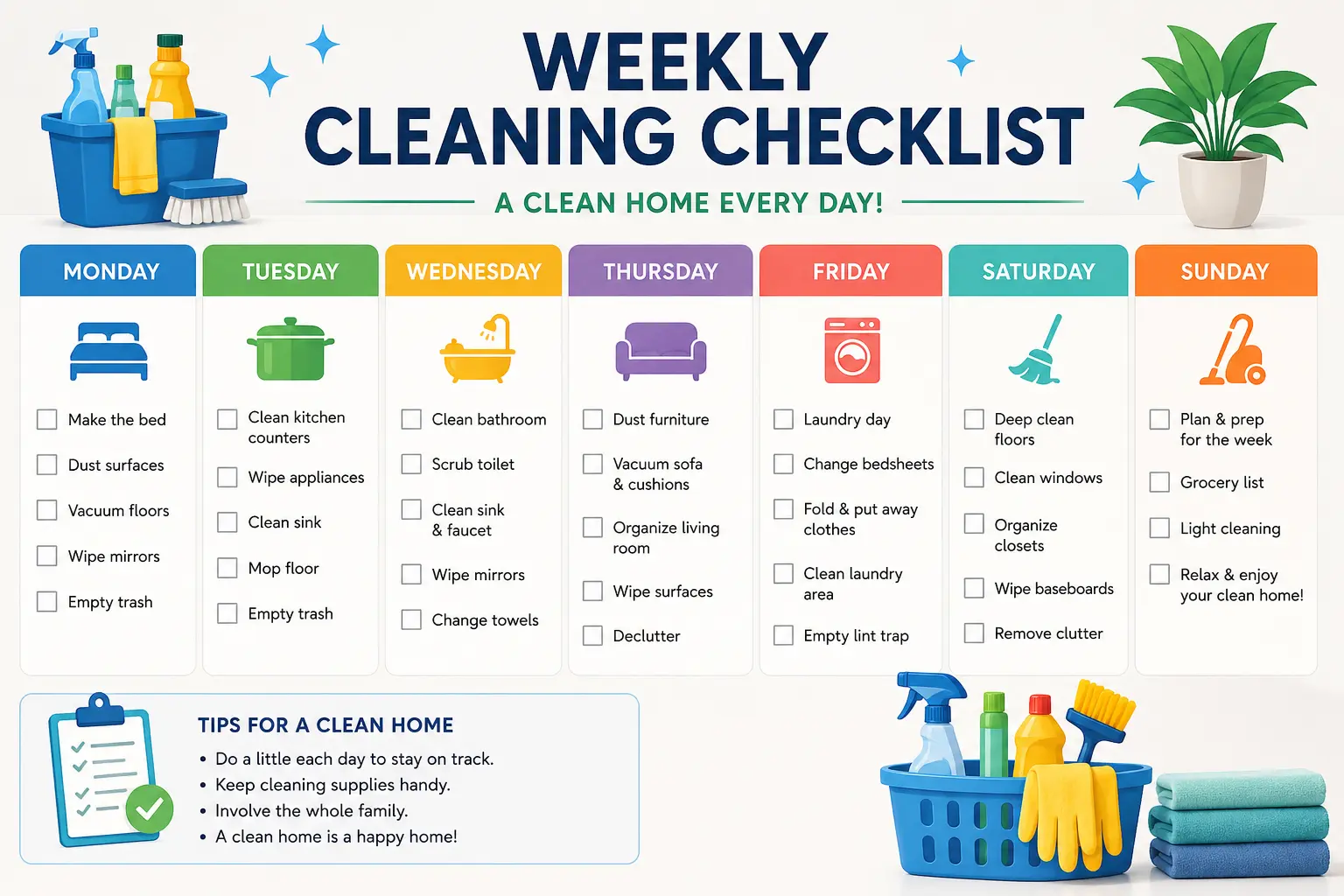
Weekly Cleaning Checklist: A Simple Routine for a Cleaner, Healthier Home
Life gets busy. Work piles up, kids leave toys everywhere, pets somehow manage to spread fur into every corner, and before you know it… the house feels messy again. The good news? You don’t need to spend your entire weekend scrubbing floors and organizing closets.
A weekly cleaning checklist helps you stay on top of household chores without feeling overwhelmed. Instead of tackling everything at once, you divide cleaning into manageable tasks that keep your home fresh, organized, and comfortable all week long.
Whether you live in a small apartment or a large family home, this guide will help you build a cleaning routine that’s realistic, easy to follow, and actually sustainable.
Why You Need a Weekly Cleaning Checklist
Cleaning becomes much easier when it turns into a habit rather than a major project.
A simple checklist helps you:
- Prevent dirt and clutter from building up
- Save time during weekends
- Reduce stress by keeping your home organized
- Improve indoor air quality
- Make deep cleaning less demanding
- Create a healthier environment for your family
The best part? Most weekly tasks only take 15 to 30 minutes when done regularly.
What Makes a Good Weekly Cleaning Checklist?
A useful checklist focuses on the areas that collect the most dust, dirt, and germs during a normal week.
It shouldn’t include seasonal projects like washing curtains or cleaning behind appliances. Those belong on monthly or quarterly schedules.
Instead, your weekly routine should cover:
- Kitchen maintenance
- Bathroom cleaning
- Dust removal
- Vacuuming
- Floor care
- Laundry
- Trash removal
- General tidying
Simple. Practical. Easy to repeat.
Your Complete Weekly Cleaning Checklist
Here’s a routine you can follow every week.
1. Clean Kitchen Surfaces
The kitchen gets used every single day, making it one of the most important spaces to maintain.
Every week:
- Wipe countertops thoroughly
- Clean cabinet handles
- Disinfect sinks
- Scrub the stovetop
- Wipe appliance exteriors
- Clean microwave inside and outside
- Empty crumbs from the toaster
Food residue builds up quickly. Staying consistent prevents stubborn grease from forming.
2. Sanitize the Bathroom
Bathrooms need weekly attention to keep bacteria and mold under control.
Include these tasks:
- Scrub toilets
- Clean sinks
- Wipe mirrors
- Disinfect faucets
- Wash shower walls
- Clean bathtub
- Replace used towels
- Empty bathroom trash
And don’t forget the light switches and door handles. They collect more germs than most people realize.
3. Vacuum Every Room
Dust, pet hair, and crumbs seem to appear out of nowhere.
Vacuum:
- Carpets
- Area rugs
- Hallways
- Bedrooms
- Living room
- Under furniture when possible
- Stairs
If you have pets, you may need to vacuum high-traffic areas twice each week.
4. Mop Hard Floors
Vacuuming removes loose debris.
Mopping removes the sticky dirt that vacuum cleaners leave behind.
Focus on:
- Kitchen floors
- Bathrooms
- Entryways
- Dining room
- Laundry room
Warm water and a gentle floor cleaner usually work well for most flooring types.
5. Dust Furniture and Surfaces
Dust accumulates faster than many people think.
Work from top to bottom:
- Shelves
- TV stands
- Coffee tables
- Side tables
- Ceiling fan blades
- Picture frames
- Window sills
- Lamps
- Bookshelves
Microfiber cloths trap dust instead of simply pushing it around.
6. Change Bed Sheets
Fresh bedding improves sleep and reduces allergens.
Each week:
- Wash bed sheets
- Replace pillowcases
- Shake out comforters
- Rotate blankets if needed
People with allergies may benefit from changing pillowcases twice each week.
7. Do the Laundry
Laundry can pile up surprisingly fast.
A weekly routine includes:
- Clothing
- Towels
- Bedding
- Kitchen towels
- Bath mats
Sorting clothes before washing also helps protect delicate fabrics.
8. Empty All Trash Bins
Kitchen trash isn’t the only bin that needs attention.
Remember to empty:
- Bathroom bins
- Office trash
- Bedroom waste baskets
- Recycling containers
After emptying them, wipe the inside of each bin to prevent odors.
9. Wipe Frequently Touched Surfaces
These areas often carry the highest number of germs.
Clean:
- Light switches
- Door handles
- Refrigerator handles
- Cabinet knobs
- Remote controls
- Computer keyboards
- Phones
This task only takes a few minutes but makes a noticeable difference.
10. Declutter Common Areas
Clutter makes even clean homes feel messy.
Spend 10–15 minutes putting away:
- Shoes
- Toys
- Blankets
- Chargers
- Books
- Clothing
Sometimes that’s all a room needs to feel organized again.
Sample Weekly Cleaning Schedule
Breaking chores into daily tasks makes them easier to manage.
Monday
- Vacuum living room
- Dust furniture
- Empty trash
Tuesday
- Clean bathrooms
- Wash towels
Wednesday
- Kitchen deep clean
- Wipe appliances
Thursday
- Laundry
- Change bed sheets
Friday
- Mop floors
- Dust remaining rooms
Saturday
- Declutter
- Organize entryway
- Clean mirrors
Sunday
- Relax
- Catch up on anything missed
Notice how nothing feels overwhelming? That’s the goal.
Cleaning Supplies You’ll Want Nearby
Keeping supplies together saves time every week.
A basic cleaning kit includes:
- Microfiber cloths
- Vacuum cleaner
- Mop
- Bucket
- All-purpose cleaner
- Glass cleaner
- Bathroom disinfectant
- Toilet brush
- Scrub sponge
- Rubber gloves
- Baking soda
- White vinegar
- Garbage bags
Store everything in a portable caddy so you can move easily from room to room.
Tips to Stick With Your Weekly Cleaning Checklist
Even the best routine won’t work if it’s impossible to maintain.
Here are a few practical tips.
Set a Timer
Cleaning often feels longer than it really is.
Set a 20-minute timer and focus on one room. You’ll probably finish more than expected.
Clean as You Go
Instead of waiting until the weekend:
- Wipe kitchen counters after cooking.
- Put dishes directly into the dishwasher.
- Hang towels after use.
- Return items to their proper place.
Small habits prevent major messes.
Involve the Whole Family
Everyone can help.
Children can:
- Pick up toys
- Make beds
- Dust shelves
- Feed pets
- Empty small trash bins
Sharing responsibilities makes cleaning faster and teaches valuable life skills.
Don’t Chase Perfection
A perfectly spotless home isn’t realistic.
Some weeks you’ll miss a task. That’s okay.
The purpose of a weekly cleaning checklist isn’t perfection—it’s consistency.
Common Weekly Cleaning Mistakes
Many people accidentally make cleaning harder than necessary.
Try to avoid these mistakes:
- Waiting until every room is messy
- Using too many cleaning products
- Forgetting high-touch surfaces
- Ignoring clutter
- Skipping vacuuming under furniture
- Cleaning rooms in random order
Working from top to bottom and room by room usually saves the most time.
How Long Should Weekly Cleaning Take?
It depends on your home size.
As a general guideline:
- Studio apartment: 1–2 hours
- Two-bedroom home: 2–3 hours
- Larger family home: 3–5 hours
Splitting chores throughout the week makes the workload feel much lighter.
Final Thoughts
A reliable weekly cleaning checklist keeps your home looking its best without turning cleaning into an exhausting all-day event. By tackling a handful of essential tasks every week, you’ll prevent clutter from taking over, reduce the need for marathon cleaning sessions, and enjoy a healthier, more comfortable living space.
Remember, consistency beats perfection every time. Some weeks you’ll finish every task, and other weeks you might skip a few—and that’s perfectly normal. What matters is building a routine that fits your lifestyle and sticking with it over time. Before long, these small weekly habits will become second nature, leaving you with more free time to enjoy your home instead of constantly cleaning it.