
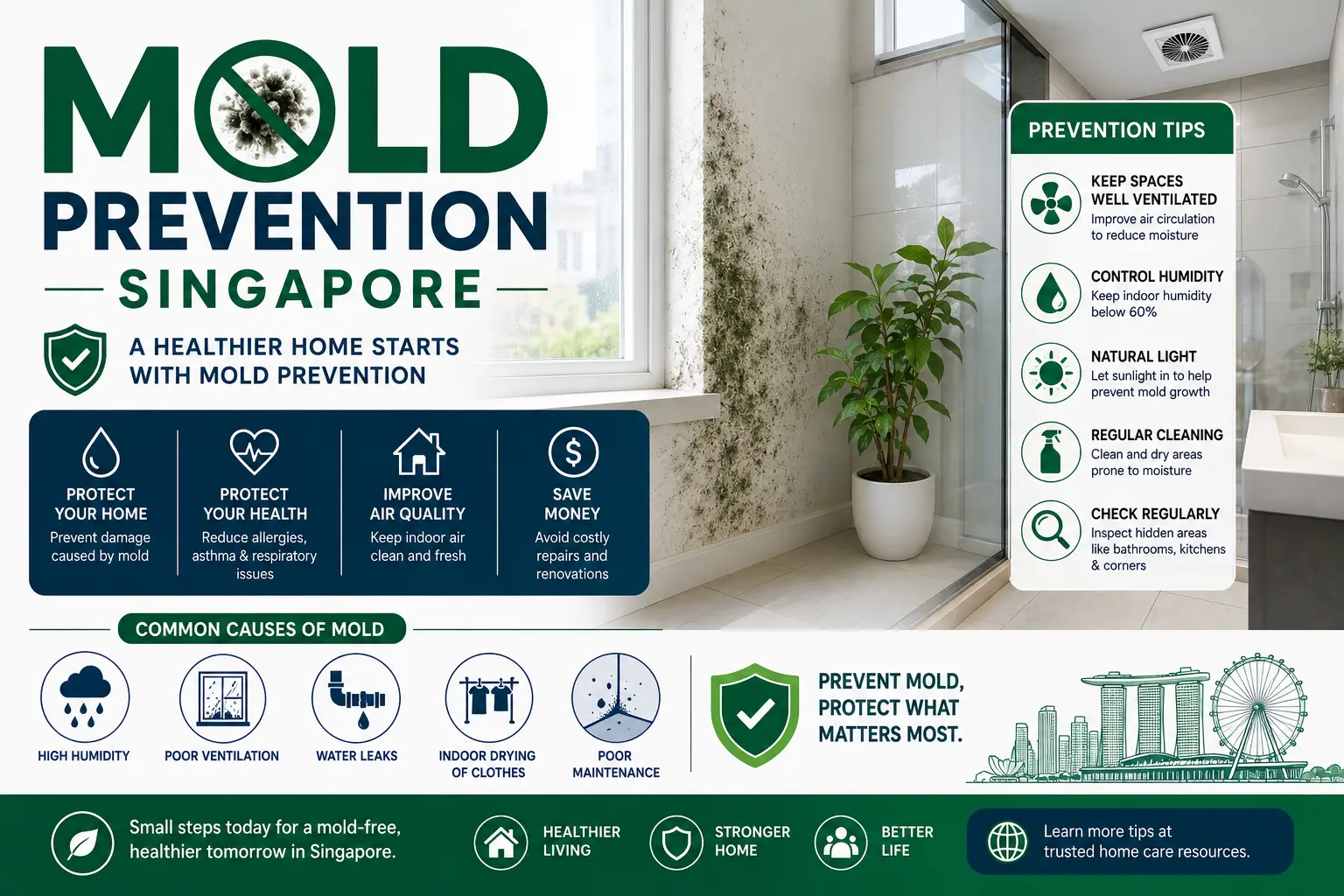
Mold Prevention Singapore: 10 Practical Ways to Keep Your Home Mold-Free All Year
If you’ve lived in Singapore for a while, you already know one thing—the humidity never really takes a break. Warm weather and frequent rain create the perfect environment for mold to grow inside homes, offices, and commercial buildings. It doesn’t always start with a dramatic black patch on the wall, either. Sometimes it’s just a faint musty smell, tiny dark spots around the window frame, or a damp corner that never seems to dry.
The good news? Preventing mold is much easier and more affordable than removing a severe infestation.
This guide covers practical and proven mold prevention Singapore tips that help protect your property, improve indoor air quality, and reduce the risk of expensive repairs later.
Why Mold Is a Common Problem in Singapore
Singapore’s tropical climate provides everything mold needs to thrive:
- High humidity throughout the year
- Frequent rainfall
- Limited airflow in some apartments
- Air-conditioned indoor environments
- Condensation on walls and windows
When moisture remains trapped on surfaces for more than a day or two, mold spores can begin to grow. Since mold spores naturally exist in the air, completely eliminating them isn’t possible—but controlling moisture is.
1. Keep Indoor Humidity Below 60%
Humidity is the biggest reason mold develops indoors.
Aim to keep indoor humidity between 45% and 60%. This simple change makes it much harder for mold to grow on walls, ceilings, furniture, and fabrics.
You can reduce humidity by:
- Using a dehumidifier
- Running the air conditioner consistently
- Opening windows during dry weather
- Using ceiling or standing fans
Many homeowners notice a significant improvement after reducing indoor moisture alone.
2. Improve Air Circulation
Poor ventilation allows damp air to stay trapped inside rooms.
Focus especially on:
- Bedrooms
- Bathrooms
- Kitchens
- Storerooms
- Walk-in wardrobes
Leave wardrobe doors open occasionally, avoid blocking air vents, and move large furniture a few centimetres away from walls. Small changes like these encourage better airflow.
And yes… even a fan running for a few hours each day can make a noticeable difference.
3. Repair Water Leaks Immediately
A tiny plumbing leak may seem harmless today.
A few weeks later? You might discover mold spreading behind cabinets or inside walls.
Check regularly for:
- Leaking pipes
- Roof leaks
- Window seal damage
- Ceiling stains
- Water around sinks
- Dripping air-conditioning units
Fixing leaks early is one of the most effective mold prevention Singapore strategies.
4. Dry Wet Areas Quickly
Bathrooms and kitchens stay damp longer than most parts of the home.
After showering:
- Wipe bathroom walls
- Dry glass panels
- Use the exhaust fan
- Leave the bathroom door open for ventilation
Likewise, clean up spilled water in kitchens immediately.
Mold doesn’t need standing water—it only needs moisture.
5. Clean Air Conditioner Filters Regularly
Air conditioners remove moisture from indoor air.
But dirty filters collect dust and organic particles that mold loves.
Experts generally recommend:
- Cleaning filters every two to four weeks
- Servicing air conditioners regularly
- Checking drainage pipes for blockages
A well-maintained air-conditioning system improves both cooling efficiency and indoor air quality.
6. Don’t Ignore Condensation
Water droplets on windows may seem harmless.
Actually, they’re an early warning sign that indoor humidity is too high.
Condensation often appears on:
- Glass windows
- Metal frames
- Mirrors
- Air-conditioning vents
Whenever you notice condensation, wipe it away and improve ventilation in the room.
It’s a small habit that helps prevent much bigger problems later.
7. Choose Mold-Resistant Materials
If you’re renovating your property, consider using materials designed to resist moisture.
Popular choices include:
- Mold-resistant paint
- Moisture-resistant drywall
- Anti-fungal sealants
- Waterproof coatings
- Mold-resistant ceiling boards
These materials won’t completely eliminate mold, but they significantly reduce the chances of growth.
8. Keep Your Home Clean
Dust isn’t just dust.
It contains tiny organic particles that mold feeds on.
Regular cleaning helps remove both dust and mold spores before they settle.
Pay attention to:
- Curtains
- Carpets
- Upholstery
- Window tracks
- Air vents
- Wardrobes
Vacuuming and wiping surfaces weekly can make a surprising difference.
9. Avoid Drying Clothes Indoors
Drying laundry inside releases large amounts of moisture into the air.
Over time, this increases indoor humidity and encourages mold growth.
Whenever possible:
- Dry clothes outdoors
- Use a dryer
- Ventilate the laundry area
- Run a dehumidifier if drying indoors is unavoidable
Many Singapore households experience recurring mold prevention singapore simply because too much moisture builds up from indoor laundry.
10. Schedule Professional Mold Inspections
Sometimes mold grows where you can’t see it.
Behind walls.
Inside ceilings.
Under flooring.
Inside air-conditioning ducts.
If you notice persistent musty smells, recurring mold prevention singapore patches, or unexplained allergy symptoms, professional inspections can identify hidden moisture sources before the problem becomes severe.
Early detection often saves significant repair costs.
Signs That Mold May Already Be Growing
Even with good prevention habits, it’s worth watching for warning signs.
Common indicators include:
- Musty or earthy smells
- Black, green, or white spots on walls
- Peeling paint
- Bubbling wallpaper
- Persistent condensation
- Allergy symptoms indoors
- Damp ceilings
- Discoloured grout
The earlier mold prevention singapore is addressed, the easier it is to remove.
Health Risks Associated With Mold
Mold doesn’t affect everyone equally.
Some people experience no symptoms at all, while others develop noticeable reactions.
Possible effects include:
- Sneezing
- Coughing
- Nasal congestion
- Eye irritation
- Skin irritation
- Asthma flare-ups
- Respiratory discomfort
Children, elderly individuals, and people with allergies may be particularly sensitive to prolonged mold prevention singapore exposure.
Simple Daily Habits That Prevent Mold
Sometimes prevention comes down to consistency rather than expensive equipment.
Try making these habits part of your routine:
- Open windows when weather permits.
- Use exhaust fans after cooking.
- Wipe wet bathroom surfaces.
- Empty dehumidifier tanks regularly.
- Clean air-conditioner filters.
- Inspect plumbing every few months.
- Keep furniture slightly away from exterior walls.
- Avoid clutter in humid storage spaces.
None of these tasks takes very long. Together, though, they make a real difference.
Final Thoughts
Living in Singapore means dealing with humidity almost every day, but mold prevention singapore doesn’t have to become a permanent problem. By controlling indoor moisture, improving ventilation, fixing leaks quickly, and maintaining a regular cleaning routine, homeowners can dramatically reduce the chances of mold growth.
The best mold prevention Singapore strategy isn’t based on a single product or one-time treatment. It’s a combination of smart daily habits, proper home maintenance, and early action whenever moisture appears.
A dry, well-ventilated home is not only more comfortable—it also protects your property, improves indoor air quality, and helps your family enjoy a healthier living environment for years to come.