Good Secondary Schools in Singapore: School Guide for Parents
Selecting a secondary school after PSLE can feel confusing, especially with so many choices across Singapore. Parents often search for good secondary schools in Singapore by looking at PSLE score, cut-off points, school reputation and academic results. These factors matter, but they only show part of the picture. A suitable school should also match a student’s interests, learning style, preferred subjects and daily routine. School culture, CCA choices, academic programmes and travel time can shape a child’s experience during the secondary years.
This guide covers popular school choices, PSLE admission ranges, Integrated Programme and O-Level pathways, Posting Groups, CCAs and other points parents can compare before making their Secondary 1 school preferences. The aim is to make school selection easier by looking at both admission chances and the type of environment where a child can learn, participate and develop confidence.
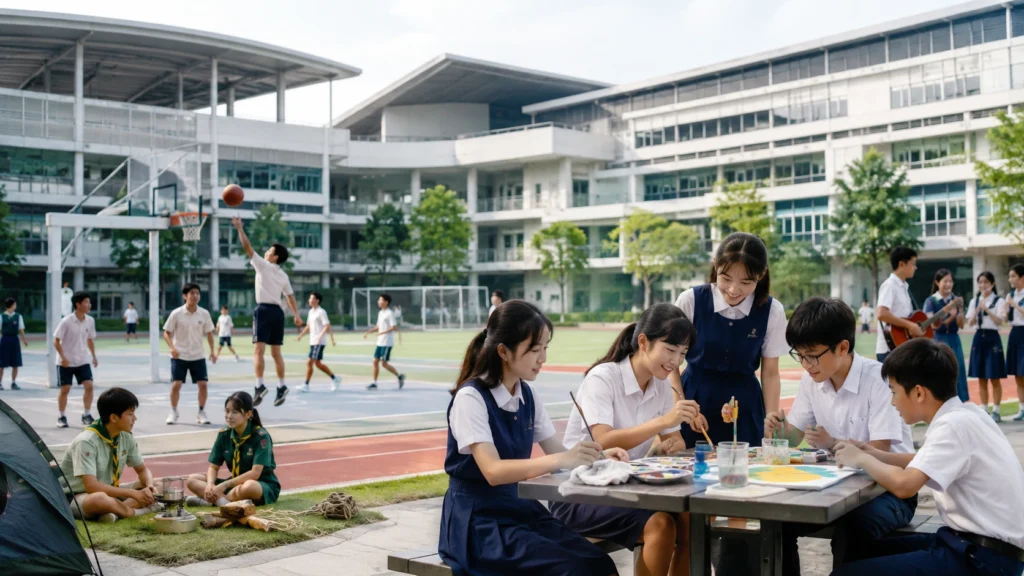
What Makes a Secondary School a Good Choice in Singapore?
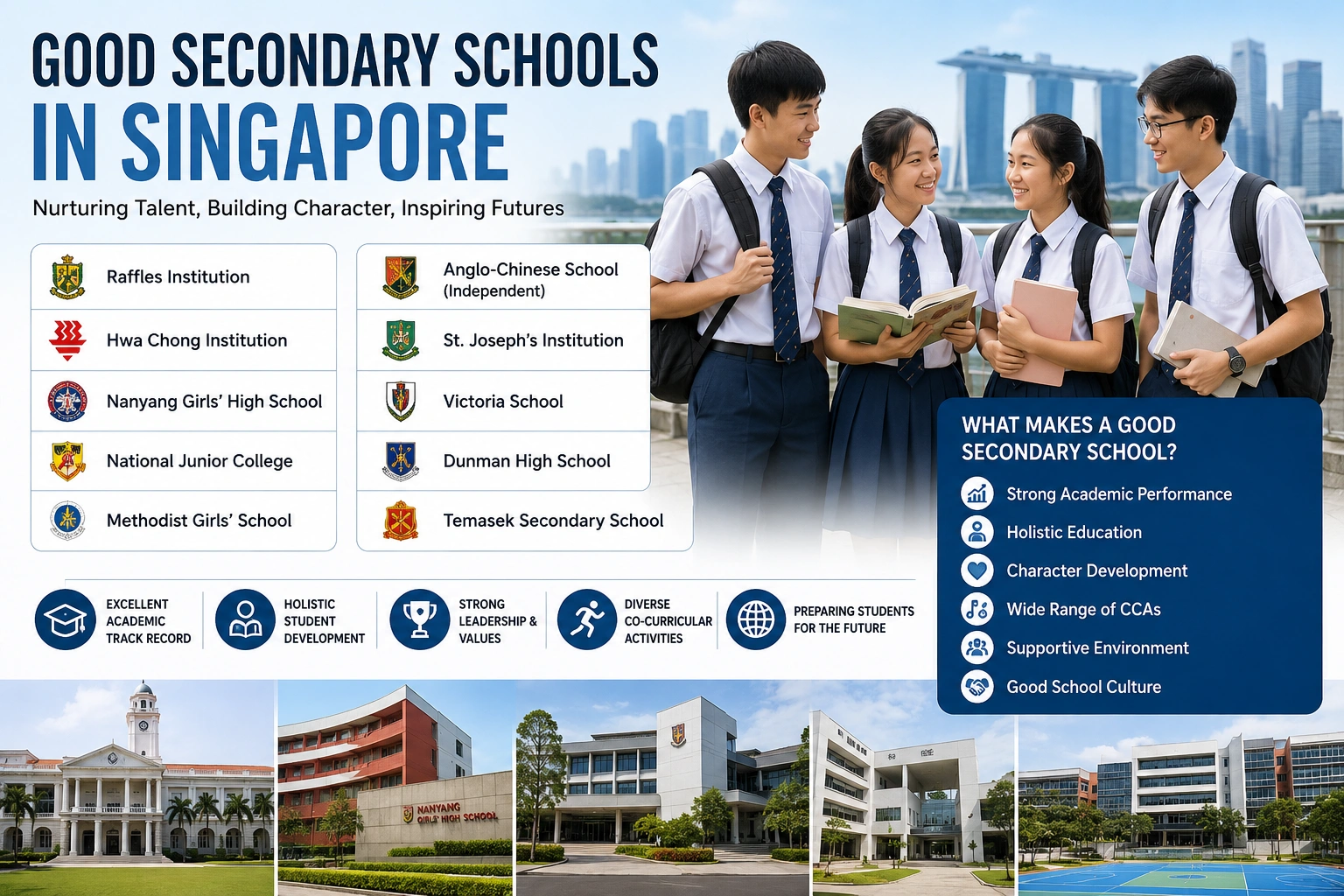
A secondary school’s COP can give parents an idea of admission competitiveness, but it does not tell the full story. A school may have a strong academic record yet feel unsuitable for a student who prefers a different learning style or has specific interests. Parents should compare several areas before deciding where to place their Secondary 1 school preferences. Academic performance, school culture, CCA choices, travel time, subject combinations and student programmes can all affect a child’s daily school life.
Academic Performance
Academic results are worth checking when comparing secondary schools in Singapore, especially if your child has clear academic goals. Look at the school’s academic programmes, subject choices, progression pathways and support available to students. A strong academic environment can suit students who enjoy challenging lessons, while others may prefer a school that gives equal attention to academics, activities and personal development.
School Culture and Learning Environment
School culture affects how students feel and interact during their secondary years. Parents can look at the school’s values, teaching approach, student support and general learning environment. An academically competitive school may suit a child who enjoys a demanding pace, while another student may perform better in a setting that feels more relaxed and supportive.
CCAs, Sports and Performing Arts
Co-curricular activities give students opportunities to develop interests outside regular lessons. Check the available CCA choices, especially if your child already enjoys sports, music, drama, dance, clubs or uniformed groups. Sports CCAs and performing arts can also provide opportunities for teamwork, competitions, performances and leadership.
Location and Daily Travel
School distance from home is another practical point to consider. A long daily journey can affect sleep, study time and participation in after-school activities. Compare MRT routes, bus connections and actual travelling time before making your school preferences. A school that is slightly less competitive but much easier to reach may be a better daily fit.
Subject Choices and Student Programmes
Check the available subject combinations and academic programmes before making a final decision. Some students may already have interests in science, languages, humanities, arts or technology. Others may prefer an Integrated Programme, while some may want the O-Level pathway. Reviewing these options early can help parents shortlist schools that match their child’s interests and future plans.
Good Secondary Schools in Singapore: Schools Parents Often Consider
Parents comparing good secondary schools in Singapore should look beyond school reputation and COP. Programme options, student interests, CCAs, school culture and location can make a school more suitable for one child than another.
Hwa Chong Institution
Hwa Chong Institution is known for its strong academic environment and Integrated Programme. It can suit students who enjoy challenging studies and independent learning.
Raffles Institution
Raffles Institution offers an Integrated Programme with a strong academic focus. Students can also take part in CCAs, leadership activities and other student programmes.
Raffles Girls’ School
Raffles Girls’ School is a popular choice for academically strong girls. Its IP pathway, CCAs and student development programmes are key areas for parents to review.
Nanyang Girls’ High School
Nanyang Girls’ High School offers an Integrated Programme and a broad selection of student activities. Affiliation may also be relevant for eligible students during school selection.
Methodist Girls’ School
Methodist Girls’ School provides different academic pathways alongside CCAs and student programmes. Parents can compare its options with their child’s PSLE profile and interests.
Anglo-Chinese School (Independent)
ACS(I) offers an Integrated Programme as well as other secondary pathways. Its academic programmes, sports, performing arts and leadership opportunities make it worth researching.
Catholic High School
Catholic High School provides IP and Posting Group pathways. Parents can compare its subject combinations, CCAs and learning environment before making school preferences.
Singapore Chinese Girls’ School
Singapore Chinese Girls’ School is a well-known girls’ school offering an Integrated Programme. Its academic options, CCAs and student development activities may suit different interests.
Comparing Secondary Schools by PSLE Score
A child’s PSLE score is a useful starting point when comparing secondary school choices, but it should not be the only deciding factor. The PSLE Achievement Level helps determine which Posting Group and schools may be suitable for a student. Parents should also check the programme offered, affiliation status and the latest admission information before submitting Secondary 1 preferences.
| School | Recent COP / Score Range | Programme | Affiliation |
| Hwa Chong Institution | Around AL 6 | Integrated Programme | Check eligibility |
| Raffles Institution | Around AL 6 | Integrated Programme | Check eligibility |
| Raffles Girls’ School | Around AL 6 | Integrated Programme | Check eligibility |
| Nanyang Girls’ High School | Around AL 6 | Integrated Programme | Check eligibility |
| Methodist Girls’ School | Around AL 6–8 | IP / Other pathways | Affiliated route available |
| Anglo-Chinese School (Independent) | Around AL 7–8 | IP / Other pathways | Affiliated route available |
| Catholic High School | Around AL 7–8 | IP / Posting Group pathways | Affiliated route available |
| Singapore Chinese Girls’ School | Around AL 7 | Integrated Programme | Affiliated route available |
| St. Joseph’s Institution | Around AL 7–8 | IP / Other pathways | Affiliation may apply |
| Dunman High School | Around AL 8 | Integrated Programme | Check current criteria |
How PSLE Achievement Level Affects School Choices
The PSLE Achievement Level gives parents a clearer picture of their child’s academic standing after PSLE. It can be used alongside school COP information to create a shortlist of realistic, competitive and safer school choices.
What Does the Previous Year’s COP Mean?
A school’s previous year’s COP shows the PSLE score of the last student admitted in that posting exercise. It is a reference point rather than a fixed admission requirement, since demand and available places can change each year.
Why COP Does Not Guarantee Admission
A student matching a previous COP is not automatically guaranteed a place. The number of applicants, school vacancies, choices submitted and tie-break situations can affect the final outcome. Parents should avoid treating an old COP as a guaranteed cut-off.
Affiliated vs Non-Affiliated Students
Some schools have affiliated primary schools, and eligible affiliated students may have different admission considerations from non-affiliated applicants. Parents should check the school’s current affiliation rules and admission requirements before making their school preferences.
What Secondary School Can You Choose With Your PSLE Score?
Your PSLE score gives you a starting point for building Secondary 1 school choices. Previous COP figures can show how competitive a school has been, but admission ranges can change each year. Parents should compare the latest school information with the child’s interests, preferred programme, affiliation status and travel time.
Good Secondary Schools for AL 6
Students with AL 6 can research some of Singapore’s most competitive secondary schools.
- Hwa Chong Institution — Integrated Programme with a strong academic focus.
- Raffles Institution — IP pathway with extensive academic and student programmes.
- Raffles Girls’ School — competitive girls’ school with an IP route.
- Nanyang Girls’ High School — IP option with academic and CCA opportunities.
Good Secondary Schools for AL 7
An AL 7 score gives families several competitive schools to research.
- Methodist Girls’ School — offers different academic pathways.
- Anglo-Chinese School (Independent) — IP and other secondary pathways.
- Catholic High School — IP and Posting Group options.
- Singapore Chinese Girls’ School — IP pathway with varied student activities.
- St. Joseph’s Institution — academic and co-curricular options.
Good Secondary Schools for AL 8
Students with AL 8 can consider schools with recent admission ranges around this level.
- Dunman High School — Integrated Programme option.
- Victoria School — strong school programmes and CCA choices.
- Cedar Girls’ Secondary School — academic and co-curricular opportunities.
- CHIJ St. Nicholas Girls’ School — different programmes and student activities.
Parents should check each school’s latest COP before making preferences, since a previous year’s score does not guarantee admission.
Options for Higher AL Scores
Students with higher AL scores still have many secondary school options across Singapore. The choice should match the student’s Posting Group, interests and preferred learning environment.
- Posting Group 1 — suitable schools and programmes based on the student’s eligible pathway.
- Posting Group 2 — options for students following the relevant secondary education route.
- Posting Group 3 — schools offering programmes suited to the student’s academic profile.
- Non-IP schools — can offer strong CCAs, academic programmes and student development opportunities.
- Schools near home — shorter travelling time can make daily routines easier.
- Schools with suitable CCAs — useful for students with strong sports, arts or club interests.
A higher PSLE AL should not lead parents to focus only on school reputation. The better approach is to shortlist secondary schools where the admission range, programme and school environment fit the child.
IP, O-Level and Posting Groups: Which Path Fits?
The Integrated Programme (IP) is a six-year route for students who prefer continuous academic study, while the O-Level pathway leads to a recognised examination at Secondary 4. Posting Groups 1, 2 and 3 determine the subject levels students can take based on their PSLE results. Parents should compare the child’s academic strengths, interests and preferred learning style before choosing a pathway.
Beyond COP: 7 Things Parents Should Compare
A school’s COP is useful for checking admission competitiveness, but parents should also compare the factors that shape a student’s everyday experience.
1. School Culture
Check the school’s values, learning environment and student activities. A comfortable school culture can make it easier for your child to settle in.
2. CCA Choices
Look at the available CCA choices, including sports, clubs, uniformed groups and performing arts. Pick a school that supports your child’s interests.
3. Subject Combinations
Check the subject combinations available in later secondary years. This matters if your child already has interests in science, languages, humanities or other subjects.
4. Academic Programmes
Compare IP, O-Level and other academic programmes. The best option should match your child’s learning style and future study plans.
5. Student Support
Review the school’s student support programmes, counselling services and academic help. These can be useful when students face academic or personal challenges.
6. School Facilities
Check classrooms, libraries, laboratories, sports areas and performing arts spaces. Good facilities can support both classroom learning and CCA activities.
7. Travelling Time
School distance from home can affect sleep, study time and CCA participation. Check the actual daily journey by MRT or bus before making your school preferences.
Good Secondary Schools in Singapore for Different Student Interests
A school that suits one student may not suit another. Parents can compare good secondary schools in Singapore by looking at their child’s interests, strengths and preferred activities rather than relying only on COP or reputation.

For Academically Strong Students
Students who enjoy challenging lessons may consider schools such as Hwa Chong Institution, Raffles Institution, Raffles Girls’ School and Nanyang Girls’ High School. Their academic programmes and IP pathways can suit students who enjoy a demanding study environment.
For Sports-Loving Students
Students who enjoy sports should check the school’s sports CCAs, training options and competition opportunities. Schools such as Anglo-Chinese School (Independent), St. Joseph’s Institution and Victoria School can be researched based on the sports available.
For Performing Arts Students
For students interested in music, drama or dance, parents should check the school’s performing arts CCAs and performance opportunities. The available groups can differ considerably between schools, so checking current CCA options is useful.
For Students Interested in Leadership
Students who enjoy taking responsibility can look for schools with leadership programmes, student councils, service activities and CCA leadership roles. These opportunities can help students build communication, teamwork and decision-making skills.
Secondary School Comparison Checklist
Parents can use this checklist to compare secondary school options in Singapore before arranging their final school preferences.
| What to Compare | Why It Matters | What Parents Should Check |
| PSLE COP | Shows admission competitiveness | Previous year’s range |
| Programme | Shapes the academic pathway | IP / O-Level |
| CCA | Matches student interests | Sports / Arts / Clubs |
| Location | Affects daily routine | Travel time |
| Subjects | Supports future interests | Available combinations |
| Culture | Shapes student experience | Learning environment |
| Affiliation | May affect admission route | Eligibility |
Common Mistakes Parents Make When Choosing a Secondary School
Looking Only at COP
A low COP does not always mean a school is the right fit. Parents should also check the academic programme, CCAs, school culture, subjects and student support before making school preferences.
Filling Every Choice With Highly Competitive Schools
Avoid putting only highly competitive schools on the list. Include realistic options and check travel time, school reputation and your child’s interests before finalising choices.
Ignoring Travel Time
A long commute can affect sleep, study time and CCA participation. Check the actual daily journey from home before ranking schools.
Choosing a School Only Because of Reputation
A well-known school may not match every student. Look at its learning environment, programmes and activities rather than relying only on its name.
Forgetting the Child’s Interests
Your child’s interests should have a place in the decision. Consider their preferred subjects, sports, performing arts, clubs and leadership activities.
FAQs About Good Secondary Schools in Singapore
What are the good secondary schools in Singapore?
Popular choices include Hwa Chong Institution, Raffles Institution, RGS, NYGH, MGS, ACS(I) and Catholic High School.
What PSLE score is needed for a good secondary school?
It depends on the school and programme. Check the latest COP and admission range before making school choices.
Which are the best IP secondary schools in Singapore?
Hwa Chong Institution, Raffles Institution, RGS, NYGH, ACS(I) and Dunman High are popular IP options.
How does secondary school posting work?
Students select schools based on their PSLE results, eligible Posting Group and school preferences, subject to available places.
What should parents consider when choosing a secondary school?
Compare COP, programmes, CCAs, subjects, school culture, location and your child’s interests.
What is a secondary school COP?
COP refers to the score of the last student admitted to a school in a particular posting exercise. It can change each year.
Are affiliated students given an admission advantage?
Eligible affiliated students may have different admission considerations. Parents should check the school’s current affiliation rules.
Is a school with a lower COP always better?
No. COP shows admission competitiveness, not the complete quality or suitability of a school for every student.
Final Thoughts on Choosing a Secondary School
Finding good secondary schools in Singapore is about more than COP. Use the previous year’s COP as a reference, then compare the programme CCAs, subjects, school culture and location. Build a balanced shortlist that matches your child’s PSLE score, interests and learning style. Check the latest admission details before submitting Secondary 1 preferences.