Primary School Ranking Singapore 2026: Top Schools & P1 Guide
Searching for a primary school ranking Singapore 2026 can give parents a quick starting point, but a school’s position on a list does not tell the whole story. Families also want to know about learning standards, school programmes, CCAs, location, student support, and the level of demand during Primary 1 admission. These details can make one school a better fit for a particular child than another.
Singapore does not publish a single official table that ranks every primary school from first to last. For that reason, school comparisons should look at several practical factors rather than relying on one number. This primary school ranking considers areas such as academic environment, admission demand, programme choices, school culture, student opportunities, and accessibility. It also looks at P1 registration, registration phases, balloting, school vacancies, and the points parents may want to check before choosing a school for their child.
What Is the Primary School Ranking in Singapore?
A primary school ranking Singapore list is a way to compare schools using several factors instead of looking at one academic figure. Parents may look at academic performance, school programmes, CCAs, admission demand, school culture, facilities, location and student opportunities before deciding where their child may fit best. A school that attracts strong demand may be popular, but popularity alone does not tell parents whether it suits their child. Singapore’s education system also places attention on different strengths, interests and student development, rather than judging schools only through examination results.
For that reason, Singapore primary school rankings should be treated as comparison tools rather than a final answer. A useful school comparison can bring together academic indicators, learning programmes, language opportunities, parent demand, travelling distance and the overall school environment. This gives families a clearer picture of the differences between top primary schools in Singapore and helps them look beyond a school’s name or reputation.
Does Singapore Have an Official Primary School Ranking?
Singapore does not publish a single official league table that places every primary school in a fixed first-to-last order. MOE provides information about schools, programmes and the education system, while parents can compare schools through factors such as programmes, school environment, location, admission demand and their child’s needs.
Why Do Parents Look at Primary School Rankings?
Parents often search for primary school rankings Singapore when they are starting to shortlist schools for their child. A ranking can make a long list of primary schools easier to compare, especially for families who are unfamiliar with different school programmes, locations or admission patterns. It can also help parents identify schools known for particular strengths, such as academic learning, bilingual education, CCAs or student development.
Admission demand is another reason these searches attract attention. A school with strong parent demand may have fewer available places and could become more competitive during P1 registration. At the same time, the nearest school may offer practical benefits that a highly sought-after school farther away cannot provide. Parents can use a primary school ranking as an initial reference, then check school culture, programmes, location, registration requirements and their child’s interests before making a final school choice.
How We Compare Primary Schools in Singapore
A school ranking becomes more useful when it reflects the things families actually look at before submitting a P1 registration. Instead of placing primary schools in order based on one academic measure, this comparison uses several signals to build a clearer school profile. The aim is to show where a school may stand out, while also recognising that a highly ranked school may not be the right match for every child.
The primary school ranking Singapore 2026 approach considers these areas:
- Academic indicators: The school’s learning environment and academic focus are considered as part of the comparison.
- Admission demand: Registration interest and competition for available places can show how strongly families prefer a school.
- School programmes: Special programmes, language learning and enrichment options add depth to the school experience.
- CCAs: Sports, arts, clubs and other co-curricular activities show the opportunities available outside classroom lessons.
- School culture: The learning atmosphere, values and wider school community can shape a child’s daily experience.
- Student development: Opportunities that support confidence, interests, skills and personal growth are considered.
- Location and travelling distance: A school’s distance from home can affect travel time, routines and family convenience.
- Parent preferences: Different families value different things, so the comparison recognises factors such as language, programmes, CCAs and school environment.
This method keeps Singapore primary school rankings focused on practical school comparison rather than presenting a single score as the final answer. It also gives parents useful points to check before deciding where to apply.
| Factor | What We Compare | Why Parents May Care |
| Academic Environment | Learning approach, academic focus and student support | Gives an idea of the school’s learning setting |
| Admission Demand | Registration interest, available places and competition | Shows how sought-after the school is |
| School Programmes | Language, enrichment and special learning opportunities | Helps match programmes with a child’s interests |
| CCAs & Activities | Sports, arts, clubs and student activities | Gives children opportunities beyond classroom lessons |
| School Culture | Values, school community and day-to-day environment | Can affect how comfortable a child feels at school |
| Student Development | Leadership, confidence, skills and wider participation | Looks beyond academic results |
| Location | Distance, transport options and daily travel | Helps families manage the school routine |
Top Primary Schools in Singapore 2026
The schools below are selected for comparison based on academic environment, school programmes, CCAs, school culture, student development, admission demand and location. They are not official MOE rankings. Each school has different strengths, so parents should compare these points with their child’s interests and P1 admission plans.
1. Nanyang Primary School
Main Strength: Strong academic and bilingual learning environment.
Best For: Families interested in Chinese language and a structured learning setting.
Location: Bukit Timah area.
2. Raffles Girls’ Primary School
Main Strength: Strong focus on academics, activities and student development.
Best For: Girls who enjoy a mix of classroom learning, sports and arts.
Location: Queenstown area.
3. Rosyth School
Main Strength: Broad CCA and student activity choices.
Best For: Children interested in sports, performing arts, clubs and leadership activities.
Location: Serangoon area.
4. Henry Park Primary School
Main Strength: Academic learning combined with social-emotional development.
Best For: Families looking for a balanced school environment.
Location: Bukit Timah area.
5. Tao Nan School
Main Strength: Bilingual learning and strong school identity.
Best For: Families interested in Chinese language and a well-established school community.
Location: Marine Parade area.

6. Ai Tong School
Main Strength: Chinese language and bilingual learning opportunities.
Best For: Families looking for a school with a strong language focus.
Location: Bishan area.
7. Nan Hua Primary School
Main Strength: Chinese-language learning and student development.
Best For: Families who value bilingual education and a strong school community.
Location: Clementi area.
8. Pei Hwa Presbyterian Primary School
Main Strength: Established school environment with varied learning opportunities.
Best For: Families living around Bukit Timah and nearby areas.
Location: Bukit Timah area.
9. Catholic High School (Primary)
Main Strength: Bilingual learning and values-based education.
Best For: Families looking for Chinese-language opportunities and a strong school identity.
Location: Bishan area.
10. CHIJ St Nicholas Girls’ School
Main Strength: Character development, Chinese language and girls’ education.
Best For: Families seeking a girls’ school with a bilingual and values-focused environment.
Location: Ang Mo Kio area.
How to Read This Primary School Ranking
This list should be used as a starting point for school comparison, not as a fixed league table. A school with high demand may not be the closest or most suitable option for every child. Parents should also check school programmes, CCAs, school culture, P1 registration requirements, admission competition and travelling distance before making their final school choice.
Most Competitive Primary Schools in Singapore
Popular primary schools can receive more P1 applications than the number of places available. When this happens, admission becomes more competitive and balloting may be needed. Parents comparing most competitive primary schools Singapore should check registration demand, available places, admission phases and recent balloting information.
High demand can make a school harder to enter, but it does not automatically make it the best choice. School programmes, CCAs, culture, location and the child’s interests should also be considered.
What Happens When a Primary School Is Oversubscribed?
If applications are higher than available P1 places, eligible applicants may go through balloting under the relevant registration rules. The process can vary by registration phase, so parents should check the latest MOE information.
Does School Ranking Affect P1 Admission?
No. A primary school ranking does not decide P1 admission. Places depend on registration rules, eligibility, available vacancies and balloting where required. A high ranking does not guarantee a place.
P1 Registration and Primary School Admission in Singapore
P1 registration Singapore is the process through which parents apply for a Primary 1 place. The registration exercise has different phases, and eligibility depends on the child’s situation. School vacancies and application numbers can also affect admission competition.
P1 Registration Phases
- Phase 1: Children with an older sibling studying in the school.
- Phase 2A: Children who meet specific school-related eligibility criteria.
- Phase 2B: Children who qualify under the relevant community or school links.
- Phase 2C: Children who are not eligible for the earlier phases.
How Does P1 Registration Work in Singapore?
Parents register during the phase that matches their child’s eligibility. If applications are higher than available places, balloting may be required under the relevant admission rules.
What Is Phase 2C Primary School Registration?
Phase 2C is for children who do not qualify for the earlier registration phases. Parents can apply to schools with available places, while oversubscribed schools may require balloting.
Primary School Ranking Table: Top Schools at a Glance
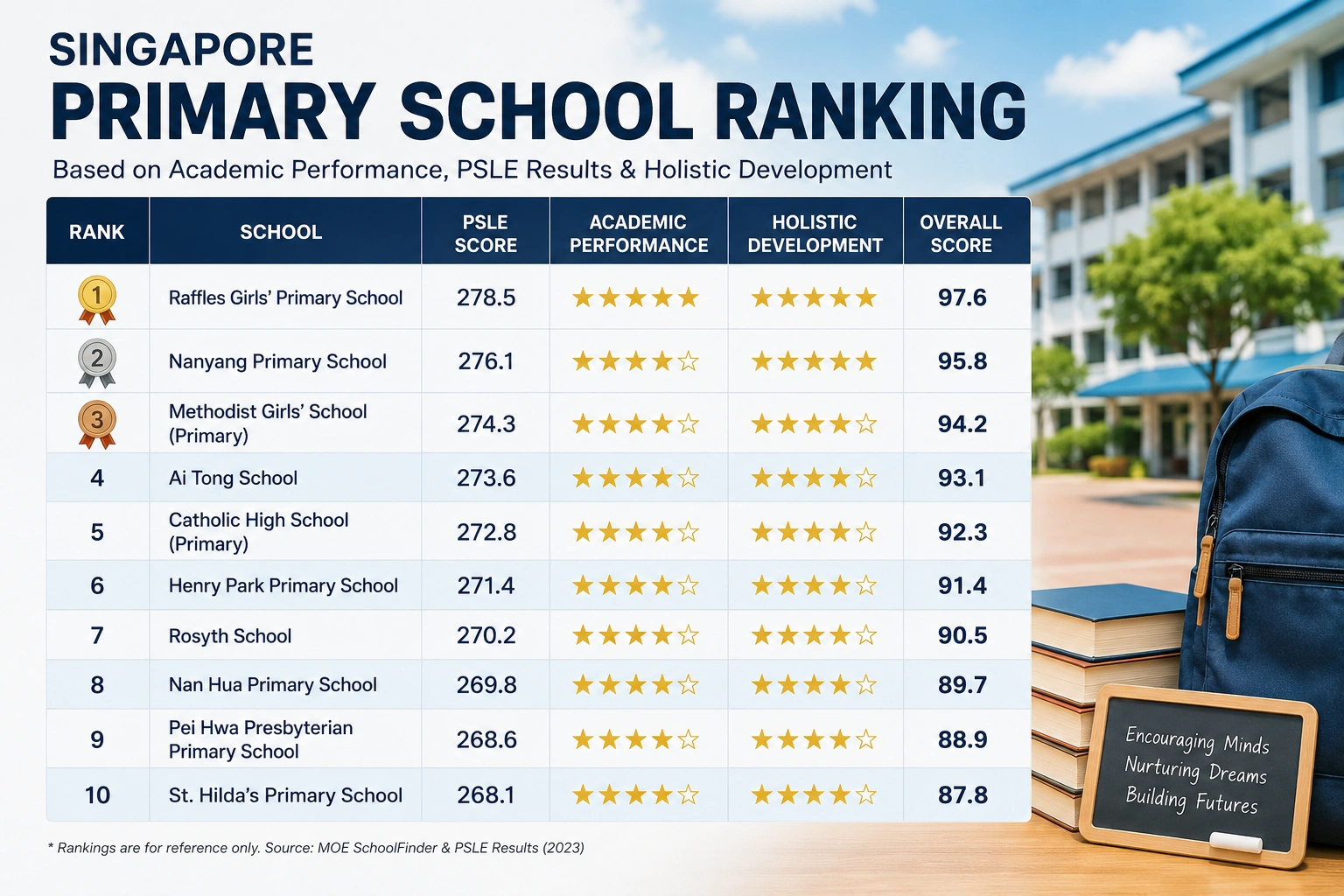
The table below gives a quick comparison of several well-known Singapore primary schools. It does not represent an official MOE league table. Instead, it brings together practical points such as each school’s main strengths, learning opportunities, location and general admission demand. Parents can use these details to narrow their options before checking the latest school information and P1 registration requirements.
| School | Main Strength | Programmes / Opportunities | Location Factor | Admission Demand |
| Nanyang Primary School | Academic & bilingual learning | Language, CCAs and student activities | Bukit Timah area | High |
| Raffles Girls’ Primary School | Academic & student development | Sports, arts and active learning | Queenstown area | High |
| Rosyth School | Academic & broad activities | Sports, arts, clubs and leadership | Serangoon area | High |
| Henry Park Primary School | Learning & student development | Active learning and enrichment | Bukit Timah area | High |
| Tao Nan School | Bilingual education | Language, CCAs and enrichment | Marine Parade area | High |
Best Primary Schools by Location in Singapore
Location matters when choosing a primary school because daily travel can affect a child’s routine. Parents should compare nearby schools based on programmes, school culture, admission demand and accessibility.
Best Primary Schools in Central Singapore
Compare schools by location, transport links, programmes and P1 admission demand.
Best Primary Schools in East Singapore
Families can check schools around Tampines, Pasir Ris and nearby areas, focusing on distance and available programmes.
Best Primary Schools in West Singapore
Parents can compare schools around Clementi and nearby neighbourhoods based on travel time, CCAs and school environment.
Best Primary Schools in North Singapore
Look at nearby schools, transport options, programmes and P1 registration competition before making a choice.
Best Primary Schools in North-East Singapore
Families can compare schools around Bishan and Serangoon by location, school culture, CCAs and admission demand.
Location and School Choice
A high primary school ranking does not always mean the school is the best fit. Distance and the child’s needs also matter.
What Makes a Good Primary School?
A good primary school offers more than strong academic results. Parents comparing best primary schools in Singapore should look at the complete school experience, including how children learn, participate and develop their interests. The right choice can differ from one family to another.
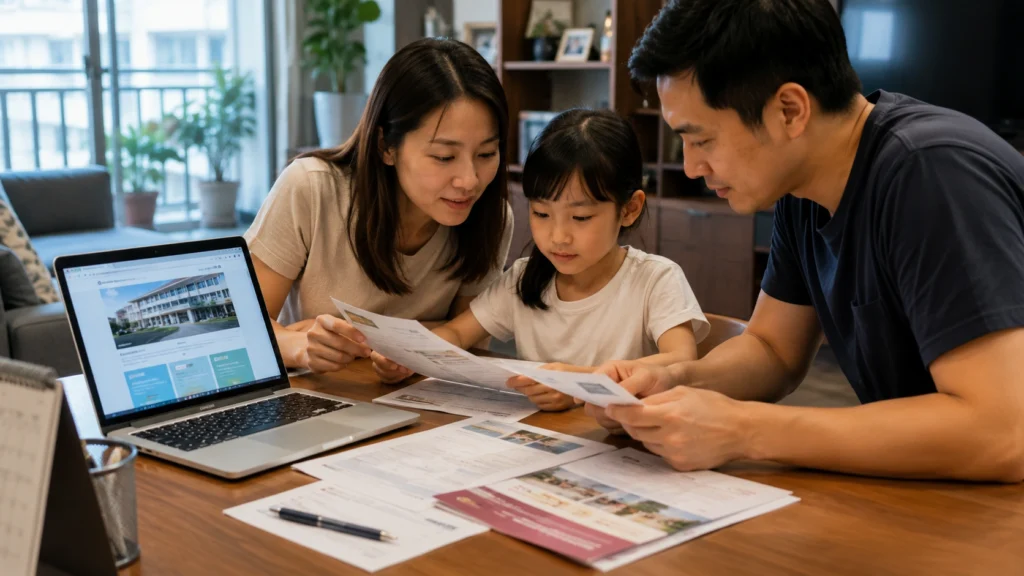
Key areas to check include:
- Academic environment: Look at the school’s approach to learning and academic support.
- Learning environment: Consider classroom experience, student support and teaching methods.
- School culture: Values, relationships and the wider school community matter.
- CCAs: Sports, arts, clubs and other activities give children opportunities outside lessons.
- Language programmes: Check mother tongue and bilingual learning options.
- SAP programmes: These may suit families looking for a stronger Chinese-language and cultural focus.
- Student development: Leadership, confidence, teamwork and personal interests are worth considering.
- Facilities: Sports spaces, libraries, learning areas and other facilities can support school life.
- Parent preferences: Families may have different priorities based on location, programmes and their child’s needs.
Are Academic Results Enough to Judge a Primary School?
No. Academic performance is useful when comparing primary schools, but it should not be the only factor. Parents should also consider school culture, programmes, CCAs, language opportunities, location, student development and admission demand before making a school choice.
Primary School Ranking vs Choosing the Right School
A high primary school ranking does not mean a school is right for every child. Parents should also consider learning style, language needs, CCA interests, school culture, distance, family priorities and admission chances. P1 vacancies, registration phases and possible balloting should also be checked before applying. The best primary school in Singapore is the one that fits the child’s needs and family routine.
FAQs
What is the primary school ranking in Singapore?
It is a way to compare primary schools using factors such as academic environment, programmes, CCAs, school culture, location and admission demand.
Which is the best primary school in Singapore?
There is no single best school for every child. The right choice depends on the child’s needs, interests, location and family priorities.
Does Singapore have an official primary school ranking?
No. Singapore does not publish one official league table ranking every primary school from first to last.
Which primary schools are most competitive?
Popular schools can become competitive when applications exceed available places. Balloting may then be required under the relevant admission rules.
How does P1 registration affect school choice?
P1 registration determines eligibility and access to available places. Parents should check the registration phase, vacancies and admission requirements.
What factors should parents consider when choosing a primary school?
Consider school programmes, location, CCAs, school culture, language options, student development and admission demand.
Does a high school ranking guarantee admission?
No. A school’s ranking does not guarantee a P1 place. Admission depends on eligibility, available vacancies and registration rules.
Final Thoughts on Primary School Ranking Singapore
A primary school ranking Singapore list can give parents a useful starting point when comparing schools, but it should not be the only deciding factor. Check admission demand, available places and P1 registration details before adding a school to your shortlist. Location also matters, especially when daily travelling time is a concern.
Parents should also compare school programmes, CCAs, language options and school culture to find a suitable match. A popular school may not be the best fit for every child. The final choice should reflect the child’s learning needs, interests and the family’s daily routine.