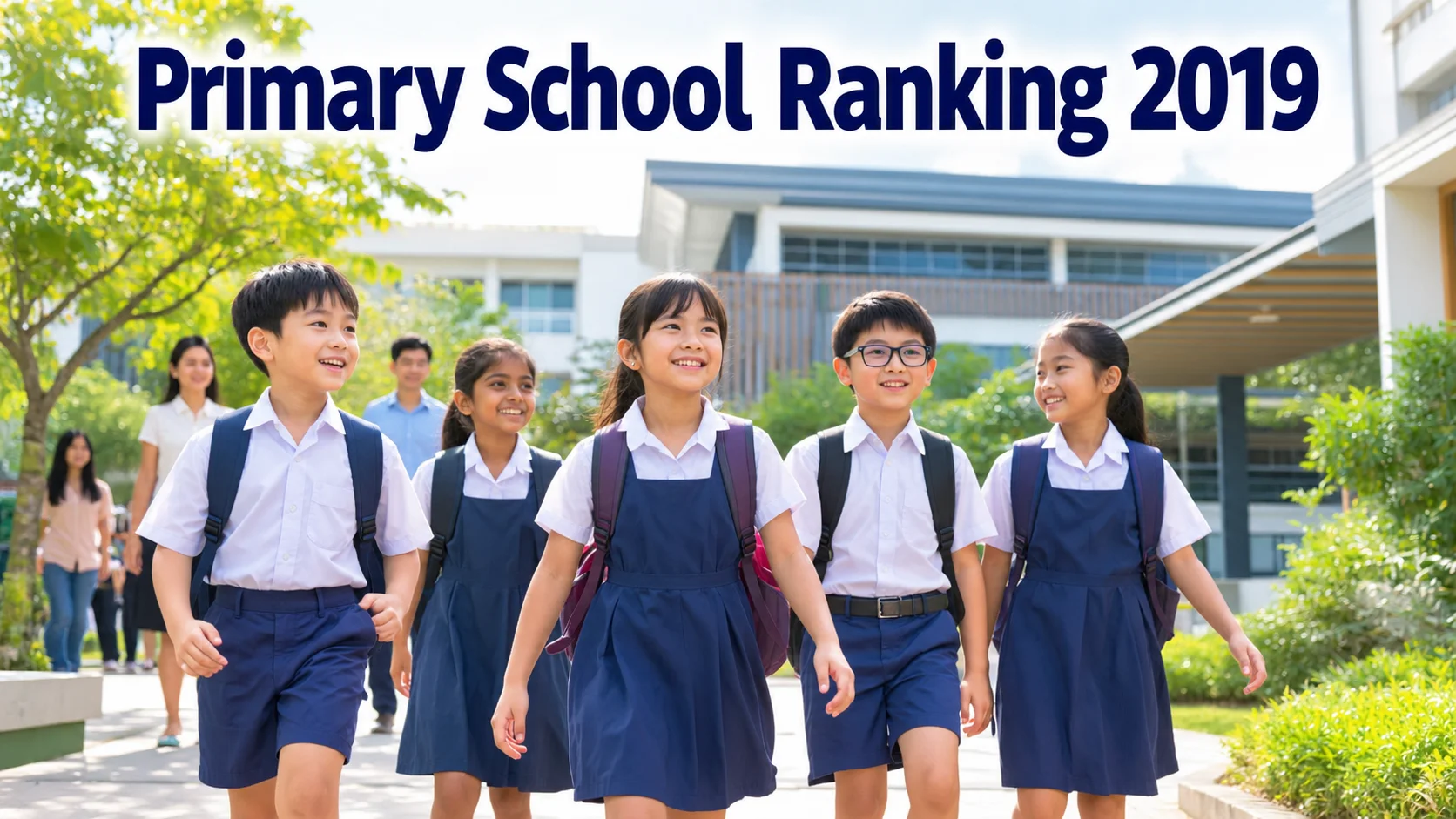
Primary School Ranking 2019 Singapore: Top Schools Guide
Choosing a primary school in Singapore has always been an important decision for families. Parents often compare schools based on academic reputation, location, school culture, programmes, facilities, and past achievements before deciding where to register their child.
This is why searches for Primary School Ranking 2019 remain useful even years later. Parents may want to understand which schools were widely regarded as popular or academically strong at the time, compare historical school reputations, or see how Singapore’s primary school landscape has changed.
There is one important point to understand before looking at any list: Singapore’s Ministry of Education does not publish an official annual league table ranking primary schools from best to worst. Lists described as primary school rankings are generally based on indicators such as historical academic reputation, popularity during Primary 1 registration, Gifted Education Programme availability at the time, school history, programmes, and public perception.
Understanding Primary School Ranking 2019
A Primary School Ranking 2019 should be treated as a reference rather than an official measurement of school quality.
There was no single score that could accurately determine which primary school was the best for every child. A school with a strong academic reputation might suit one student, while another child could perform better in a school closer to home with a different learning environment.
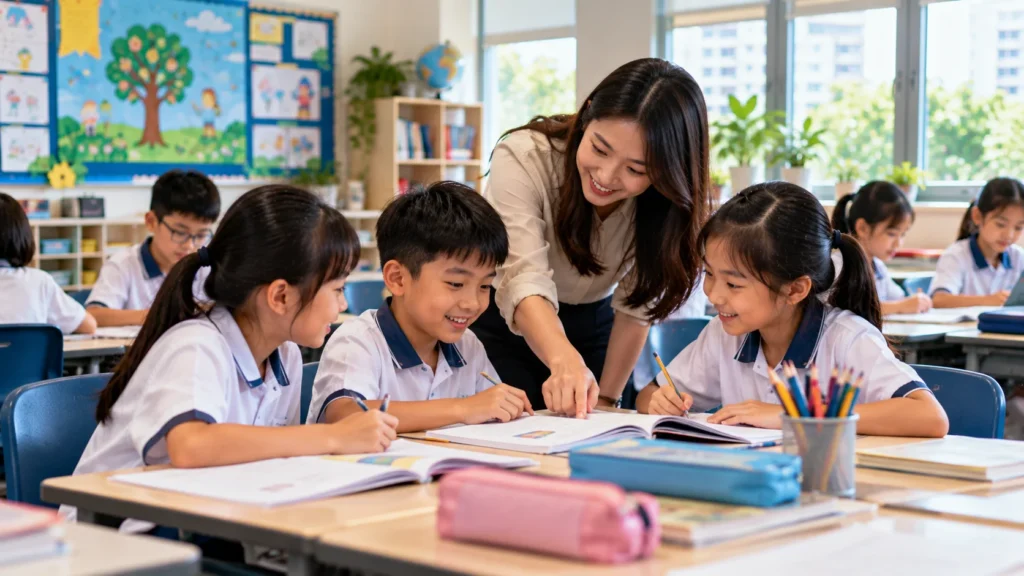
Parents looking at schools around 2019 commonly considered factors such as:
- Academic reputation
- Popularity among parents
- Primary 1 registration demand
- School location
- Special programmes
- Co-curricular activities
- School history
- Gifted Education Programme availability
- Affiliation with secondary schools
- School culture and values
These factors provide a more useful picture than simply assigning every school a number.
Popular Primary Schools in Singapore Around 2019
The following table provides examples of schools that were widely recognised or frequently discussed by parents around this period. The order should not be interpreted as an official MOE ranking.
| Primary School | Area | Commonly Noted Feature |
|---|---|---|
| Nanyang Primary School | Bukit Timah | Strong academic reputation and long history |
| Raffles Girls’ Primary School | Bukit Timah | Established girls’ school |
| Rosyth School | Serangoon | Known for academic programmes |
| Tao Nan School | Marine Parade | Established SAP school |
| Catholic High School (Primary) | Bishan | SAP school with secondary affiliation |
| Henry Park Primary School | Bukit Timah | Popular residential-area school |
| Nan Hua Primary School | Clementi | Established SAP school |
| Ai Tong School | Bishan | Established SAP primary school |
| CHIJ St. Nicholas Girls’ School (Primary) | Ang Mo Kio | Girls’ school with secondary section |
| Pei Hwa Presbyterian Primary School | Bukit Timah | Established school with strong community interest |
| Methodist Girls’ School (Primary) | Bukit Timah | Established girls’ school |
| Anglo-Chinese School (Primary) | Novena | Long-established boys’ school |
| Anglo-Chinese School (Junior) | Newton | Popular boys’ primary school |
| Maris Stella High School (Primary) | Toa Payoh | SAP school with secondary section |
| St. Hilda’s Primary School | Tampines | Established school in eastern Singapore |
This table is better understood as a snapshot of notable schools associated with discussions around primary school ranking in Singapore in 2019, rather than an official numbered ranking.
Nanyang Primary School
Nanyang Primary School has long been one of the better-known primary schools in Singapore.
Located in the Bukit Timah area, the school has a long history and has traditionally attracted considerable attention from parents. Its reputation has been associated with academics, school culture, and enrichment opportunities.
Its location also means that families living nearby may have considered it alongside several other established schools in the Bukit Timah area.
When researching historical Primary School Ranking 2019 lists, Nanyang Primary frequently appears because of this established reputation.
Raffles Girls’ Primary School
Raffles Girls’ Primary School is another established name in Singapore’s primary education landscape.
As a girls’ primary school with a long history, it has traditionally received significant interest from families. Academic development, student activities, and school traditions are among the reasons parents may have considered it.
However, reputation alone should never be confused with suitability. Even highly sought-after schools may not provide the ideal environment for every child.
Rosyth School
Rosyth School is located in the Serangoon area and was another school frequently associated with discussions of academically established primary schools.
Its educational programmes and reputation made it a school that many parents researched when considering primary education options.
For families looking beyond central Singapore, schools such as Rosyth also demonstrated that popular primary schools were spread across different parts of the island.
Tao Nan School
Tao Nan School is an established Special Assistance Plan school located in the east of Singapore.
Its heritage and emphasis on bilingual learning have contributed to its distinctive identity. Families interested in Chinese language and cultural education may have considered these characteristics especially important.
This highlights an important limitation of simple school rankings. A programme that makes one school attractive to a particular family may not be relevant to another.
Catholic High School (Primary)
Catholic High School has both primary and secondary sections and is an established educational institution in Singapore.
The primary section has historically attracted parents looking for a school with a strong institutional identity and an established educational environment.
School affiliation can also influence parental decisions because progression opportunities and affiliation rules may be relevant when students later move into secondary education.
Henry Park Primary School
Henry Park Primary School is located in the Bukit Timah area and has long been familiar to families researching popular Singapore primary schools.
Demand for a school can sometimes provide insight into parental interest, but it should not automatically be treated as proof that the school provides better education than another school.
High demand may also be influenced by residential patterns, location, alumni connections, siblings already attending the school, and other registration factors.
Nan Hua Primary School
Nan Hua Primary School in Clementi has a long educational history and is a Special Assistance Plan school.
Its bilingual and cultural environment has been an important characteristic of the school.
Parents comparing schools in 2019 might therefore have considered Nan Hua for reasons extending beyond examination performance. Language environment, values, traditions, and school activities could all contribute to the decision.
Ai Tong School
Ai Tong School is another established SAP primary school.
Located in the Bishan area, it has a long history and is known among families looking for a school environment with a strong Chinese cultural and bilingual component.
For parents researching historical rankings, schools such as Ai Tong demonstrate why primary schools cannot always be compared fairly through a single numerical list.
CHIJ St. Nicholas Girls’ School
CHIJ St. Nicholas Girls’ School has primary and secondary sections and a long history in Singapore education.
Its girls-only environment, SAP status, school culture, and educational traditions have made it a distinctive option for families.
When choosing a school, these characteristics may be considerably more meaningful than whether a website places the school fifth, tenth, or twentieth on a ranking list.
Methodist Girls’ School (Primary)
Methodist Girls’ School is another long-established institution that attracted considerable attention from parents.
The school has a distinctive heritage and educational environment. Families considering a girls’ school could compare factors such as programmes, values, distance from home, CCAs, and secondary-school pathways.
Such comparisons provide more practical information than a simple ranking position.
Anglo-Chinese School (Primary)
Anglo-Chinese School (Primary), commonly known as ACS(P), is part of the wider Anglo-Chinese School family.
The school’s long history and established identity have contributed to strong awareness among Singapore parents.
Historical reputation can influence how schools appear on unofficial ranking lists, but parents should distinguish reputation from measurable outcomes and individual student needs.
What Did Parents Look at in 2019?
Parents did not choose schools based on rankings alone.
One of the biggest considerations was distance from home. A prestigious school located far away could create a demanding daily commute for a young child.
Primary school students attend school throughout the week, so an additional 30 or 40 minutes of travel each way can become significant over several years.
Parents also considered school programmes. Some children might benefit from stronger opportunities in music, sports, languages, technology, art, or other areas.
The right school therefore depended heavily on the individual student.
Primary 1 Registration Popularity
Primary 1 registration data can sometimes be used to understand how much demand existed for particular schools.
When applications exceed the available places within a registration phase, balloting may be required under the applicable admission rules.
However, oversubscription should not be treated as an academic ranking.
A school may receive many applications because it is located in a densely populated residential area. Another may have strong alumni connections or attract families because siblings are already enrolled.
Registration demand therefore measures parental demand, not necessarily educational quality.
Gifted Education Programme and Historical Rankings
The Gifted Education Programme was another factor frequently considered in older primary-school comparisons.
Historically, selected primary schools hosted the programme, which naturally increased interest in those institutions among some families.
However, parents researching Primary School Ranking 2019 today should remember that Singapore’s education system continues to change. Current programmes, admissions arrangements, and school structures should always be checked separately instead of assuming that information from 2019 remains unchanged.
Why PSLE Scores Cannot Simply Rank Primary Schools
It may seem logical to rank schools according to PSLE performance, but there is a major problem: complete school-by-school PSLE results are not published as a simple official league table for parents to rank every primary school.
Individual high achievers or school accomplishments may receive attention, but that does not provide enough information to accurately compare the overall performance of every school.
A school may also perform particularly well with students who started at different academic levels. Raw examination results do not necessarily capture teaching quality, student progress, emotional development, or school culture.
For this reason, claims such as “School A was officially number one in 2019” should be treated carefully unless the ranking methodology and source are clearly explained.
Does a Top Primary School Guarantee Better PSLE Results?
No school can guarantee a particular PSLE outcome.
A child’s performance depends on many factors, including learning habits, teaching, family support, individual strengths, motivation, health, and the student’s response to the school environment.
Attending a well-known school does not automatically mean every student will achieve a higher score.
Likewise, students from neighbourhood schools can achieve excellent academic results and develop strong skills.
School choice should therefore focus on fit rather than prestige alone.
Location Matters More Than Many Rankings Suggest
Singapore has primary schools across different residential areas, making distance an important practical consideration.
For a six- or seven-year-old child, a short commute can mean more sleep, less travel stress, and additional time for family, homework, hobbies, and rest.
Parents comparing two schools with similar programmes may find that the closer school provides the better daily experience.
Distance has also played a role in Primary 1 registration rules, making residential location relevant from an admissions perspective as well.
School Culture Should Be Part of the Comparison
School culture is difficult to express through numbers.
Some schools have a highly traditional identity, while others may place particular emphasis on specific activities, values, bilingual education, sports, arts, or community involvement.
Parents can consider whether the environment suits their child’s personality.
A confident and highly competitive student may respond differently to a particular environment than a child who needs more time to adjust socially or academically.
This is another reason a universal ranking cannot determine the best school for every student.
Co-Curricular Activities and Student Development
Primary education involves much more than classroom examinations.
Co-curricular activities can help students discover interests, develop teamwork, build confidence, and learn skills outside academic subjects.
When comparing schools, parents can look at the activities available and consider whether they match their child’s interests.
Sports, performing arts, clubs, uniformed groups, and other activities may form an important part of a student’s primary school experience.
Affiliated Schools
Some primary schools have affiliations with secondary schools.
This can be relevant for long-term planning, although parents should carefully check the admission requirements applicable to the year their child enters secondary school.
Rules and cut-off requirements can change.
Historical information from 2019 should therefore be used to understand the educational landscape at that time rather than as a substitute for current admission information.
Primary School Ranking 2019 vs Current School Selection
A Primary School Ranking 2019 is mainly useful as historical reference today.
Several years can bring changes in principals, teachers, programmes, facilities, admission rules, curriculum approaches, and school initiatives.
A school that was highly discussed in 2019 may still have a strong reputation, but parents choosing a school now should use current information.
Historical reputation can be one part of the research process, but it should not be the only factor.
How to Choose the Right Primary School
Instead of asking only, “Which primary school ranks highest?” parents can ask a more practical set of questions.
How long will the daily journey take?
Does the school offer programmes that match the child’s interests?
Is the learning environment suitable for the child’s personality?
What CCAs are available?
Does the family value a particular language or cultural environment?
Is secondary-school affiliation important?
How competitive is Primary 1 registration?
These questions turn school selection into a decision based on the child rather than reputation alone.
Are Neighbourhood Primary Schools Good?
Singapore’s neighbourhood primary schools should not automatically be viewed as weaker options simply because they receive less attention in unofficial rankings.
Schools operate within the national education system and follow the national curriculum while developing their own programmes and areas of emphasis.

Singapore parents researching and comparing primary school options with their child at home.A nearby school can also offer practical advantages.
A shorter commute gives children more time to rest and participate in activities. Living near classmates may also make friendships and group activities easier outside school hours.
For many families, these everyday benefits can matter more than an unofficial ranking position.
Can You Still Use 2019 Rankings Today?
Yes, but only for historical comparison.
Parents, students, researchers, and education writers may use 2019 information to understand which schools attracted attention during that period.
It should not be used as a current admissions guide without checking newer information.
School programmes can change. Registration rules can change. Leadership can change. Even the characteristics parents value can shift over time.
Current applicants should therefore confirm important details through official school and Ministry of Education information.
FAQs
1. What was the Primary School Ranking 2019 in Singapore?
There was no official MOE ranking of primary schools in 2019. Most rankings were based on popularity, reputation, programmes, and parent demand.
2. Which primary schools were popular in Singapore in 2019?
Nanyang Primary, Raffles Girls’ Primary, Rosyth School, Tao Nan School, and Henry Park Primary were among the commonly discussed schools.
3. Did MOE publish Primary School Ranking 2019?
No, Singapore’s Ministry of Education did not publish an official league table ranking every primary school from best to worst.
4. Was Nanyang Primary School popular in 2019?
Yes, Nanyang Primary School was widely known among parents due to its established reputation, programmes, and long school history.
5. How were primary schools compared in 2019?
Parents commonly considered school reputation, P1 registration demand, location, special programmes, CCAs, and secondary-school affiliations.
6. Is Primary School Ranking 2019 still useful today?
Yes, it can be useful for historical comparison. Current school choices should be based on updated programmes, admission rules, and official information.
7. Should parents choose a school based only on ranking?
No. Distance, school culture, learning environment, programmes, and the individual needs of the child are also important factors.
Final Thoughts
The Primary School Ranking 2019 offers a useful look at the Singapore primary schools that attracted strong interest from parents during that period. Schools such as Nanyang Primary, Raffles Girls’ Primary, Rosyth School, and Tao Nan School were often recognised for their reputation, programmes, and school culture.
However, rankings should only be used as a reference. A suitable primary school depends on factors such as location, learning environment, programmes, and a child’s individual needs. Parents researching schools today should always check the latest information before making a decision.