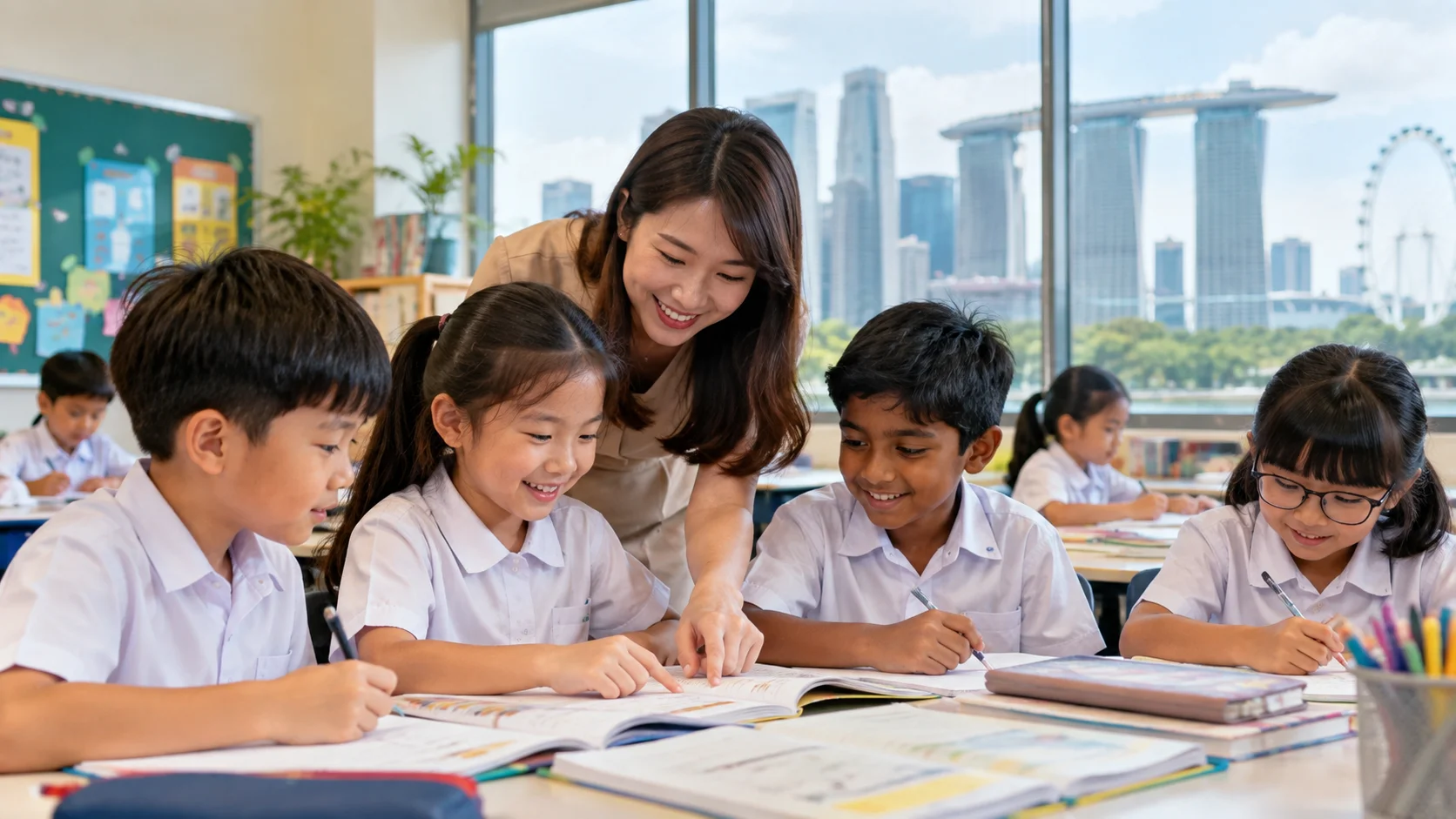
Top Primary Schools in Singapore 2026: Best Schools Guide
Finding the top primary schools in Singapore is a major decision for parents preparing their children for Primary 1. Singapore has many established primary schools, but there is no single school that is right for every child.
Parents often look at a school’s reputation, location, learning environment, programmes, co-curricular activities and past Primary 1 registration demand. Distance from home is also a practical factor because it can affect both daily travel and admission priority during P1 registration.
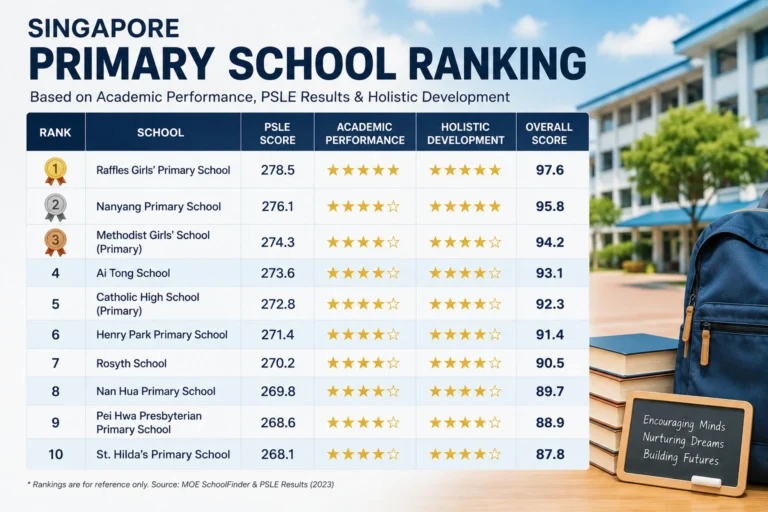
It is important to understand that the Ministry of Education (MOE) does not publish an official ranking of Singapore primary schools. Therefore, a list of popular schools should not be treated as an official academic ranking.
This guide looks at some of the top primary schools in Singapore that frequently attract parent interest, while also explaining what families should consider before choosing a school.

Top Primary Schools in Singapore at a Glance
The table below highlights several established and highly sought-after primary schools. The order should not be read as an official ranking.
| Primary School | Area | School Type / Feature | Why Parents Consider It |
|---|---|---|---|
| Nanyang Primary School | Bukit Timah | SAP, Co-ed | Established name and strong school culture |
| Nan Hua Primary School | Clementi | SAP, Co-ed | Strong P1 demand and Chinese cultural focus |
| Rosyth School | Serangoon | Co-ed | Popular with families and historically high registration demand |
| CHIJ St. Nicholas Girls’ School (Primary) | Ang Mo Kio | SAP, Girls | Established girls’ school and SAP education |
| Catholic High School (Primary) | Bishan | SAP, Boys | Long history and bilingual tradition |
| Tao Nan School | Marine Parade | SAP, Co-ed | Established heritage and Chinese cultural education |
| Ai Tong School | Bishan | SAP, Co-ed | Popular SAP primary school |
| Rulang Primary School | Jurong West | Co-ed | Strong demand from families in the west |
| Nan Chiau Primary School | Sengkang | SAP, Co-ed | Popular choice in north-east Singapore |
| Princess Elizabeth Primary School | Bukit Batok | Co-ed | Extremely high recent P1 registration demand |
1. Nanyang Primary School
Nanyang Primary School is one of the names parents commonly encounter when researching the top primary schools in Singapore.
Located in the Bukit Timah area, it is a Special Assistance Plan (SAP) school. SAP schools place additional emphasis on bilingual learning and Chinese language and culture alongside the national curriculum.
Nanyang Primary has a long history in Singapore education. Families considering the school should look beyond its name and study its programmes, school culture, travel time and current P1 admission situation.
For families who value bilingual education and can manage the daily commute, it may be a school worth researching closely.
2. Nan Hua Primary School
Nan Hua Primary School in Clementi is another highly sought-after SAP school.
Its popularity is also visible in recent P1 registration figures. During the 2026 Phase 2C exercise, Nan Hua was among the schools where applications significantly exceeded available places.
High demand, however, should not automatically be interpreted as proof that one school provides better academic outcomes than another. P1 demand can be influenced by location, reputation, family preferences, school history and the number of available places.
Parents living around Clementi may want to consider Nan Hua alongside other nearby schools rather than choosing purely by reputation.
3. Rosyth School
Rosyth School in Serangoon has remained a well-known choice among Singapore parents.
It has historically experienced considerable demand during P1 registration, and the pattern continued in the 2026 exercise. This makes Rosyth particularly relevant when discussing popular primary schools in Singapore.
Parents considering Rosyth should pay close attention to home-school distance and the registration phase for which their child qualifies.
A school can be highly attractive to a family, but admission may become difficult when the number of applicants exceeds the available vacancies.
4. CHIJ St. Nicholas Girls’ School (Primary)
CHIJ St. Nicholas Girls’ School (Primary) is an established girls’ school in Singapore and operates under the Special Assistance Plan.
Its history, bilingual environment and school identity make it a school that many parents research when considering primary education for their daughters.
Choosing a girls’ school is also a personal family decision. Parents should consider whether the learning environment, school culture and available programmes match their daughter’s needs and personality.
Practical issues such as travel time should remain part of the decision.
5. Catholic High School (Primary)
Catholic High School (Primary) is an established boys’ school in the Bishan area.
It is also a SAP school, making Chinese language and culture an important part of its educational identity.
For parents searching for the top primary schools in Singapore for boys, Catholic High frequently appears among the schools they research.
Parents should still examine the current school programmes and P1 registration information instead of relying on older online rankings.
6. Tao Nan School
Tao Nan School is a well-established SAP primary school located in the Marine Parade area.
The school has deep roots in Singapore’s Chinese community and continues to attract interest from parents looking for a bilingual educational environment.
Its location may make it particularly convenient for families living in eastern Singapore.
As with other popular schools, parents should compare Tao Nan with schools closer to home and consider the practical effect of travelling to school every weekday.
7. Ai Tong School
Ai Tong School is another SAP primary school commonly considered by families in Singapore.
Located in Bishan, it has a long history and a strong connection with Chinese language and cultural education.
Its location makes it a possible option for families living around Bishan and nearby neighbourhoods.
Rather than focusing only on the school’s reputation, parents can look at its learning environment, programmes and CCAs to determine whether it matches their child’s interests.
8. Rulang Primary School
Rulang Primary School is a popular primary school in Jurong West.
Recent registration patterns show that it continues to receive strong interest from parents. In the 2026 P1 registration exercise, demand exceeded available Phase 2C vacancies.
For families in western Singapore, Rulang can be one of several schools worth researching.
Living close to a popular school can also matter during an oversubscribed P1 registration phase, making location an important part of school planning.
9. Nan Chiau Primary School
Nan Chiau Primary School is located in Sengkang and is a SAP school.
It has become a frequently discussed choice among parents living in north-east Singapore. Recent P1 registration data also indicates strong demand for places.
The school can appeal to parents looking for an environment that combines the national curriculum with a strong bilingual and cultural component.
Families should compare it with other Sengkang and nearby primary schools based on distance, programmes and their child’s needs.
10. Princess Elizabeth Primary School
Princess Elizabeth Primary School in Bukit Batok deserves attention because of its recent P1 registration demand.
In the 2026 Phase 2C exercise, it recorded the highest level of oversubscription, with far more applicants than available places.
That figure shows strong parent demand, but it should not be treated as an academic ranking. Registration popularity and student academic performance are different measures.
For parents living around Bukit Batok, the school may be worth considering together with other nearby options.
What Makes a Primary School “Top” in Singapore?
There is no official formula for identifying the top primary schools in Singapore.
A famous school name may matter to some families, while another family may prefer a neighbourhood school that is five minutes from home.
Parents can consider several practical factors:
- Distance between home and school
- School culture and values
- Mother Tongue options
- SAP status where relevant
- Learning support
- School-based programmes
- Co-curricular activities
- Student wellbeing
- Daily travelling time
- Past P1 registration demand
A child who enjoys school, has enough time to rest and feels supported may benefit more from a suitable nearby school than from spending significant time travelling to a famous one.
P1 Registration and School Distance
Primary 1 registration is an important part of choosing a school in Singapore.
For Singapore Citizens and Permanent Residents, the exercise is conducted through several phases, including Phase 1, Phase 2A, Phase 2B, Phase 2C and Phase 2C Supplementary.
When a school receives more eligible applications than available places, balloting may be required.
Citizenship and home-school distance can affect priority. This is why parents should not create their shortlist using school reputation alone.
A highly popular school several kilometres away may present a different admission situation from a suitable school close to home.
Parents should always check the latest MOE information for the registration year relevant to their child.
Are Popular Schools Always Better?
Not necessarily.
P1 registration demand tells us how many families want places at a school. It does not provide a direct measurement of teaching quality or future PSLE performance.
Singapore primary schools follow the national curriculum, while individual schools may offer different programmes, CCAs, cultures and learning experiences.
Parents should therefore treat popularity as one piece of information rather than the final answer.
Changes to High-Ability Education
Parents researching older school lists may also see references to the Gifted Education Programme (GEP).
Singapore is changing its approach to supporting higher-ability primary school students. The existing GEP model is being discontinued for the 2026 Primary 3 cohort, with support moving towards expanded school-based provisions.
From 2027, high-ability provisions are expected to reach more students across primary schools. This means older lists based heavily on which schools previously hosted GEP pupils may become less useful for families choosing a school today.
How to Choose the Right Primary School
Start with schools within a practical distance from your home.
Then compare their programmes, culture, CCAs and educational approach. Parents can use MOE’s SchoolFinder to search schools based on location, subjects, programmes and other criteria.
Visiting school websites and attending available open-house activities can also provide a better idea of the learning environment.
Most importantly, consider the individual child.
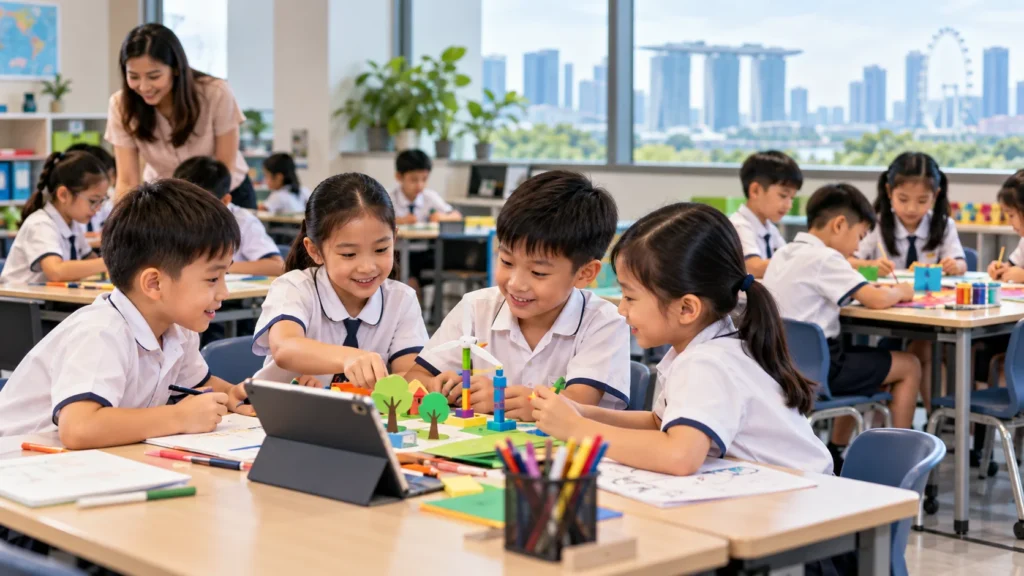
Some children enjoy highly structured environments, while others may thrive where they have more opportunities in sport, music, art, leadership or other activities.
The top primary schools in Singapore for your family are therefore not necessarily the schools with the biggest names. They are the schools that offer a suitable environment while remaining realistic in terms of admission and daily travel.
Frequently Asked Questions
1. What are the top primary schools in Singapore?
Popular choices include Nanyang Primary, Nan Hua Primary, Rosyth, Tao Nan and CHIJ St. Nicholas Girls’ School.
2. Does MOE rank primary schools in Singapore?
No. MOE does not publish an official ranking of primary schools in Singapore.
3. Which primary school was highly oversubscribed in 2026?
Princess Elizabeth Primary School saw very high demand during the 2026 Phase 2C registration exercise.
4. Does living near a primary school improve admission chances?
Yes, home-school distance can affect priority when balloting is required during applicable P1 registration phases.
5. Are SAP primary schools better than other schools?
Not necessarily. SAP schools focus strongly on bilingual education and Chinese language and culture.
6. How should parents choose a primary school in Singapore?
Compare location, programmes, school culture, CCAs and your child’s learning needs before choosing.
7. Where can I check Singapore primary schools before P1 registration?
Use MOE SchoolFinder and official P1 registration resources for current school and admission information.
Final Thoughts
Singapore has many established primary schools, including Nanyang Primary School, Nan Hua Primary School, Rosyth School, CHIJ St. Nicholas Girls’ School (Primary), Catholic High School (Primary), Tao Nan School, Ai Tong School, Rulang Primary School, Nan Chiau Primary School and Princess Elizabeth Primary School.
Recent P1 registration demand can help parents understand which schools are highly sought after, but it should not be confused with an official academic ranking.
Look at location, programmes, school culture, admission rules and your child’s learning needs before making a decision. A school that fits the child and family can be more practical than choosing a school based only on its reputation.