Flooring Installation Singapore: Types, Cost & Tips
Flooring Installation Singapore is an important part of home renovation, whether you are updating an HDB flat, moving into a new BTO apartment, refreshing a condo, or improving a landed property. The floor has a direct effect on how a room looks, feels, and works in everyday life. A suitable floor can also make cleaning easier and handle the level of foot traffic a home receives.
Singapore homeowners can choose from materials such as vinyl, SPC, laminate, parquet, engineered wood, and tiles. Each option has different qualities, so the right choice depends on the room, budget, lifestyle, maintenance needs, moisture exposure, and how much use the floor will receive. A flooring option that works well in a bedroom may not be the best fit for a kitchen or busy living area.
The material itself is only one part of a successful floor installation. The existing surface needs to be checked before work begins, while proper measurement, surface preparation, installation, skirting, and finishing can affect the final result. For HDB, BTO, condo, and landed homes, paying attention to these details can help create a floor that looks neat and performs well during everyday use.
What Is Flooring Installation in Singapore
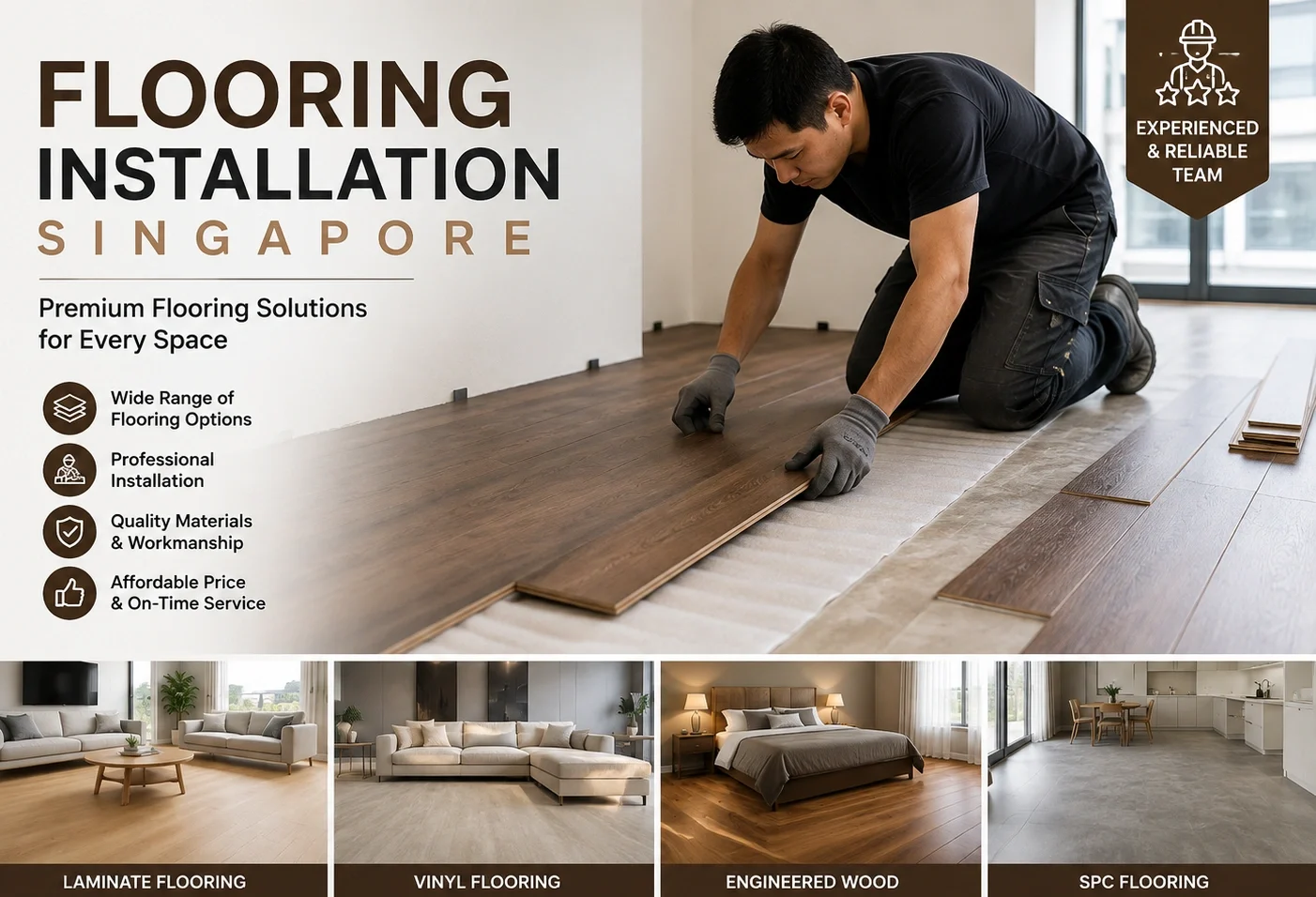
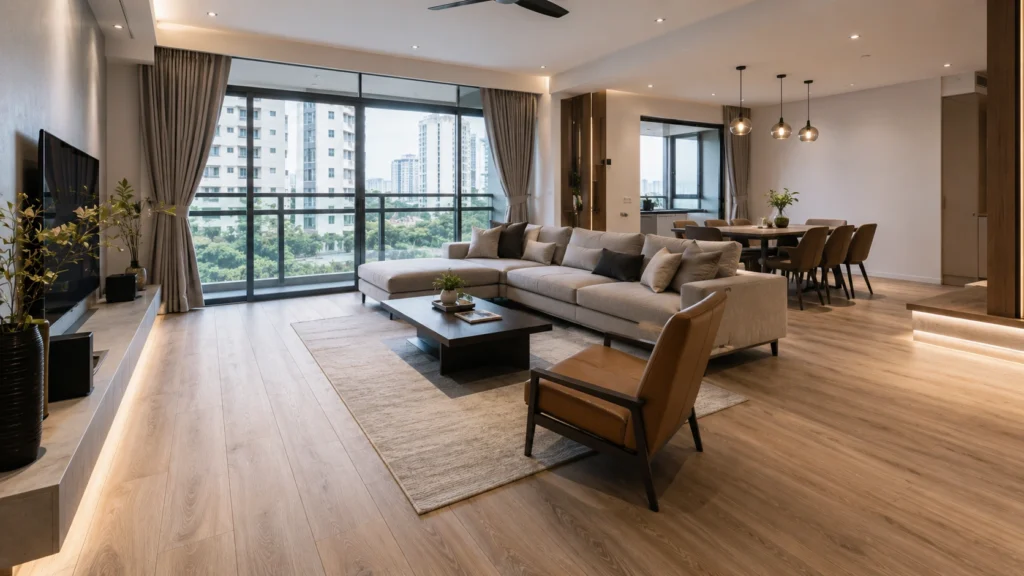
Flooring installation is the process of preparing a floor and fitting a selected material so it sits properly, looks neat, and can handle regular use. It is more than simply placing new boards, planks, or tiles on the floor. Depending on the project, the work may include measuring the space, checking the existing surface, preparing the base, fitting the flooring, and finishing the edges.
A typical floor installation may include:
- Measuring the room and calculating the required flooring material
- Checking the existing floor for cracks, loose areas, moisture, or uneven spots
- Preparing or levelling the surface where needed
- Cutting and fitting the selected flooring material
- Installing skirting, trims, or floor transitions
- Checking the finished floor before the area is handed back to the homeowner
New Flooring vs Floor Replacement
Not every project requires the old floor to be removed. If the existing surface is stable, clean, level, and suitable for the new material, some flooring can be installed over it. A full floor replacement may be needed when the old surface has damaged tiles, loose sections, major unevenness, moisture problems, or other issues that could affect the new installation.
A professional floor installer checks these conditions before starting work. Good flooring services can include old flooring removal, surface preparation, floor levelling, installation, skirting, and finishing. For residential flooring, comfort, appearance, cleaning, and everyday use are common priorities. Commercial flooring often has different requirements because offices, shops, and other business spaces may receive heavier foot traffic and more frequent cleaning.
Popular Flooring Options for Singapore Homes
Singapore homes have different flooring needs depending on the room, daily foot traffic, cleaning habits, and overall interior style. HDB flats, BTO apartments, condos, and landed properties can all use different materials, so the best flooring is not always the most expensive option. Vinyl, SPC, laminate, parquet, engineered wood, and tiles each have their own strengths.
Vinyl Flooring
Vinyl flooring Singapore homeowners often choose for its practical upkeep and comfortable feel underfoot. It is available in different colours, textures, and wood-look designs. Vinyl floor installation can work well in bedrooms, living rooms, and other areas where easy cleaning matters.
Good points:
- Easy to clean and maintain
- Available as vinyl plank flooring
- Comfortable for everyday use
- Many design options
- Some products offer water-resistant or waterproof flooring features
SPC Flooring
SPC flooring Singapore is known for its rigid core construction and strong resistance to everyday wear. SPC floor installation is often considered for busy areas because the material has a firm structure and is available in many wood and stone-look finishes.
Good points:
- Suitable for high-traffic areas
- Easy day-to-day maintenance
- Stable rigid core construction
- Waterproof SPC flooring options are available
- SPC flooring for HDB can suit practical home renovation projects
Laminate Flooring
Laminate flooring Singapore offers a wood-style appearance without using solid timber throughout the floor. Laminate floor installation is commonly considered for bedrooms and living spaces where appearance and budget both matter.
Good points:
- Wide choice of wood-look finishes
- Suitable for bedrooms
- Simple daily cleaning
- Water-resistant laminate flooring options are available
Parquet and Engineered Wood Flooring
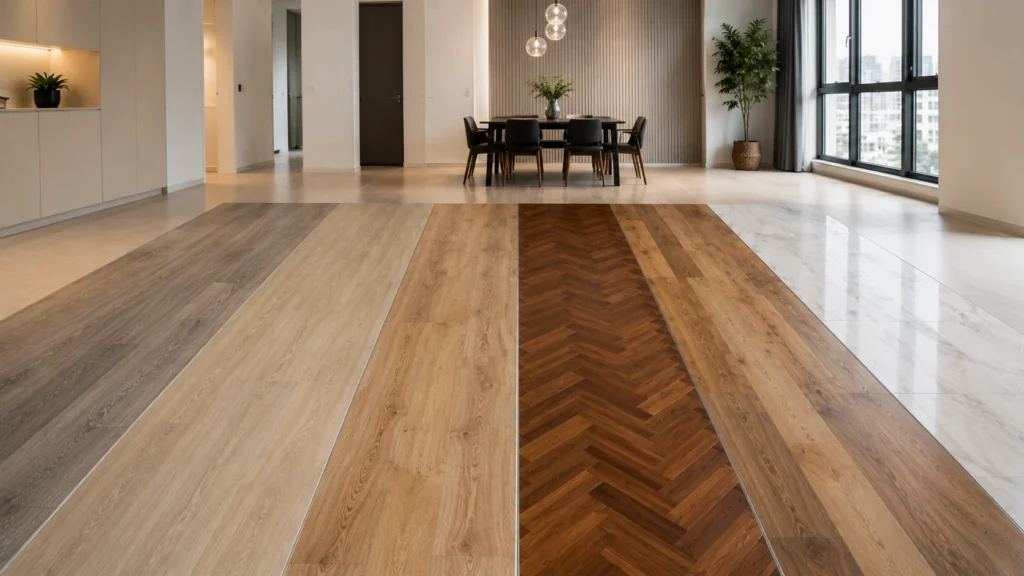
Parquet flooring Singapore is a popular choice for homeowners who want a more traditional wood appearance. Parquet floor installation can create patterns that add character to a room. Engineered wood flooring Singapore is another option for those who prefer the appearance of wooden flooring, while timber flooring can provide a natural interior finish.
Good points:
- Natural wood appearance
- Suitable for premium interiors
- Different patterns and finishes
- Can add warmth to living spaces
Tile Flooring
Tile flooring Singapore remains a practical choice for areas that need a hard-wearing surface. Floor tile installation can use ceramic floor tiles or porcelain floor tiles, depending on the required finish and application. Tile replacement may also be considered when existing tiles are cracked, worn, or outdated.
Good points:
- Durable surface
- Easy to clean
- Many colours and patterns
- Suitable for kitchens and bathrooms
Flooring Types Comparison
| Flooring Type | Main Strength | Maintenance | Suitable For |
| Vinyl | Easy maintenance | Low | HDB, bedrooms, living areas |
| SPC | Durable structure | Low | High-traffic areas |
| Laminate | Wood-look appearance | Moderate | Bedrooms, living rooms |
| Parquet | Natural appearance | Moderate | Premium interiors |
| Engineered Wood | Wood finish | Moderate | Living spaces |
| Tiles | Hard-wearing surface | Easy | Kitchens, bathrooms |
How to Choose Flooring for Different Singapore Homes
The right flooring can vary from one Singapore home to another. An HDB flat may need practical flooring that is easy to maintain, while a condo or landed property may give homeowners more room to consider design, material, and finish. The room itself also matters because each area receives a different level of use.
HDB Flats
For HDB flooring, durability, cleaning, available space, and budget are common considerations. During an HDB floor renovation, vinyl, SPC, laminate, and tiles can suit different rooms depending on the home’s needs. Easy-maintenance flooring is often useful for busy households.
BTO Apartments
BTO flooring gives homeowners the chance to plan the floor finish before settling into a new space. Flooring options for BTO units can include vinyl, SPC, laminate, or tiles. The choice should match the room layout, furniture plans, daily use, and preferred interior style.
Condo Apartments
Condo flooring often gives homeowners more flexibility with design and finish. For a condominium flooring project, material selection can depend on the room, interior theme, maintenance routine, and expected foot traffic. Flooring for condo renovation may include wood-look, stone-look, or natural wood finishes.
Landed Properties
Landed house flooring usually offers more space and more choices in material and design. A landed property may suit larger-format tiles, engineered wood, parquet, timber flooring, or other finishes depending on the room and interior plan.
Choosing Flooring Room by Room
- Living room: Choose a durable surface that can handle regular foot traffic and furniture movement.
- Bedroom: Comfort, appearance, and easy cleaning may be higher priorities.
- Kitchen: Look for flooring that is practical and easy to clean.
- Dining area: A durable surface can help with frequent movement and food spills.
- Study: Quiet, comfortable flooring can work well for a focused workspace.
- High-traffic areas: Durable and easy-maintenance materials are usually more practical.
Flooring Installation Process: What Happens on Site?
A proper flooring installation process starts before the first plank, board, or tile is fitted. The installer needs to understand the condition of the site, measure the area accurately, prepare the surface, and make sure the selected material is suitable for the space. For professional flooring installation Singapore projects, these checks can make a noticeable difference to the finished floor.
1. Site Assessment
The process usually starts with a professional site assessment. The installer checks the room, existing flooring, access points, floor condition, and any areas that may need extra preparation.
2. Floor Measurement
Accurate measurements are taken to work out how much flooring material is required. Room dimensions, corners, doorways, and other fixed areas need to be considered before ordering or cutting materials.
3. Existing Flooring Inspection
The existing surface is checked for loose tiles, cracks, uneven sections, moisture, or other damage. This helps determine whether the new flooring can go over the existing surface or whether floor removal is needed.
4. Surface Preparation
The floor should be clean, dry, stable, and suitable for installation. Depending on the condition, preparation may include cleaning, repairs, removal of old flooring, or other work before installation begins.
5. Floor Levelling
If the surface has noticeable uneven areas, floor levelling may be required. A level base helps the new flooring sit correctly and reduces the chance of movement or visible gaps.
6. Material Preparation
The selected flooring is prepared according to the installation method. Materials may need cutting, arranging, acclimatisation, or other preparation depending on the product.
7. Flooring Installation
The installer then fits the flooring across the prepared surface. The method varies between vinyl, SPC, laminate, parquet, engineered wood, and tiles, so following the material requirements is important.
8. Skirting and Floor Transitions
Skirting is fitted around suitable edges, while floor transitions can be used where different flooring materials or floor levels meet. These details give the installation a cleaner finish.
9. Final Inspection
Once the floor installation is complete, the surface is checked for visible gaps, alignment, damaged pieces, edge finishing, and other issues. Good floor installation services should leave the area clean and ready for normal use.
What Should Be Checked Before Flooring Installation?
Before starting a flooring project, the existing floor should be checked carefully. Small problems under the surface can affect the new flooring later, so identifying them early can save extra work and unexpected costs. A proper pre-installation check also helps the installer decide which preparation is needed for the selected material.
What to Check Before Flooring Installation?
- Existing floor condition: Check whether the surface is stable, clean, dry, and suitable for the new flooring.
- Cracks and damaged areas: Cracks or broken sections may need repair before installation.
- Uneven areas: Noticeable slopes or dips may require floor levelling.
- Moisture: Damp areas should be identified before installing materials that may be affected by moisture.
- Hollow tiles: Loose or hollow-sounding tiles may need attention if flooring is being installed over the existing surface.
- Floor height: The new flooring can change the finished floor level, especially when installed over an existing surface.
- Door clearance: Doors may need checking if the new floor adds height.
- Skirting: Existing skirting may need removal, adjustment, or replacement depending on the installation method.
- Furniture: Decide whether furniture needs to be moved before the work starts.
- Material quantity: Measure the space accurately and allow enough material for cuts, corners, and possible replacements.
How to Prepare a Home for Floor Installation?
Clear smaller furniture and personal items from the work area, provide access to the rooms, and discuss any fixed furniture or appliances with the installer beforehand. It is also useful to confirm the flooring material, installation scope, preparation work, skirting, and finishing details before the project begins.
How Much Does Flooring Installation Cost in Singapore?
The flooring installation cost Singapore homeowners pay can vary from one project to another. There is no single price that fits every home because the final quotation depends on the flooring material, floor size, condition of the existing surface, and amount of installation work required. A simple installation on a prepared floor can have a very different cost from a floor replacement that requires removal, repairs, and levelling.
The flooring material is usually one of the first cost considerations. Vinyl, SPC, laminate, parquet, engineered wood, and tiles have different material and installation requirements. The total floor area also matters because larger spaces require more flooring and usually more labour. If old flooring needs to be removed, disposal and additional preparation can add to the project cost.
Other details can affect the quotation as well. These may include:
- Existing flooring removal
- Surface preparation and repairs
- Floor levelling
- Labour requirements
- Skirting installation or replacement
- Floor transitions
- Complex designs or patterns
- Door adjustments caused by changes in floor height
- Disposal of old flooring and related materials
Flooring Installation Cost Factors
| Cost Factor | Effect on Final Quote |
| Flooring material | Material price varies |
| Floor area | Larger areas need more material and labour |
| Existing flooring | Removal can add work |
| Subfloor condition | Repairs or levelling may be needed |
| Installation pattern | Complex patterns take more labour |
| Skirting | Adds finishing work |
| Door adjustments | May be required with floor-height changes |
| Disposal | Old flooring removal creates additional work |
Before accepting a flooring quotation Singapore homeowners should check exactly what is included. Ask whether the price covers installation, surface preparation, old floor removal, skirting, transitions, disposal, and other additional work. Comparing quotations based on the full scope of work gives a clearer picture than comparing the headline price alone.
Can New Flooring Be Installed Over Existing Tiles?
Yes, new flooring can be installed over existing tiles in some situations, but the old surface must be suitable for the new material. The tiles should be stable, reasonably level, clean, and free from serious damage. The installation method also depends on the type of flooring being fitted.
Before covering existing tiles, an installer should check several points:
- Tile condition: Loose, cracked, or badly damaged tiles may need to be repaired or removed.
- Levelness: Large dips, raised areas, or uneven joints can affect the finished floor.
- Hollow tiles: Hollow-sounding or poorly bonded tiles should not simply be ignored.
- Moisture: Damp areas need to be identified and addressed before installation.
- Floor height: Adding another layer can raise the finished floor level.
- Door clearance: Doors may need adjustment if the additional floor thickness prevents them from opening properly.
- Material compatibility: The existing surface must be suitable for the selected vinyl, SPC, laminate, or other flooring system.
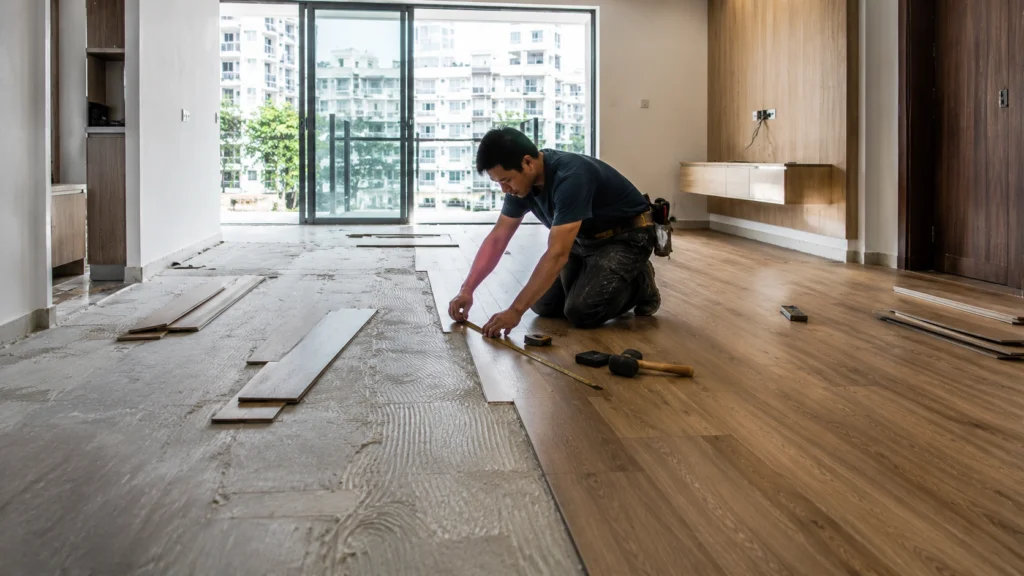
Installing over tiles can reduce removal work, but it is not suitable for every floor. If the existing surface has major unevenness, movement, moisture problems, or widespread damage, removing the old flooring and preparing the base may be a better option. A site inspection can determine which approach is appropriate for the property.
common Flooring Installation Mistakes to Avoid
A flooring project can look simple from the outside, but small oversights can create problems after installation. Most issues are easier to deal with before the work begins, which is why material selection, floor inspection, measurements, and preparation deserve attention.
- Choosing flooring only for its appearance: A floor may look attractive but still be unsuitable for a room with heavy foot traffic, moisture, or frequent cleaning.
- Skipping the existing floor inspection: Cracks, loose tiles, uneven areas, or damaged sections can affect the new flooring if they are left untreated.
- Ignoring moisture: Dampness can cause problems for certain flooring materials. Any moisture concern should be checked before installation.
- Automatically choosing the cheapest quotation: A lower price may not include removal, floor preparation, skirting, disposal, or other necessary work.
- Skipping subfloor preparation: A poor base can affect how the finished floor sits and performs over time.
- Forgetting skirting and floor transitions: These finishing details may affect both appearance and the final quotation.
- Using incorrect measurements: Ordering too little material can cause delays, while poor measurements can increase waste.
- Ignoring maintenance requirements: Every flooring material has different cleaning and care needs. These should be understood before making a final choice.
A good flooring project starts with the condition of the floor and the way the space will actually be used, not just the look of the finished material.
How to Choose a Flooring Contractor in Singapore
Choosing a flooring contractor in Singapore should involve more than looking at the lowest price. A good contractor should explain the installation work clearly, inspect the property, recommend suitable materials, and provide a quotation that shows what is included.
Before hiring a flooring company Singapore homeowners can consider, check these points:
| What to Check | What to Ask the Contractor |
| Previous installation work | Can you show examples of similar completed projects? |
| Flooring materials | Which materials are suitable for my room and property? |
| Flooring quotation | Does the written quote include material and labour? |
| Installation scope | What work is included from preparation to finishing? |
| Site assessment | Has the existing floor been properly inspected? |
| Preparation work | Are repairs, removal, or floor levelling included? |
| Skirting and transitions | Are these included or charged separately? |
| Warranty | What does the warranty cover and for how long? |
| Installation timeline | When will the work start and how long should it take? |
| After-installation support | Who should I contact if a problem appears later? |
A flooring quotation Singapore homeowners receive should be clear enough to show the full scope of work. Check for items such as old flooring removal, surface preparation, skirting, disposal, and other possible charges before making a decision.
Comparing contractors based on the complete scope rather than price alone can give you a better idea of the value you are receiving. A professional flooring installer should also be willing to explain the material, preparation requirements, installation method, and expected finish before work begins.
How to Maintain Newly Installed Flooring
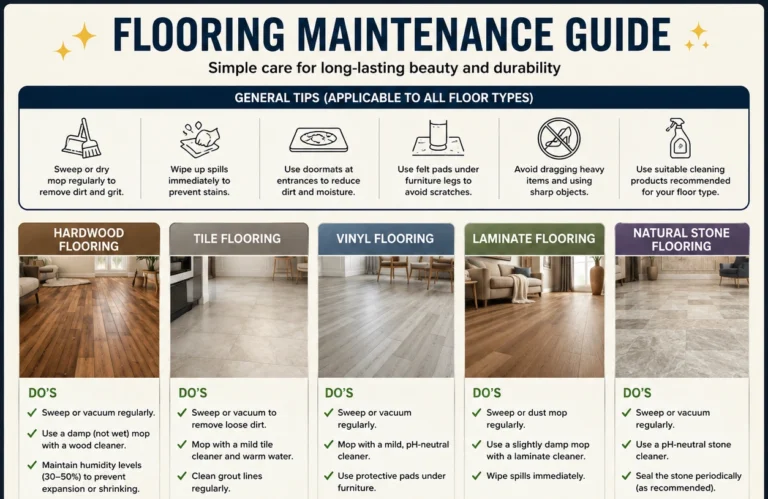
Knowing how to maintain newly installed flooring can help keep the surface clean and reduce everyday wear. Regular cleaning is a simple part of floor maintenance, but the method should match the flooring material. Vinyl, SPC, laminate, tiles, and wood flooring may each require different cleaning products and techniques.
Water and moisture should also be handled carefully. Wipe spills as soon as possible and avoid leaving standing water on the surface. Furniture can cause scratches or marks, so use suitable protective pads under chairs and tables. When moving heavy furniture, lift it instead of dragging it across the floor. Rugs or mats can also help reduce dirt and wear in entrances and other busy areas.
For flooring maintenance Singapore homeowners should follow the care instructions provided by the manufacturer or installer. Avoid cleaning products that are not recommended for the material, particularly on laminate and wood flooring. Easy-maintenance flooring can make everyday cleaning simpler, but proper care still helps preserve its appearance and condition for longer.
Frequently Asked Questions
1. How much does flooring installation cost in Singapore?
It depends on the material, floor size, labour, preparation, and removal work. A site quotation gives the most accurate estimate.
2. How long does flooring installation take in Singapore?
It depends on the floor area, material, and preparation required. Floor removal or levelling can increase the timeline.
3. What is the best flooring for HDB flats in Singapore?
Vinyl, SPC, laminate, and tiles are popular options. The right choice depends on budget, room use, and maintenance needs.
4. Can new flooring be installed over existing tiles?
Yes, if the tiles are stable, level, clean, and dry. Damaged or uneven tiles may need removal first.
5. How should I prepare my home for flooring installation?
Clear furniture from the work area and provide access. Confirm the flooring, preparation work, skirting, and installation scope with the contractor.
Final Thoughts
Choosing flooring for an HDB, BTO, condo, or landed home depends on the room, lifestyle, budget, and maintenance needs. Vinyl, SPC, laminate, parquet, engineered wood, and tiles each suit different spaces.
Before installation, check the existing floor for cracks, uneven areas, moisture, and height issues. Proper preparation and skilled installation can make a clear difference to the finished result.
For Flooring Installation Singapore, compare contractors by their workmanship, written quotation, installation scope, warranty, and after-installation support. A suitable material and properly prepared floor can provide a practical finish for everyday living.