Vinyl vs Tiles Singapore: Which Flooring Is Better?
Choosing between vinyl and tiles can be tricky when renovating a Singapore home. Vinyl vs Tiles Singapore is a common comparison for homeowners planning flooring for HDB flats, BTO flats, resale HDB units, condominiums, and landed properties. Singapore’s humid climate also makes moisture resistance, cleaning, and everyday durability worth considering before selecting a floor.
Vinyl flooring offers a softer feel, quieter walking surface, and flexible design options, while tile flooring is known for its hard surface, water resistance, and suitability for wet areas. The better option can change from one room to another. A bedroom may suit vinyl, while a kitchen or bathroom may call for tiles.
This comparison looks at durability, lifespan, maintenance, installation, cost factors, humidity, and room-by-room use so you can see where each flooring type fits best.
Vinyl vs Tiles Singapore at a Glance
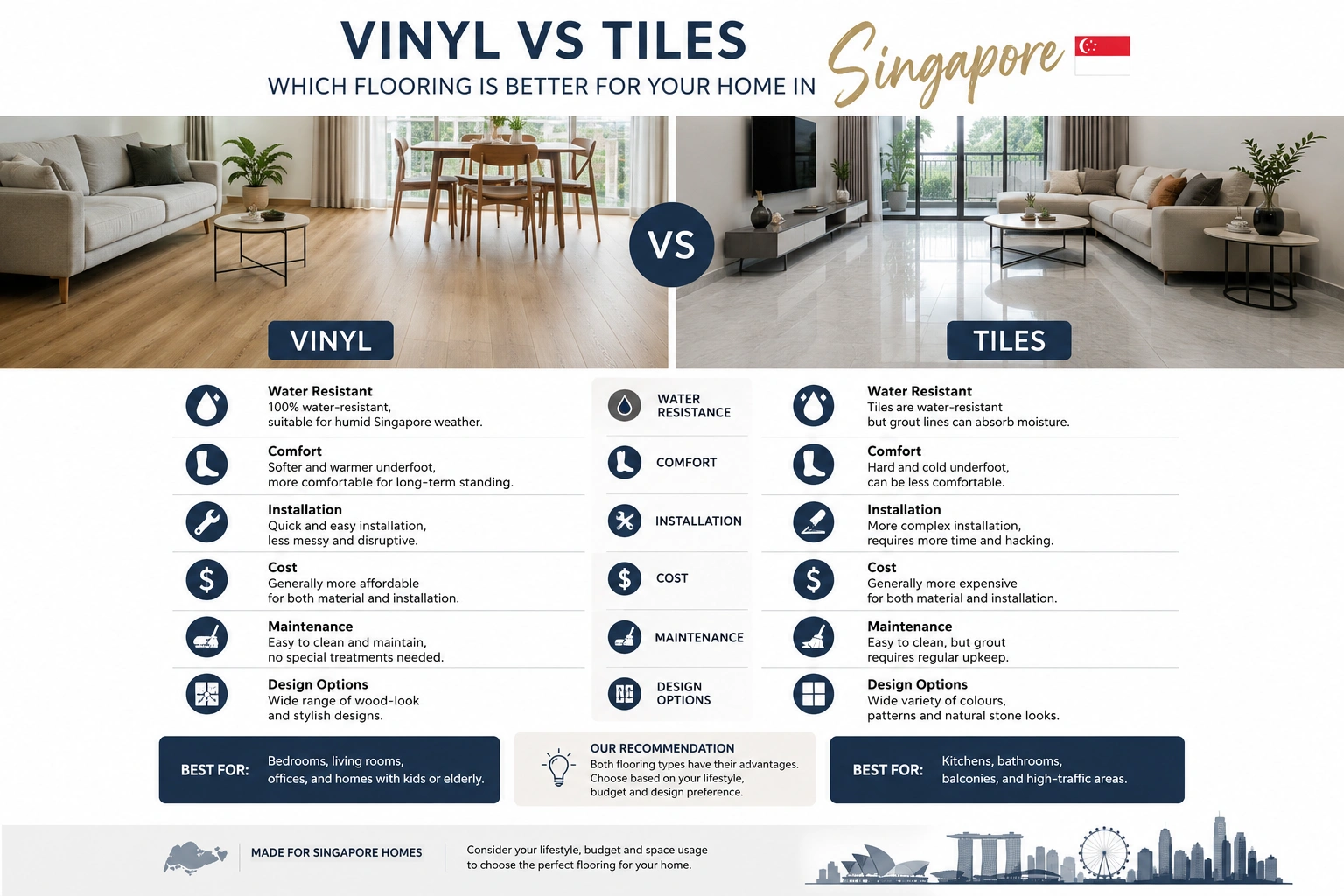
Vinyl and tiles both work well in Singapore homes, but they have different strengths. Vinyl flooring is softer, quieter, and comfortable for bedrooms and living areas. Tiles offer a harder surface with strong water resistance, making them useful for kitchens and bathrooms.
Key Differences
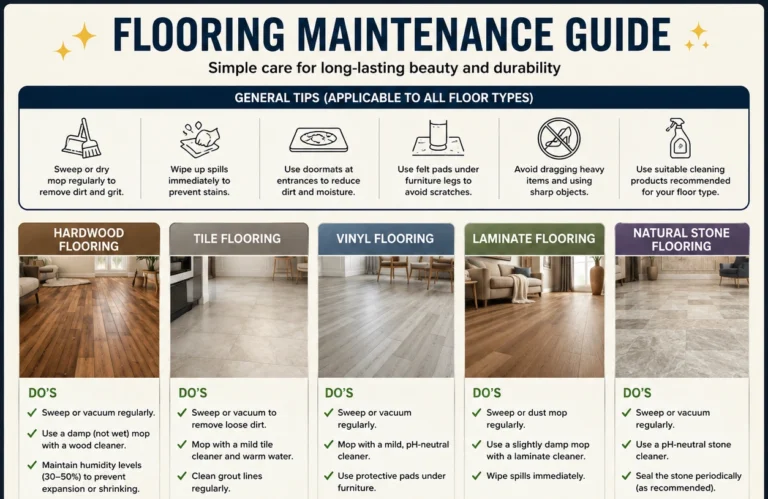
- Durability: Tiles are generally harder; vinyl depends on its wear layer.
- Lifespan: Both can last for years with proper installation and care.
- Water Resistance: Tiles perform very well in wet areas; vinyl depends on the product.
- Comfort: Vinyl feels softer and warmer underfoot.
- Maintenance: Vinyl is easy to clean; tiles need occasional grout cleaning.
- Installation: Vinyl can be quicker to install; tiles need adhesive, levelling, and grout.
- Repair: Vinyl planks can often be replaced individually; cracked tiles can be removed and replaced.
- Design: Both offer wood, stone, concrete, and modern finishes.
- Noise: Vinyl is usually quieter underfoot than hard tiles.
- Best Use: Vinyl suits bedrooms and living spaces; tiles suit kitchens, bathrooms, and moisture-prone areas.
What Is Vinyl Flooring?
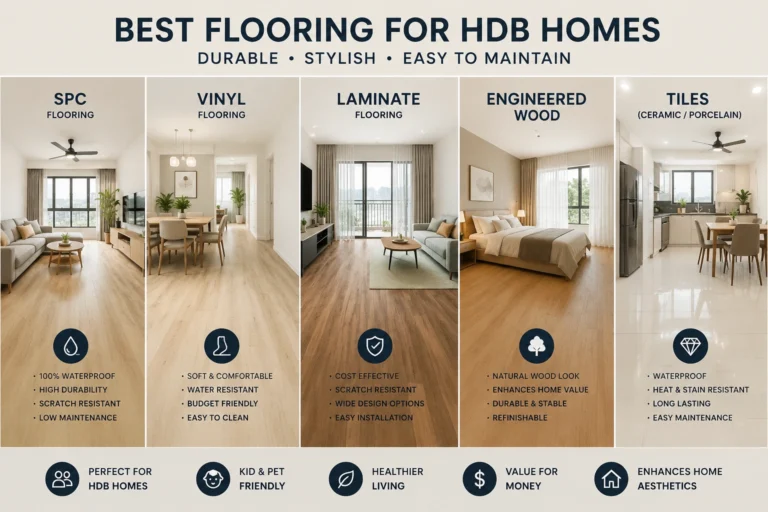
Vinyl flooring is a manufactured floor covering made in layers, with a printed design layer and protective surface on top. It is available in several formats, so homeowners can choose a finish that suits the room and renovation plan. Vinyl plank flooring is shaped like timber boards, while vinyl tiles can create the look of stone, concrete, or other floor surfaces.
Luxury vinyl flooring is made to give a more detailed and realistic appearance than basic vinyl products. LVT flooring usually comes in plank or tile formats, while LVP flooring is commonly designed in longer plank shapes. SPC flooring is a rigid-core option made with a stone-plastic composite core. It is also sold as SPC vinyl flooring and is known for its firm structure and dimensional stability.
LVT, LVP and SPC Flooring: What’s the Difference?
- LVT flooring: Usually designed to imitate stone, ceramic, or decorative surfaces and comes in tile or plank formats.
- LVP flooring: Usually has a plank shape and is commonly selected for wood-look flooring.
- SPC flooring: Uses a rigid core that gives the flooring a firm feel and good dimensional stability.
Vinyl Flooring Advantages
- Underfoot comfort: Vinyl has a softer feel than ceramic or porcelain tiles, which can be pleasant in bedrooms and living rooms.
- Water resistance: Many vinyl products provide good water resistance, although the product specifications and installation method matter.
- Easy maintenance: Regular mopping and basic floor cleaning are usually enough for everyday care.
- Design choices: Wood, stone, concrete, and decorative finishes make vinyl suitable for different interior styles.
- Flooring installation: Click-lock installation can make some vinyl systems practical for renovation projects, while glue-down installation is another option.
- Sound absorption: Vinyl can feel quieter underfoot than hard tile surfaces, especially when the flooring system includes suitable acoustic backing.
Vinyl Flooring Disadvantages
Vinyl is not immune to scratch resistance and impact issues. Heavy furniture, sharp objects, or unsuitable cleaning methods can damage the surface. Good subfloor preparation is also important because uneven flooring can affect the finished appearance and performance.
Direct heat and strong sunlight may also affect some vinyl products, so the manufacturer’s specifications should be checked before installation. If a plank becomes badly damaged, a replacement plank may be needed. Product quality also varies, so thickness, wear layer, surface protection, and core construction should be checked rather than choosing vinyl by appearance alone.
What Is Tile Flooring?
Tile flooring is a popular choice for Singapore homes because it provides a hard, stable surface for everyday use. Common options include ceramic tiles, porcelain tiles, natural stone flooring, and large format tiles. The right type depends on the room, moisture exposure, foot traffic, and the look you want.
Ceramic and porcelain tiles are common in residential flooring, while natural stone flooring offers a more distinctive appearance. Large format tiles can give larger rooms a cleaner look with fewer visible joints. Tile grout fills the spaces between individual tiles and needs regular cleaning to keep the floor looking fresh.
Ceramic vs Porcelain Tiles
Ceramic and porcelain tiles look similar, but their construction and water absorption differ. Porcelain is denser and generally less porous, which makes it a strong option for areas where moisture is a concern. Ceramic tiles can still work well in many indoor areas and come in many styles and finishes.
| Feature | Ceramic Tiles | Porcelain Tiles |
| Density | Standard | Higher |
| Water Resistance | Good | Very good |
| Durability | Good for normal use | Usually higher |
| Design Options | Many | Many |
| Suitable Areas | Living areas, bedrooms | Kitchens, bathrooms, busy areas |
| Maintenance | Easy surface cleaning | Easy surface cleaning |
Tile Flooring Advantages
- Long-term durability: Quality tiles can handle regular foot traffic for many years.
- Water resistance: Porcelain and suitable ceramic tiles work well in moisture-prone areas.
- Impact resistance: Hard tile surfaces can handle normal household use.
- Easy cleaning: Most tile surfaces are simple to wipe and mop.
- Wet-area suitability: Tiles are widely used in kitchens and bathrooms.
- Design options: Wood-look, stone-look, patterned, concrete-style, and large format tiles are available.
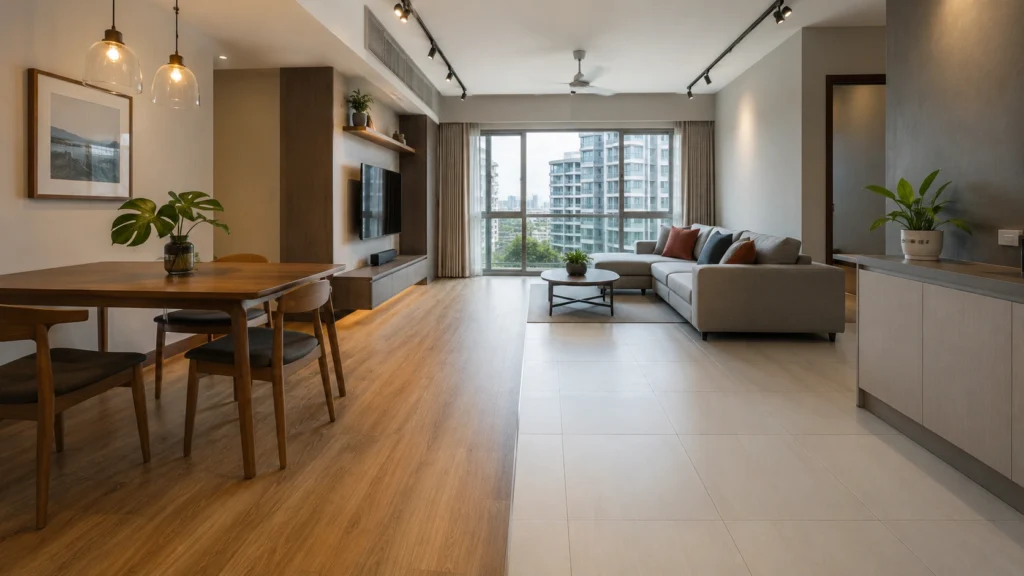
Tile Flooring Disadvantages
The hard surface can feel less comfortable than vinyl, especially when standing for long periods. Grout cleaning also needs attention because dirt can collect between tiles. Strong impacts may cause cracked tiles, and finding an exact replacement later can sometimes be difficult.
Tile flooring can also require more installation labour and careful subfloor preparation. Uneven surfaces may need floor levelling or screeding before the tiles are installed, which can add work to a Singapore renovation project.
Vinyl vs Tiles for Singapore Homes
Singapore’s humid climate matters when choosing flooring. Vinyl can be a comfortable option for dry indoor spaces, while tiles are often better suited to areas with regular moisture.
Which Handles Humidity Better?
- Tiles: A strong choice for kitchens, bathrooms, and damp areas.
- Vinyl: Can offer good moisture resistance, but product specifications should be checked.
- Installation: Proper joints and subfloor preparation matter for both flooring types.
Which Is Better for Heavy Daily Use?
- Tiles: Their hard surface offers strong durability for busy areas.
- Vinyl: A suitable wear layer and surface protection can handle normal household traffic.
- Best choice: Tiles for wet or heavily used areas; vinyl for dry rooms where comfort matters.
Vinyl vs Tiles for HDB Flats
For HDB flooring Singapore, the best choice can change from room to room. During an HDB renovation, homeowners should consider moisture, daily traffic, comfort, cleaning, and the condition of the existing floor.
Living Room
For vinyl vs tiles for living room, vinyl offers a softer and quieter surface. It also works well with wood-look interiors. Tiles are a good option when a harder surface and easy cleaning are higher priorities.
Bedrooms
For vinyl vs tiles for bedroom, vinyl is often more comfortable underfoot and produces less walking noise. It can also create a warmer feel compared with hard ceramic or porcelain tiles.
Kitchen
For vinyl vs tiles for kitchen, tiles are usually the safer choice where spills and moisture are common. Porcelain and suitable ceramic tiles are easy to clean, while vinyl can still work if the product is designed for the space and installed correctly.
Bathroom
For vinyl vs tiles for bathroom, tiles are generally more suitable because bathrooms have regular water exposure. Proper waterproofing, tile selection, grout, and installation matter in this area.
For vinyl flooring for HDB, dry rooms often suit vinyl well, while kitchens and bathrooms may benefit more from tile flooring. The existing floor condition should also be checked before choosing overlay flooring or a new installation.
Vinyl vs Tiles for BTO and Resale HDB Homes
Flooring needs can differ between BTO flats and resale HDB homes. The existing floor condition, renovation plans, budget, and installation method can all affect the final choice.
New BTO Flooring Considerations
For BTO flats, homeowners can plan their flooring around the condition of the supplied surfaces and the overall renovation design. Vinyl flooring can be suitable for bedrooms and living areas, while tiles may be preferred for kitchens and bathrooms.
Before flooring installation, check the surface for uneven areas. Proper subfloor preparation and floor levelling can help prevent problems later. Click-lock vinyl may also reduce renovation time in suitable spaces.
Resale HDB Flooring Considerations
Resale HDB homes may already have tiles, vinyl, or other existing flooring. In some cases, overlay flooring can be considered instead of removing the old floor. This can reduce hacking work, but the existing surface must be suitable and level.
If the old flooring is damaged or uneven, hacking, floor levelling, and additional subfloor preparation may be needed. These tasks can increase installation labour and renovation time.
For both BTO and resale homes, compare the condition of the floor first, then decide whether new vinyl or tile flooring is the better fit.
Vinyl vs Tiles Cost in Singapore
The vinyl flooring cost Singapore homeowners pay depends on more than the flooring material itself. The same applies to tile flooring cost Singapore. When comparing vinyl vs tiles cost Singapore, look at the full project rather than only the price of the flooring.
Flooring installation cost Singapore can include material cost, installation labour, preparation work, removal of existing flooring, skirting, and other installation charges. A lower material price may not always mean a lower total renovation flooring cost.
What Changes the Final Flooring Cost?
- Material quality: Higher-grade vinyl, SPC, porcelain, or natural stone usually costs more.
- Floor size: Larger areas require more materials and installation labour.
- Wear layer: Thicker vinyl wear layers can increase the material cost.
- Tile type: Ceramic, porcelain, large format, and natural stone tiles have different price levels.
- Existing flooring: Old or damaged flooring may require removal before new flooring is installed.
- Hacking: Removing existing tiles can add to labour and disposal costs.
- Floor screeding: Uneven surfaces may need screeding before installation.
- Floor levelling: Level surfaces are important for proper flooring performance.
- Installation method: Click-lock, glue-down, and tile installation have different labour requirements.
- Skirting: New skirting or replacement work adds to the project cost.
- Labour: Installation labour varies based on the flooring type, room layout, and preparation required.
For an accurate total flooring cost, ask for a quotation that separates material, labour, floor preparation, hacking, and installation charges. This gives a clearer picture of what you are actually paying for.
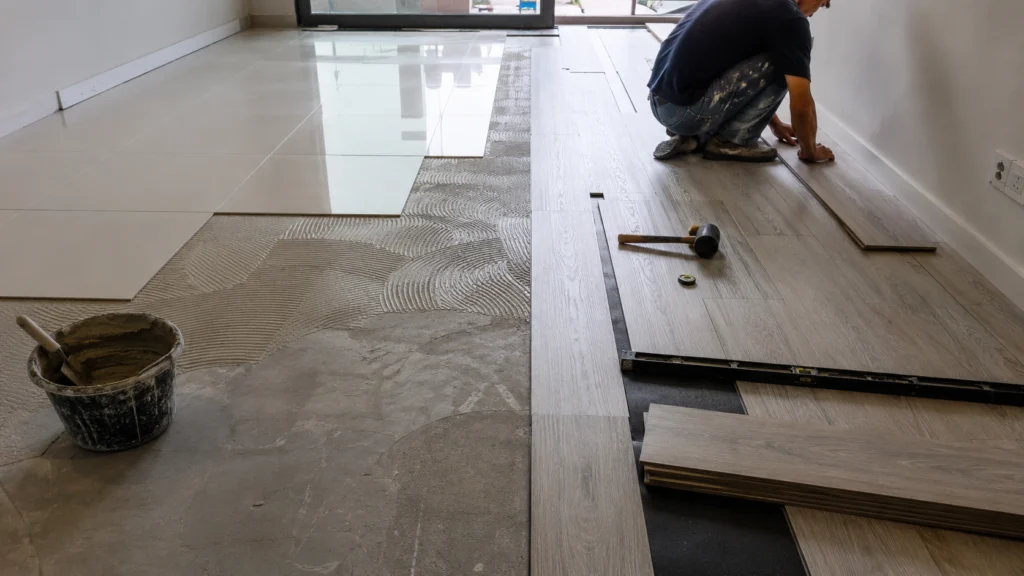
Vinyl Flooring Installation
- Subfloor inspection: Check the floor for moisture, damage, and uneven areas.
- Floor levelling: Correct uneven sections before laying vinyl.
- Subfloor preparation: Clean and prepare the surface properly.
- Click-lock installation: Join suitable vinyl planks together without adhesive.
- Glue-down installation: Apply flooring adhesive for products designed for this method.
- Finishing: Complete skirting, edges, and transitions.
Tile Flooring Installation
- Surface preparation: Clean and prepare the floor.
- Tile adhesive: Apply suitable adhesive to the prepared surface.
- Tile placement: Position tiles according to the planned layout.
- Grout lines: Fill the gaps between tiles after placement.
- Curing: Allow adhesive and grout to set properly.
- Finishing: Complete edges, skirting, and other finishing work.
Which Takes Longer to Install?
Vinyl may require less installation time when the existing floor is level and ready. Tile flooring can take longer when hacking, floor screeding, levelling, and grout work are required.
The actual renovation time depends on floor size, existing flooring, preparation work, installation method, and the material selected.
Which Flooring Is Better for Each Room?
There is no single flooring choice for every room. Vinyl flooring can be a good fit where comfort and quieter walking matter, while tile flooring works well in areas exposed to moisture or heavier use.
| Room | Vinyl | Tiles | Better Choice |
| Living Room | Excellent | Good | Depends on lifestyle |
| Bedroom | Excellent | Good | Vinyl |
| Kitchen | Good | Excellent | Tiles |
| Bathroom | Product-dependent | Excellent | Tiles |
| Dining Area | Good | Excellent | Depends |
| Study Room | Excellent | Good | Vinyl |
| Corridor | Good | Excellent | Depends |
Which Is Easier to Maintain?
Vinyl flooring is generally easier to maintain. Regular sweeping, simple floor cleaning, and occasional mopping are usually enough for everyday care.
- Floor cleaning: Vinyl can be cleaned with a soft mop and suitable floor cleaner.
- Regular mopping: Avoid excessive water and harsh cleaning products that may affect the surface.
- Stain resistance: Quality vinyl with good surface protection can handle common household spills.
- Grout cleaning: Tiles need more attention because dirt can build up between grout lines.
- Mould and mildew: Damp areas should be cleaned and dried properly, especially around tile grout.
- Floor repairs: Damaged vinyl may allow individual replacement planks, depending on the flooring system.
- Cracked tiles: A damaged tile can usually be removed and replaced, but finding an exact match later may be difficult.
Tiles have an advantage in areas with frequent moisture because their surface is easy to wipe clean. The grout, however, needs regular care to keep the floor looking clean.
Vinyl Flooring Pros and Cons
Pros
- Comfortable: Softer underfoot than most tile surfaces.
- Quieter: Produces less footfall noise in many indoor spaces.
- Easy maintenance: Simple cleaning and regular mopping are usually enough.
- Many designs: Available in wood, stone, concrete, and decorative finishes.
- Dry indoor spaces: Works well in bedrooms, living rooms, and study areas.
Cons
- Can scratch: Sharp objects and heavy furniture may damage the surface.
- Quality varies: Wear layer, core construction, and surface protection differ between products.
- Subfloor matters: Uneven surfaces can affect the finished flooring.
- Wet-area suitability varies: Check the product’s moisture and water-resistance specifications before installation.
Vinyl or Tiles — Which One Should You Choose?
The better flooring choice depends on the room, moisture exposure, comfort, and how the space will be used.
Choose Vinyl When:
- Bedroom comfort is a priority.
- You want a quieter floor underfoot.
- A shorter renovation process is preferred.
- You like wood-look flooring or modern decorative finishes.
- Easy cleaning and maintenance matter.
Choose Tiles When:
- Wet areas are a main concern.
- You need a hard-wearing surface.
- The flooring is for a kitchen or bathroom.
- The room receives heavy daily traffic.
- Long-term tile durability is a priority.
Singapore-Specific Recommendation
For most Singapore homes, vinyl can suit bedrooms, living rooms, and study areas where comfort and easy maintenance matter. Tiles are often the better fit for kitchens, bathrooms, and spaces exposed to regular moisture.
For Vinyl vs Tiles Singapore, consider each room separately instead of using one flooring type throughout the entire home. Check the product specifications, existing floor condition, installation method, and expected daily use before making the final choice.
Frequently Asked Questions
1. Is vinyl flooring better than tiles for Singapore homes?
Vinyl is often more comfortable and quieter, while tiles are better suited to wet and high-moisture areas. The best choice depends on the room.
2. Which flooring is better for HDB flats, vinyl or tiles?
Vinyl works well for bedrooms and living areas, while tiles are a practical choice for kitchens and bathrooms.
3. Is SPC flooring better than tiles for HDB?
SPC offers a firm, moisture-resistant flooring option with easy installation. Tiles provide a harder surface and strong wet-area performance.
4. Can vinyl flooring handle Singapore’s humid climate?
Many vinyl products can handle humid conditions, but water resistance, product quality, joints, and installation should be checked before use.
5. Is vinyl cheaper than tiles in Singapore?
The final cost depends on material quality, installation labour, floor preparation, hacking, and the condition of the existing floor.
6. Can vinyl flooring be installed over existing tiles in Singapore?
Yes, it may be possible when the existing tiles are stable, dry, clean, and sufficiently level for the selected vinyl flooring system.
Final Thoughts
For Vinyl vs Tiles Singapore, both flooring options have their place. Vinyl is a comfortable and low-maintenance choice for bedrooms, living rooms, and study areas, while tiles offer a hard-wearing surface for kitchens, bathrooms, and moisture-prone spaces.
Before choosing, consider the room, existing floor condition, moisture exposure, installation requirements, and long-term maintenance. A room-by-room approach can help you choose flooring that suits how your Singapore home is actually used.